Kusum
Kusum is the tree that dyes. Once a year, as spring approaches, its crown flares up with bright red young leaves, as if someone had dipped it in dye; and on its branches feeds a tiny lac insect whose secretions yield lac – the very scarlet alta used to paint the soles of the feet. Sanskrit knows it as koshamra, and for that same resin calls it lakshavriksha – “the lac tree.” And the red trail leads straight to Vraja: to the feet of Radha, from which the lac rubs off onto a rumpled bed of flowers, leaving a token of the night gone by.
Contents
The Tree in Vraja
The kadamba and the tamala come up again and again in the poetry of Vrindavan, but the kusum – not once. Its place in Vraja rests not on a line that names it, but on what it gives: the red dye.
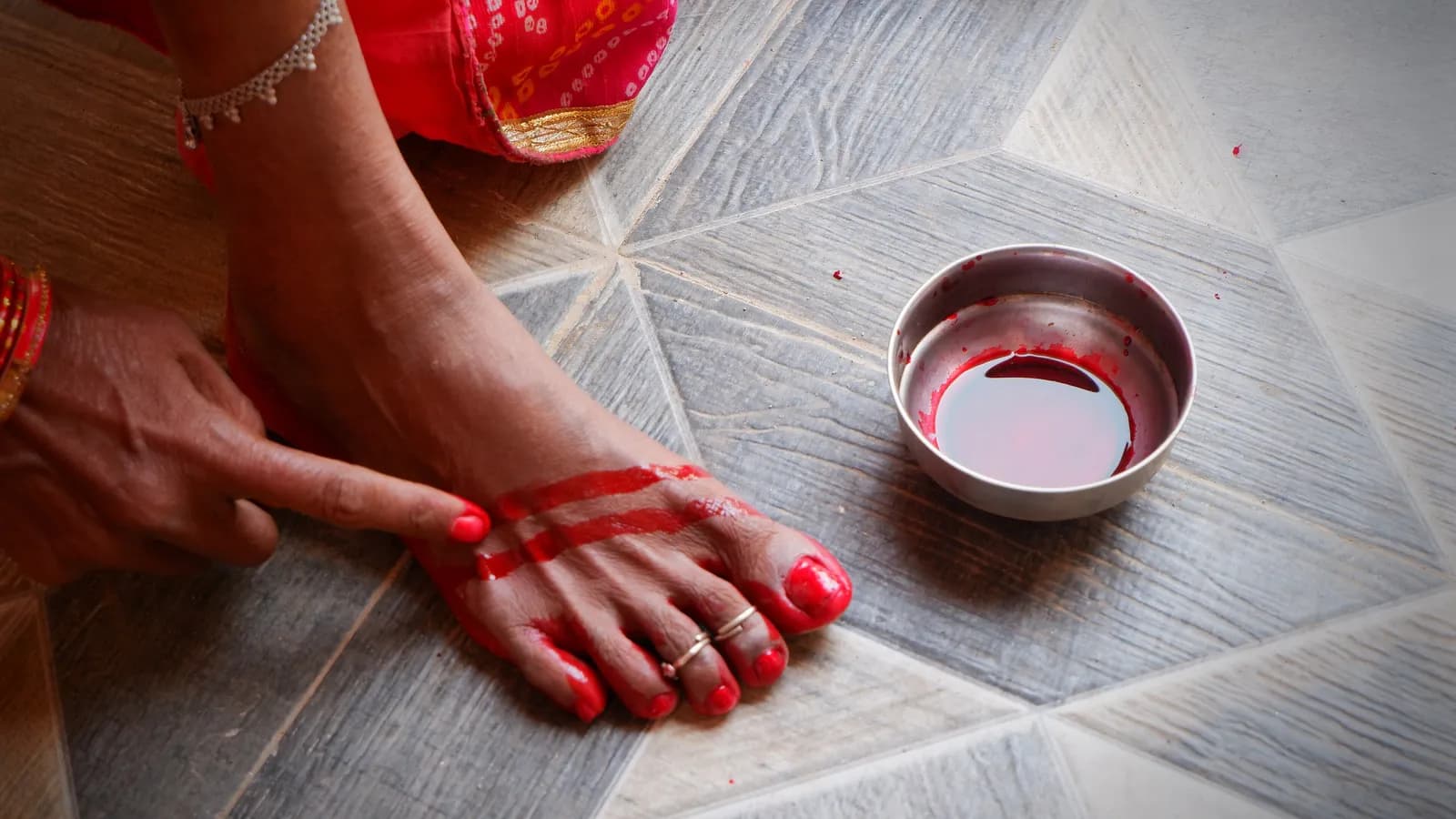
The kusum is one of the principal host trees of the lac insect. On its branches the tiny insect secretes lac resin, and from the lac comes the scarlet dye used to paint the hands and feet – alta, mahawar, in Sanskrit laksha, alaktaka, yavaka (a married woman's hair parting, however, is colored not with it but with sindura). The redness is written into the tree's very names: the Ayurvedic lexicon Bhavaprakasha lists side by side lakshavriksha – “the lac tree,” raktamra – “the red mango,” and suraktaka – “the bright red one.” It is with this dye that the kusum enters Vraja.
And the red lac on Radha's feet is an image the rasika poets return to again and again: it is not a description of her feet but a reading of the traces. In the morning the sakhis find the abandoned bed of flowers and, from the colors left on it, piece together what happened during the night. Srila Krishnadasa Kaviraja Gosvami in the Govinda-lilamrita reads this bed like a secret script:
madhye'cyutāṅga-ghana-kuṅkuma-paṅka-digdhaṁ
rādhāṅghri-yāvaka-vicitrita-pārśva-yugmam |
sindūra-candana-kaṇāñjana-bindu-citraṁ
talpaṁ tayor diśati keli-viśeṣam ābhyaḥ ||
In the center of the bed were kuṅkuma stains from Kṛṣṇa's body, and at the two sides the marks of lac from Rādhā's feet. Here and there were marks of vermilion, sandalwood and collyrium. Thus the bed indicated the particular antics of the couple to the eyes of the sakhīs.
The lac lay “along both edges” – that is where Her feet had rested; the kunkuma in the middle came from the body of Krishna. It is by the placement of the colors that the sakhis read the story of the night. The same device appears in Srila Rupa Gosvami's Vidagdha-madhava, where Lalita, gazing at the bed of flowers at dawn, says:
kṛṣṇāṅga-saṅgama-milad-ghusṛṇāṅga-rāgā
rādhā-pada-skhalad-alaktaka-rakta-pārśvā |
sindūra-bindu-cita-gharma-jalokṣiteyaṁ
dhūnā dhinoti nayane mama puṣpa-śayyā ||
Smeared with saffron from Kṛṣṇa's limbs, and red lac fallen from Rādhā's feet, and sprinkled with perspiration mixed with drops of red sindūra, this broken bed of flowers delights my eyes.
Both Gosvamis give us the very same scene and the very same reading of the traces. And the lac on Radha's feet is prized so highly that even its disappearance is noticed: in the Ujjvala-nilamani a sakhi rebukes Krishna because the garland from His head has wiped the lac from Radha's feet – and tells Him to adorn those very feet anew with that same garland1. And Srila Visvanatha Cakravarti Thakura, in the Krishna-bhavanamrita, goes further still: the redness of Radha's feet, borrowed from the lac, outshines the morning dawn itself2. Thus an unassuming forest tree, never once named by the poets of Vraja, serves Vraja all the same – not by its name, but by the color on those feet.
Kamadeva's Arrow
The kusum plays a second role as well: the garden treatises count it among Kamadeva's flower arrows. The reason is that same redness – the color of passion, the color of alta, the color of the crown that flares red with the coming of spring.
The shastras know Kamadeva's flower bow well: his bowstring is a swarm of bees, and his arrow is “five-headed,” each tip with an action of its own: to wither, to bewilder, to arouse, to torment, to inflame3. And the fives that the sources actually name do not know the kusum: neither the list of the Sanat-kumāra-saṁhitā, where the arrows are matched to the letters of the kāma-bīja – the mango bud, the ashoka, the mallika, the madhavi and the bakula – nor the reading of the features of Radha's face by Srila Jayadeva Gosvami in the Gita-Govinda (the lips to the bandhuka, the cheeks to the madhuka, the eyes to the blue lotus, the nose to the sesame flower, the teeth to the kunda). The kusum is a red tree that popular tradition added to Kama's quiver by right of its colour.
Ayurveda
In the Ayurvedic tradition, kusum is recorded under the name koshamra and is mentioned in the classical sources: the tree itself is described in the same Bhavaprakasha lexicon, while its fruit appears in the Sushruta Samhita. It is chiefly the bark and the seed oil that are used. The bark is astringent (kashaya) – it is used to cleanse and heal wounds (vrana), and to treat skin eruptions and itching. The seed oil is applied to the skin and hair. The sources do not specify the rasa (taste), virya (potency), or vipaka (post-digestive effect) precisely.
The name itself, however, is not so clear-cut. Most synonyms of koshamra mean “mango” – “forest mango”, “small mango”, “red mango” – and Monier-Williams renders the word itself the same way: wild mango, Mangifera sylvatica. As for the “lac tree”, lakshavriksha, the nighantus disagree: the Haravali and Monier-Williams assign it to the palasha, while the Raja Nighantu equates it with koshamra. The dispute is an old one, not a modern invention: the lac insect has long been raised on both the palasha and the kusum, so the name “lac tree” rightly belongs to them both.
Botany
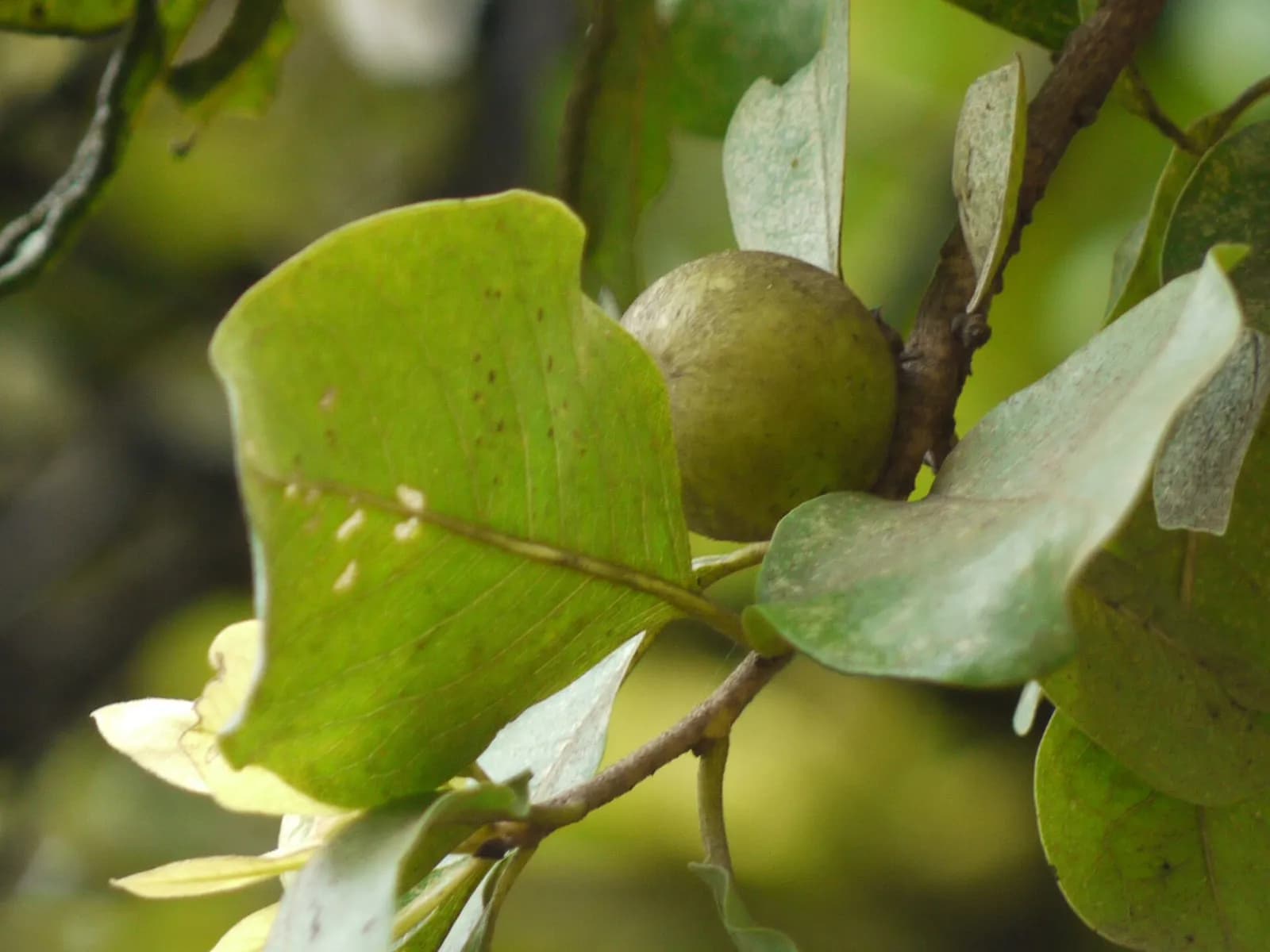
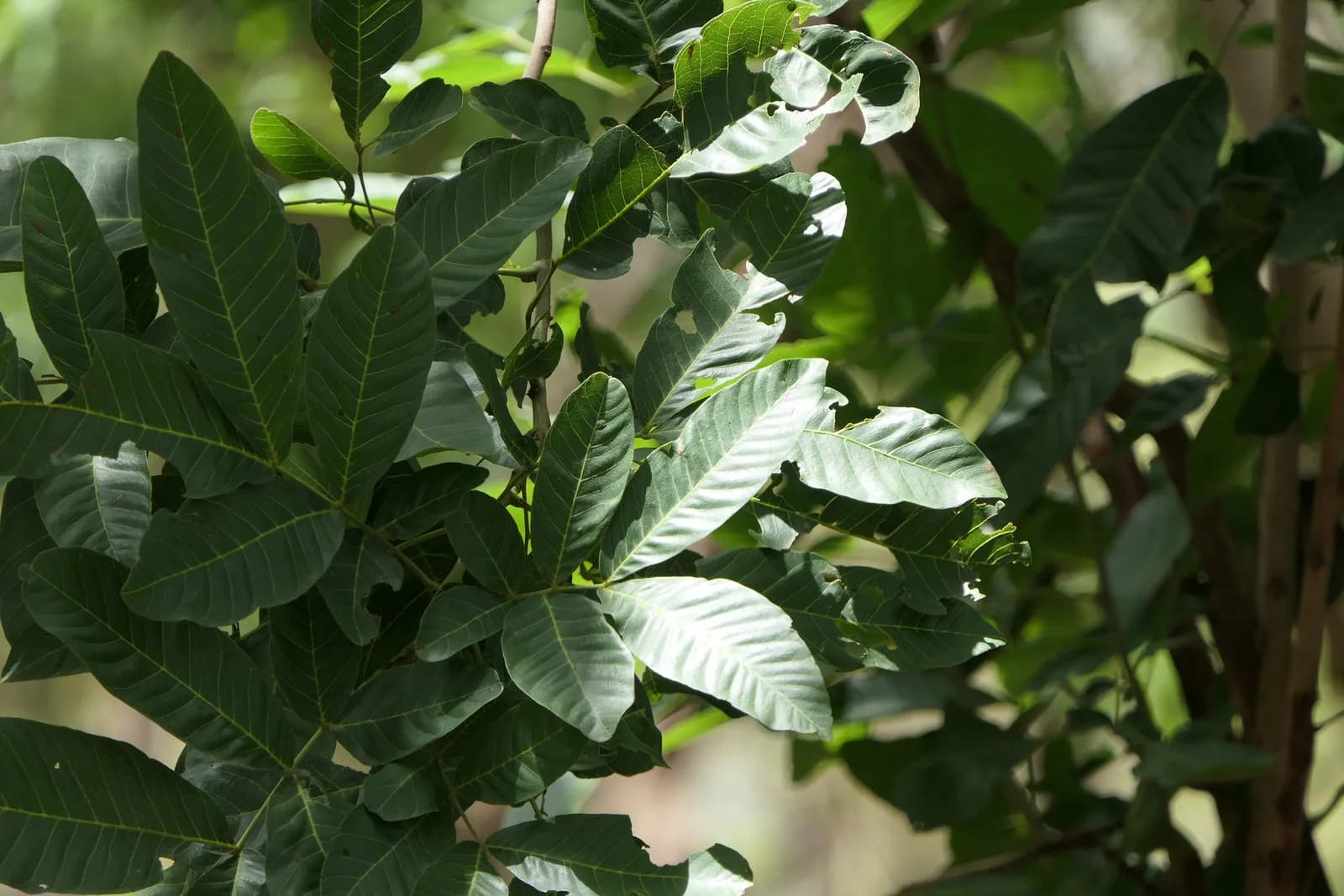
To botanists, kusum is known as Schleichera oleosa of Sapindaceae (the soapberry family). The tree sheds its leaves for only a very short time and so looks nearly evergreen; its trunk is short and fluted, its crown broad and shady, its wood very hard and reddish-brown. The leaves are pinnate, with two to four pairs of leaflets. The fruit is dry, about the size of a small plum, but beneath the shell lies juicy, tart pulp around the stone – the very part that is eaten in the lychee, a relative from the same family, only sweet there. It grows in dry mixed forests from the Himalayan foothills (Punjab to Nepal) across the whole of India to Sri Lanka, Burma, and Thailand, and farther east as far as the islands of Indonesia.
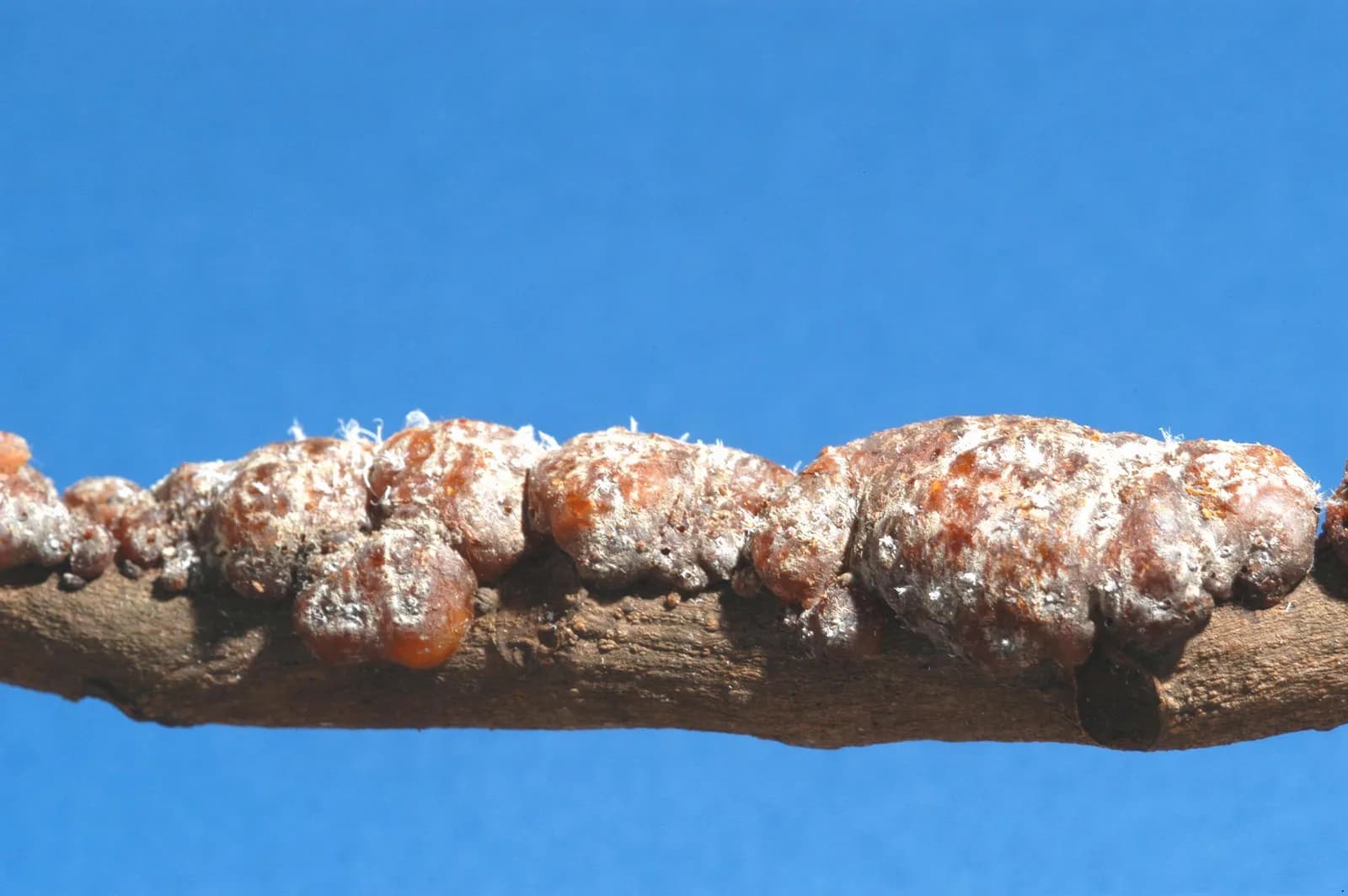
In practical use the tree serves two purposes, both to do with color and resin. First, kusum is one of the three trees on which the entire commercial rearing of the lac insect Kerria lacca depends (the other two being palasha and ber): the resin the female secretes on its branches goes into shellac and lacquer, and kusum lac is especially prized – it is the “least colored” and therefore the purest. From it also come the red dye for the feet and scarlet sealing wax. Second, the seeds yield 25–38% oil, used for the skin and hair, for lamps, and for industrial purposes.
Kusum: foliage, flowers, fruit, and lac
Sources
We build Vrajapedia together – with stories, verses, photographs and parikrama experience. If you know something more, tell us and it will appear on this page.