Tamal
The tamal is the dark tree of Vrindavana: tradition likens the colour of its bark to the colour of Krishna’s body. And so for the people of Vraja the tamal is no ordinary tree: wound about by the madhavi creeper, it becomes an image of the Divine Couple – the dark Krishna in the embrace of the fair Radha. Srila Rupa Gosvami addressed the tamal as Govinda Himself.
The Tree of Krishna’s Colour
In the texts and in prayer Krishna is called again and again shyama – dark, blue-black. The hue of His body is compared now to a thundercloud, now to the blue flax flower, now to a sapphire. And among the trees of Vraja that colour fell to the tamal with its dark bark. The lexicons derive the name from the root tam-, “darkness”. Hence the settled comparison tamala-shyama – “dark as a tamal”: seeing this tree, a man of Vraja remembers the form of Krishna.
In his gloss on the Ujjvala-nilamani, Srila Vishvanatha Chakravarti unfolds a scene in which Lalita-devi, showing the swan his way, asks him to comfort the Pulinda women of the forest by Govardhana. At the mere sight of a tamal the likeness of colour burns them with the memory of Krishna, and nothing can cool them but the wind off the Yamuna.
The Garga-samhita, drawing Vrindavana, begins with the holy bank of the Yamuna and with the forest, where the first named are the dark (shyamala) tamals, and after them the nipa, the nimba, the kadamba and the rest of the trees1.
Srila Rupa Gosvami, in the poem Hamsa-duta, describes Krishna at the very kadamba from which He carried off the garments of the gopis: His body shone with a dark lustre, like the tamal tree, and He Himself, in a crown of peacock feathers and golden silk, played the flute and poured out waves of bliss.
The Tamal and the Madhavi Vine
The dark tamal is often wound about by the flowering madhavi creeper, and for the poets of Vraja this is a visible image of Radha and Krishna. The dark tree is Krishna, and the fair golden creeper that embraces it is Radha. In this image the tree is always the same, while the creeper changes. With Srila Rupa Gosvami the tamal is wound about by the madhavi; with Srila Raghunatha dasa Gosvami it is the golden yuthi, with Srila Jiva Gosvami a champaka creeper2.
In the Utkalika-vallari Srila Rupa Gosvami prays to the tamal, seeing Govinda Himself behind it:
mādhavyā madhurāṅga kānana pada prāptādhirājya śriyā
vṛndāraṇya vikāsi saurabha-tate tāpiñcha kalpadruma
nottāpaṁ jagad eva yasya bhajate kīrti-cchaṭā cchāyayā
citra tasya tavāṅghri sannidhi juṣāṁ kiṁ vā phalāptir nṛṇām
“O beautiful, fragrant tamal – wish-fulfilling tree that blossoms in the forest of Vrindavana, wound about by the madhavi creeper, the royal goddess of this forest! O tree, whose glory’s shade shelters the world from its burning sorrows – what wondrous fruit do those attain who come to Your feet?”
The commentary Makaranda-kana-vyakhya of Ananta dasa Babaji explains the verse thus: speaking of the tamal and the madhavi creeper, Srila Rupa Gosvami sings of Krishna and Radha, for madhavi is also one of the names of Radha. Such a poetic device, where speech about a visible thing secretly runs about another, is called in Sanskrit poetics aprastuta-prashansa.
Such pairs are not only an image. By the description of the Krishna-bhavanamrita, the trees of Vrindavana grow in groups, wound about two by two by creepers, and their joined branches make living “chambers” – kunjas, bowers for the play of Radha and Krishna. A tamal wound about by madhavi is the heart of such a bower: in the Utkalika-vallari it is into a madhavi bower that Rupa-manjari spreads a bed of flowers and leads the Divine Couple.
She Was Mistaken
The Krishna-bhavanamrita describes an evening when Radha took Krishna Himself for a tree. Vishakha was the first to see Madhava embracing a young tamal, and she called to Radha: look, there He is! Radha looked and decided her friend was joking: “How many times have I seen that tree! That is not My beloved, that is a tamal.” And She Herself explained why the joke was true after all: both the spring and the motionless tamal are called Madhava, by the same name as Krishna. Then Krishna took off His yellow scarf, covered His ornaments and spread His arms like branches. The sakhis withdrew and hid among the creepers, and Radha embraced the “tree” and only then knew her Beloved. “Thus Madhava became like the tamal tree, and Radhika like the golden creeper that embraced it.”
It happened the other way round as well. Srila Rupa Gosvami sets out that error point by point in the Ujjvala-nilamani: not Krishna but a tamal tree; not a flute but the humming of bees; not a necklace of gunja but a cluster of bandhuka flowers3. The tamal stands first in that list: the bees replace a sound, the bandhuka an ornament, the lotuses a pair of eyes, and the tree alone is taken for Him Himself.
Botany
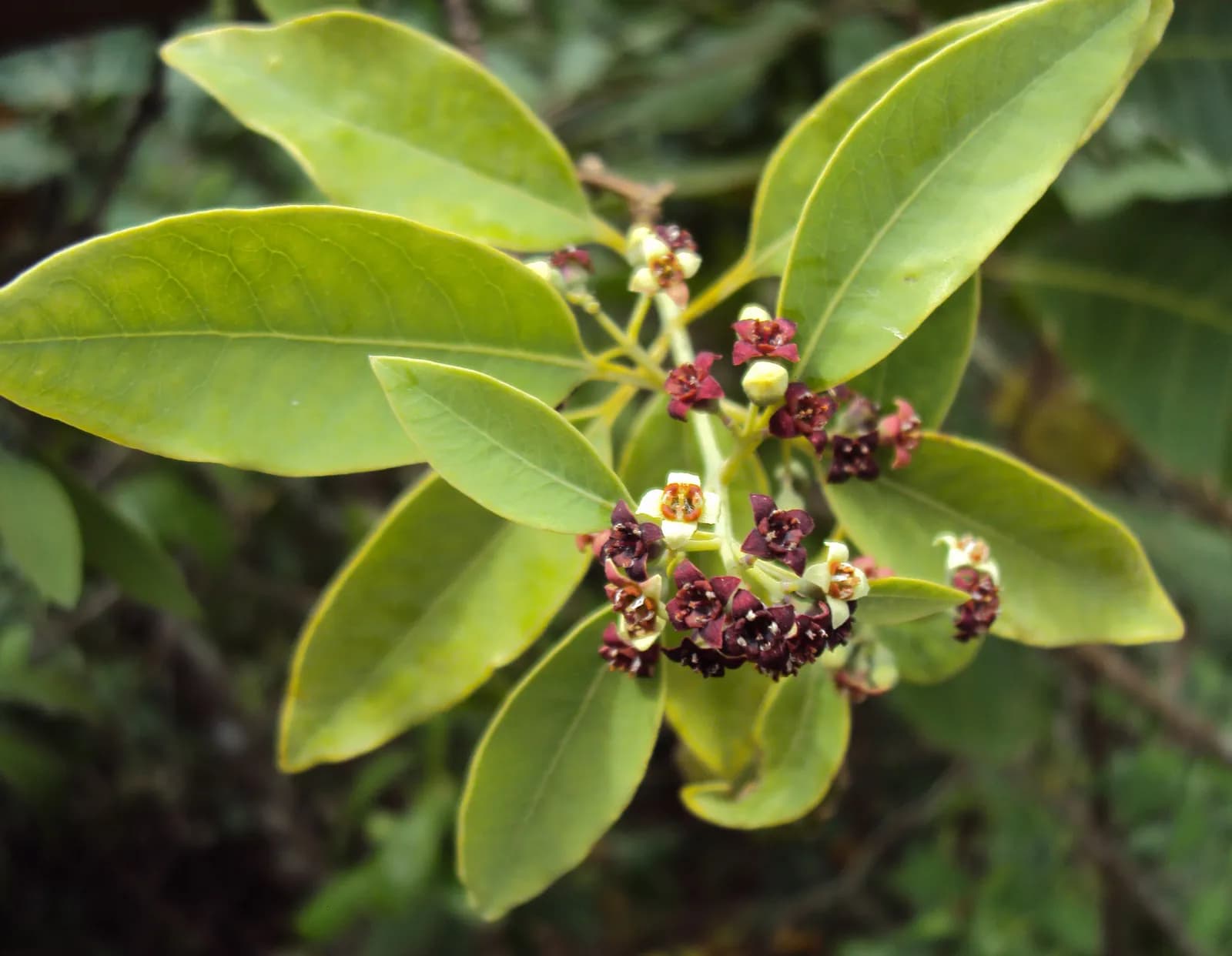
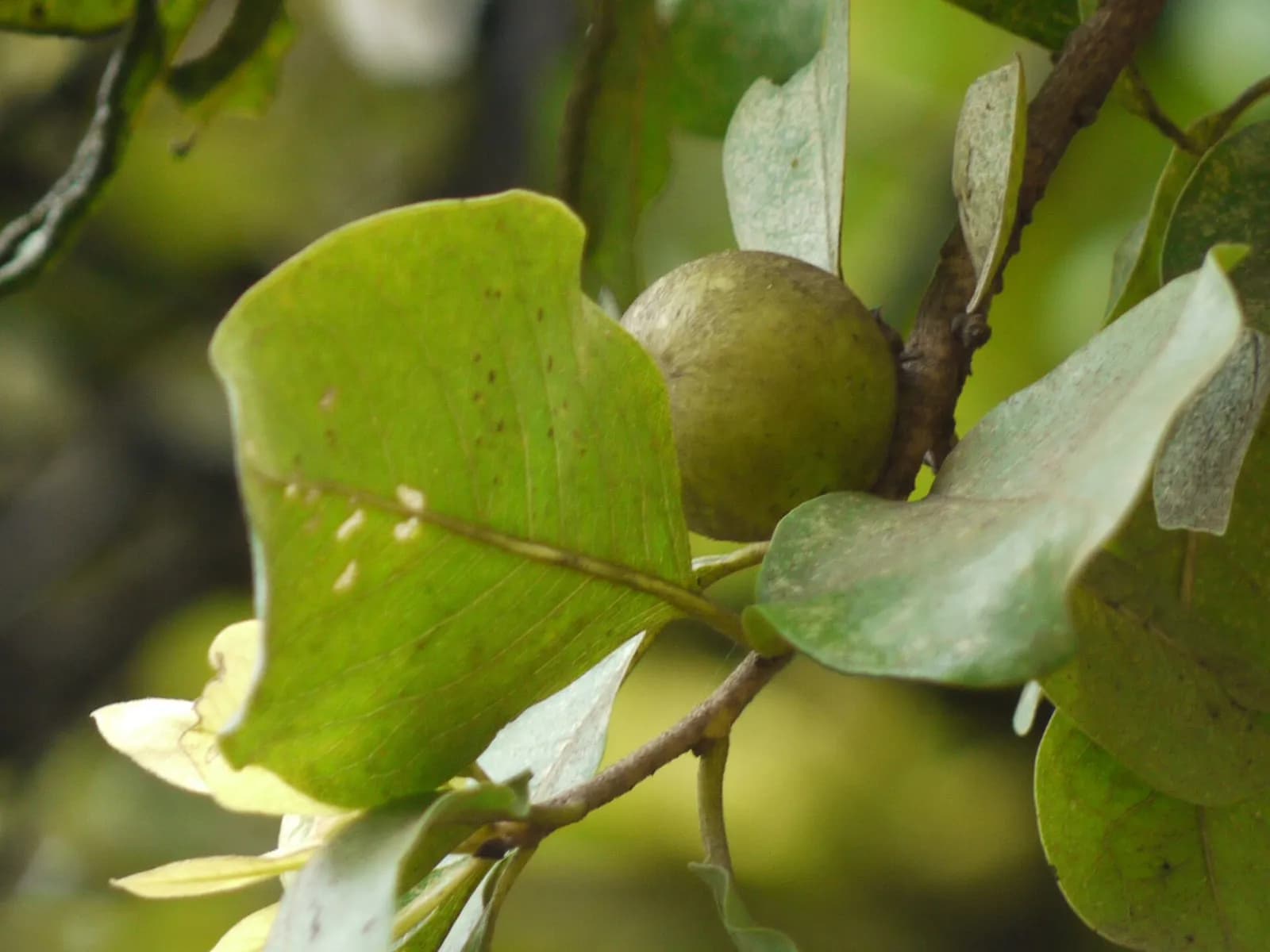
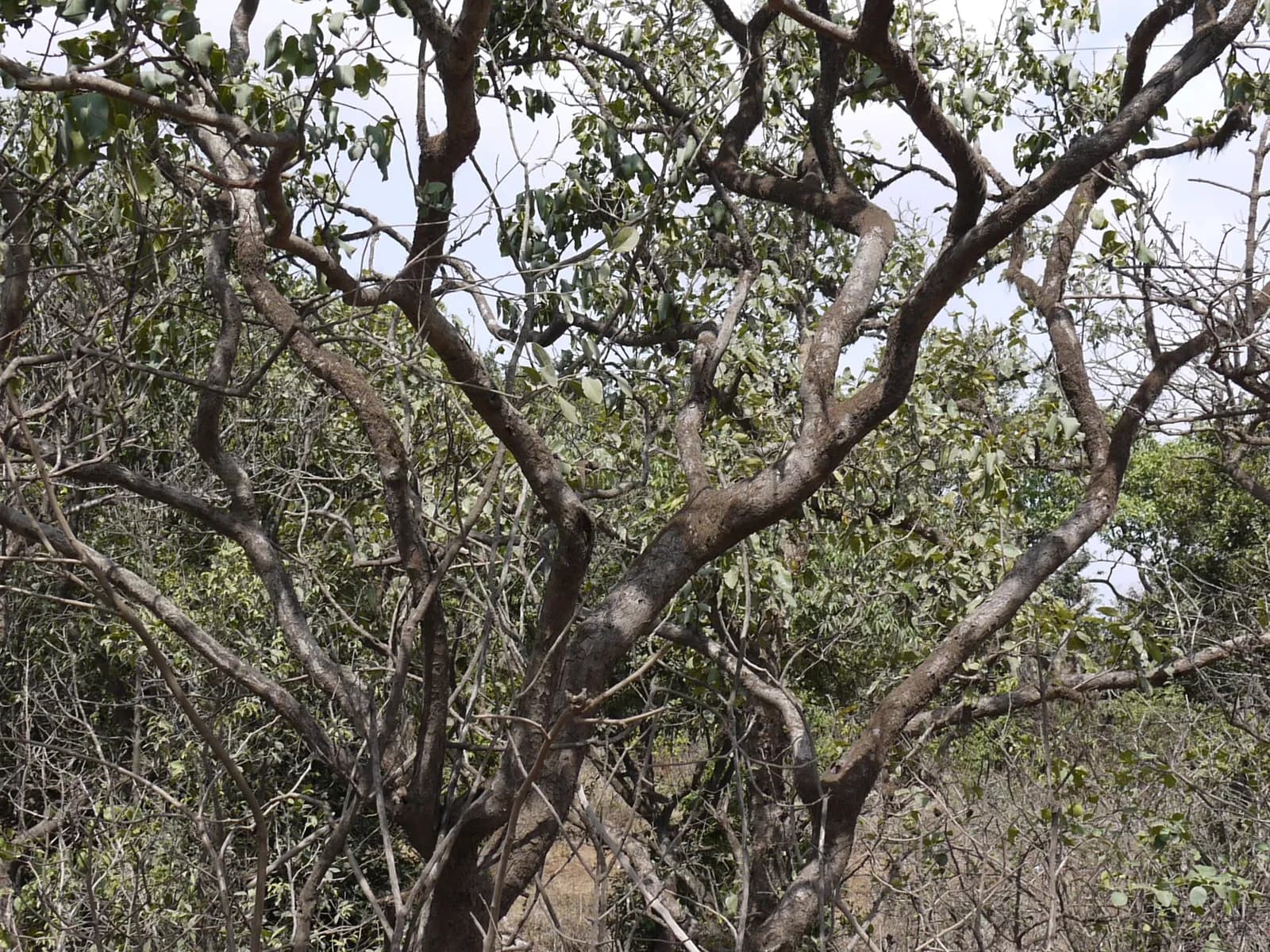
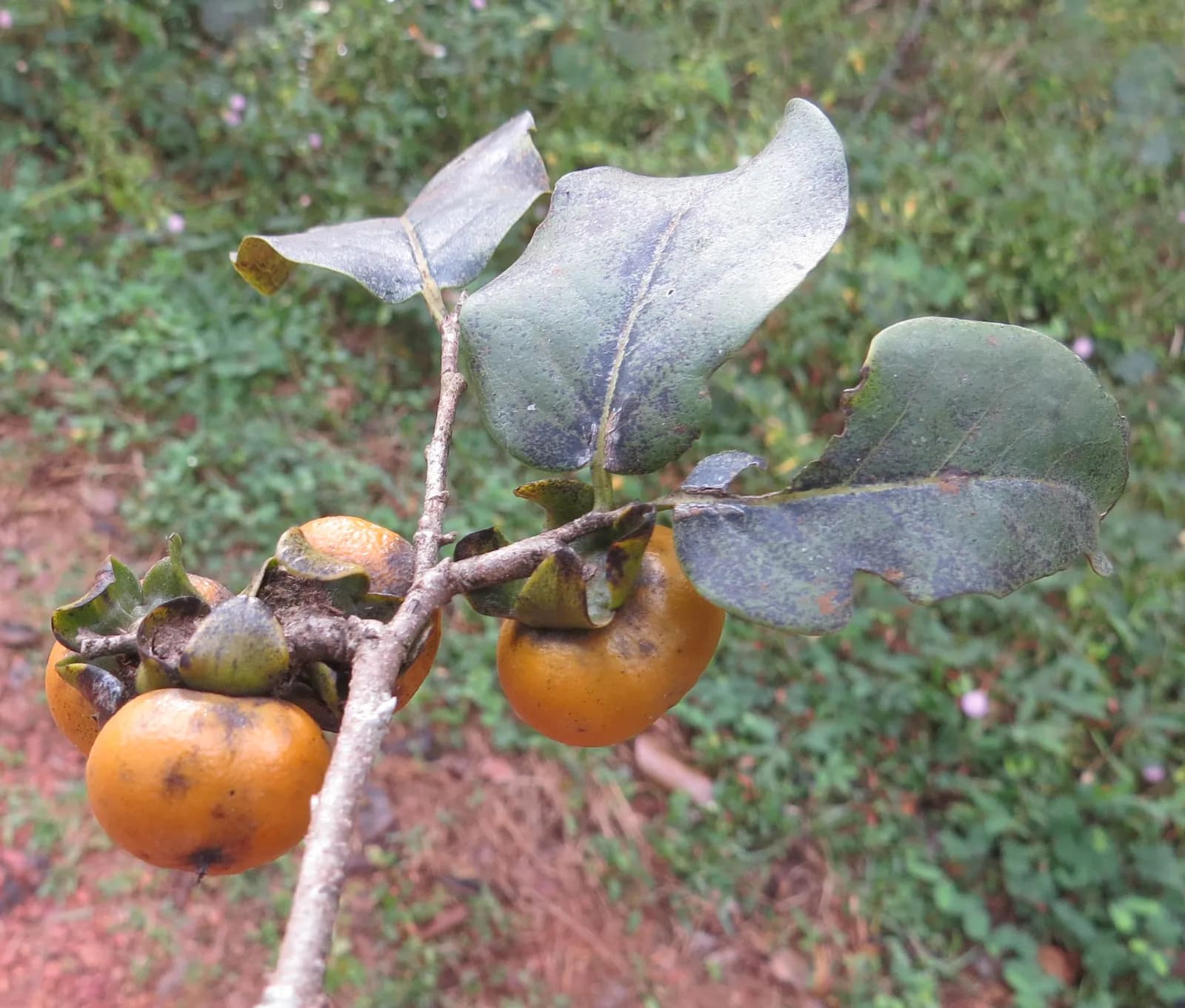
Diospyros montana is a deciduous tree of the ebony family, up to fifteen metres tall; it grows from India and Sri Lanka to Indochina and the Greater Sunda Islands, no less often on the northern plains than in the south. The leaves are simple and oval; the fruits are round berries the size of a cherry, turning yellow as they ripen.
The Indian floras describe the bark differently: from smooth and ashy grey to dark grey and rough. But the darkest thing about the ebonies is not outside but within: ebony, the black wood, is their heartwood. In the tamal it too is dark: black, with reddish and ashen veins, heavy and very hard. In folk medicine the fruits are applied outwardly to boils.
Which tree the Sanskrit texts called the tamal is disputed to this day. The Sanskrit lexicons (Monier-Williams, Apte, the Shabda-sagara) give with one voice a quite different plant under this name – Xanthochymus pictorius, that is, the present-day Garcinia xanthochymus of the Clusiaceae; Indian botanists also propose the cinnamon tree Cinnamomum tamala, whose leaf is known as tejpat. The description the lexicons give, however, is one and the same: a tree with very dark bark but with white flowers.
For Diospyros montana there stands an argument of another kind – the living name. In Bengali this tree is called just that: তমাল, tamal. The Gaudiya tradition speaks Bengali, and its tamal is this one. The lexicons of the century before last tied the Sanskrit name to another tree, leaning on their own circle of sources. Their description does not contradict this tree either: the dark bark and the white flowers are both in place.
Sources
We build Vrajapedia together – with stories, verses, photographs and parikrama experience. If you know something more, tell us and it will appear on this page.