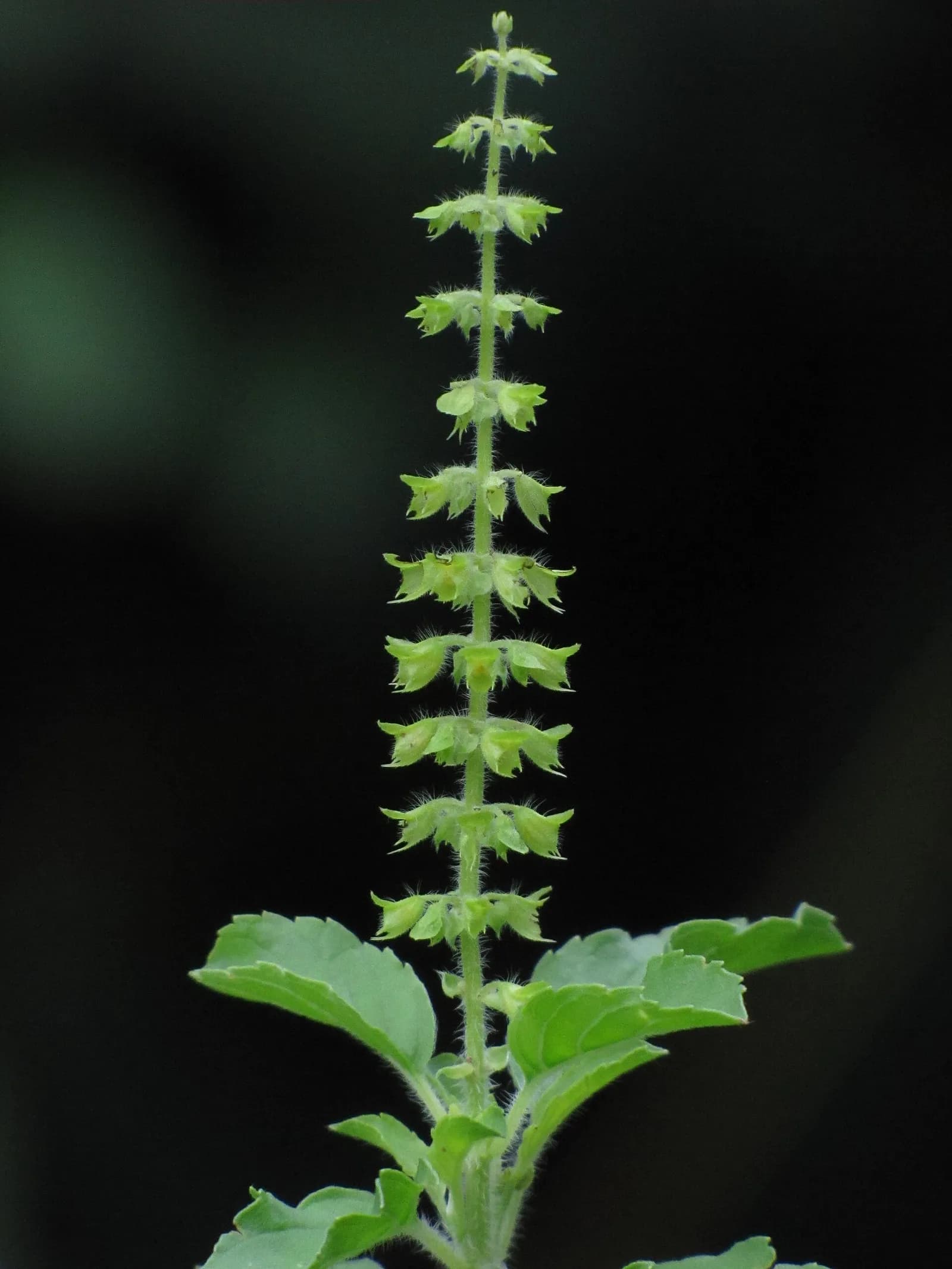
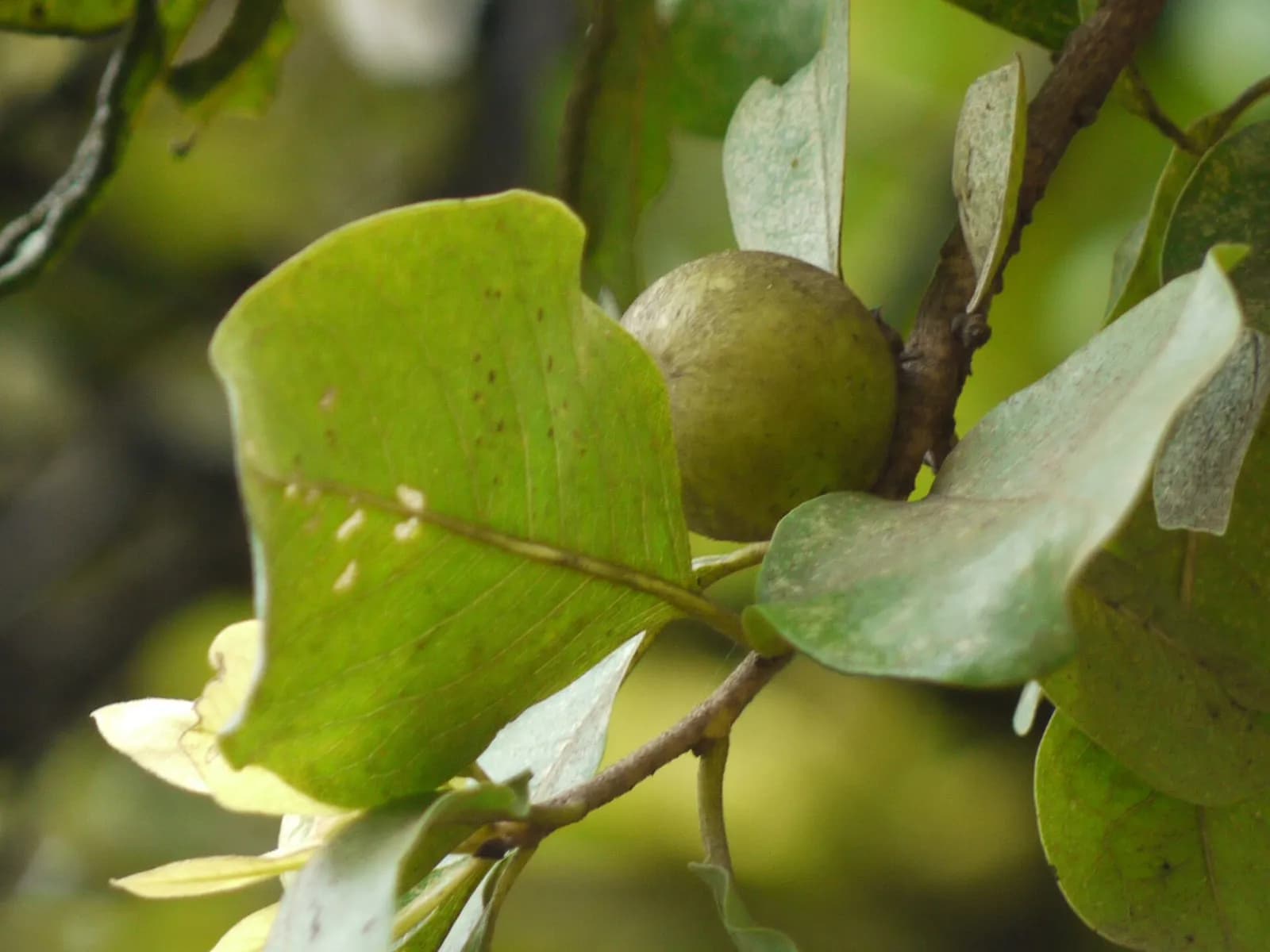
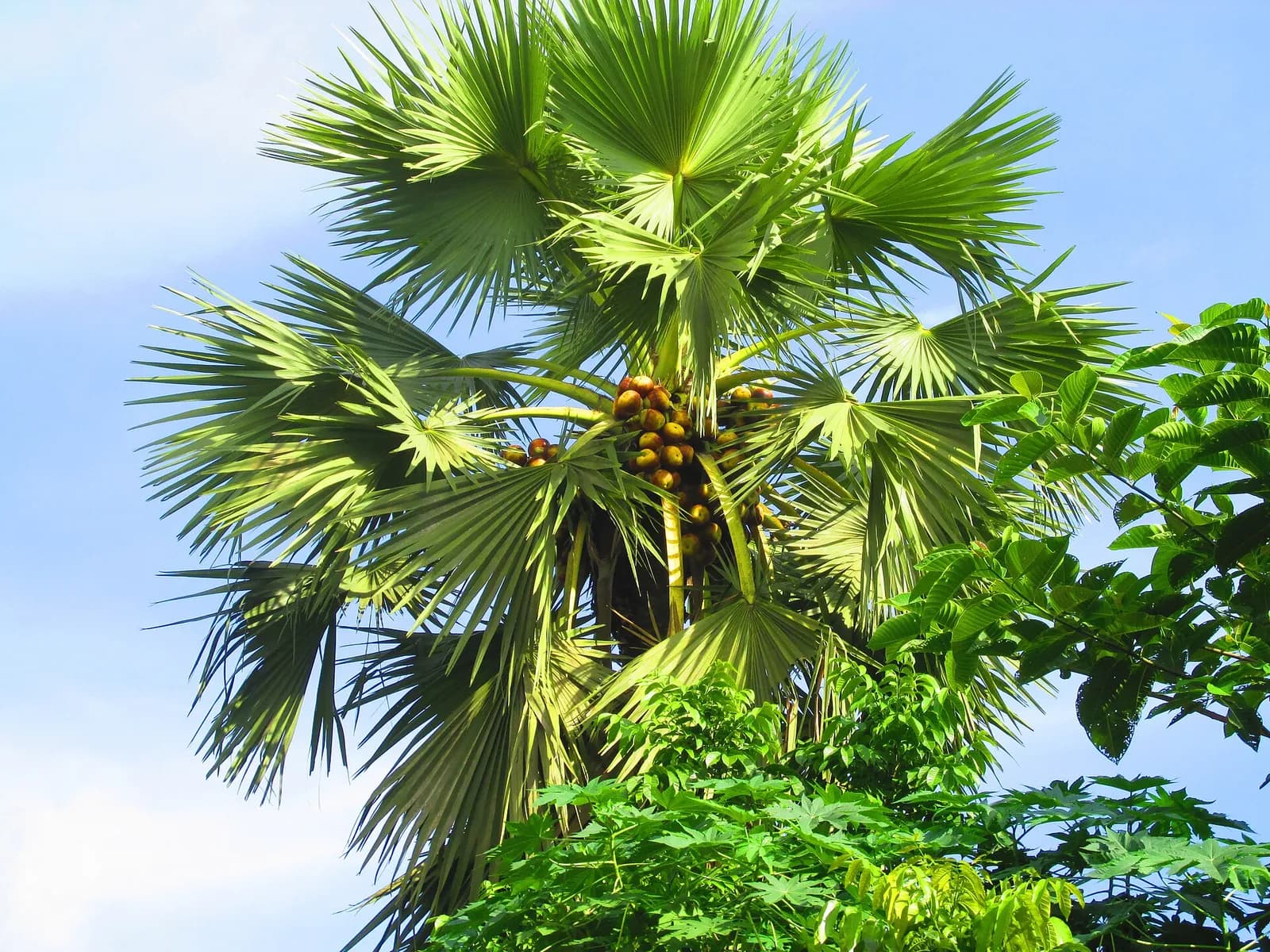
Sandalwood
In Vrindavana sandalwood is everywhere. Its fragrant heartwood is ground into a cool paste, chandana, and with it are anointed the shoulders and chest of Krishna, dark as a thundercloud; with it are drawn the tilaka and the patterns on the cheeks; it is put into the chewed tambula. But sandalwood in Vraja is not an unguent only. It became a word for coolness as well: the body of Radha the poets call “cooler than sandal”, and the spring wind of love comes from the southern Malaya hills and carries the scent of their sandal forests. And the same tree speaks of separation: that very paste which cools at the meeting dries on the skin, in longing for the Beloved, like the ash of a funeral pyre.
Sandalwood in Vrindavana
Sandalwood in Vraja is coolness ground into a paste. In the heat of noon the friends of Krishna run off into the forest, gather fragrant substances there, grind them with water on the stones – and anoint His body. “In the forest of Vrindavana there is everything needed for enjoyment”, remarks Srila Sanatana Gosvami in the Brihad-bhagavatamrita, and sandalwood stands first in the list:
candanāguru-kasturī-kuṅkumair āhṛtair vanāt
dravyaiḥ su-gandhibhiś cānyaiḥ piṣṭair aṅgāny alepayat
“He anointed the limbs of His body with a paste of sandalwood, aguru, kunkuma, musk and other fragrant substances brought from the forest.”
The paste here does not only cool the dark skin, it also draws. Grinding sandalwood with saffron and musk, the gopis trace on Krishna’s throat, forehead and cheeks “wondrous designs”1 – the very patterns with which the Deities are adorned to this day.
Coolness and the Heat of Love
When a poet needs to say that the body of Radha is coolness itself, he takes sandalwood. In Srila Rupa Gosvami’s Lalita-madhava Krishna, drinking in the beauty of His Beloved, says to Her:
nirdhūtāmṛta-mādhurī-parimalaḥ kalyāṇi bimbādharo
vaktraṁ paṅkaja-saurabhaṁ kuharita-ślāghā-bhidas te giraḥ
aṅgaṁ candana-śītalaṁ tanur iyaṁ saundarya-sarvasva-bhāk
tvām āsādya mamedam indriya-kulaṁ rādhe muhur modate
“Your red lips are sweeter than nectar, Your face gives off the fragrance of a lotus, Your words are more pleasing than the song of the cuckoo, and every part of Your body is cooler than sandalwood paste. Enjoying You, O Radha, all My senses are again and again seized with delight.”
But this coolness has its reverse side. In separation everything that cooled begins to burn: the moonlight, and the sandalwood paste. In Srila Jayadeva Gosvami the separated Krishna, whom Kamadeva showers with the arrows of love, taking Him for the ascetic Shiva, fights back, and in His words sandalwood is no longer coolness but ash:
hṛdi bisa-latā-hāro nāyaṁ bhujaṅgama-nāyakaḥ
kuvalaya-dala-śreṇī kaṇṭhe na sā garala-dyutiḥ
malayaja-rajo nedaṁ bhasma priyā-rahite mayi
prahara na hara-bhrāntyānaṅga krudhā kim u dhāvasi
“This is not a serpent on My chest but a garland of lotus stalks; the blue on My throat is not poison but a wreath of blue lotuses; and this is not funeral ash upon Me – it is Malayan sandalwood paste, dried to dust by the heat of separation from My Beloved. Do not strike Me, taking Me for Shiva, O Ananga – why do you chase Me in such fury?”
The Malaya are the southern hills overgrown with sandal forests; hence sandalwood is called malayaja, “born on the Malaya”. The wind from there comes to Vraja cool and fragrant, and in spring that same wind fans the flame of love. With this wind Srila Jayadeva Gosvami opens the Vrindavana spring:
lalita-lavaṅga-latā-pariśīlana-komala-malaya-samīre
madhukara-nikara-karambita-kokila-kūjita-kuñja-kuṭīre
viharati harir iha sarasa-vasante
nṛtyati yuvati-janena samaṁ sakhi virahi-janasya durante
“The Malayan breeze, grown yet more tender from caressing the graceful clove creepers; the forest bower full of the humming of bees and the calling of cuckoos; and here, dear friend, in the midst of the intoxicating spring, Hari takes His pleasure, dancing with the young maidens – while for one who is in separation this spring is unbearable.”
The cool sandal wind, the lavanga creepers, the humming of bees: at the hour of meeting all this is bliss, and in separation a torment. It is only poetry that calls the clove a creeper – the tree itself is never one, and the liberty here is the same as with the champaka creeper.
Worship
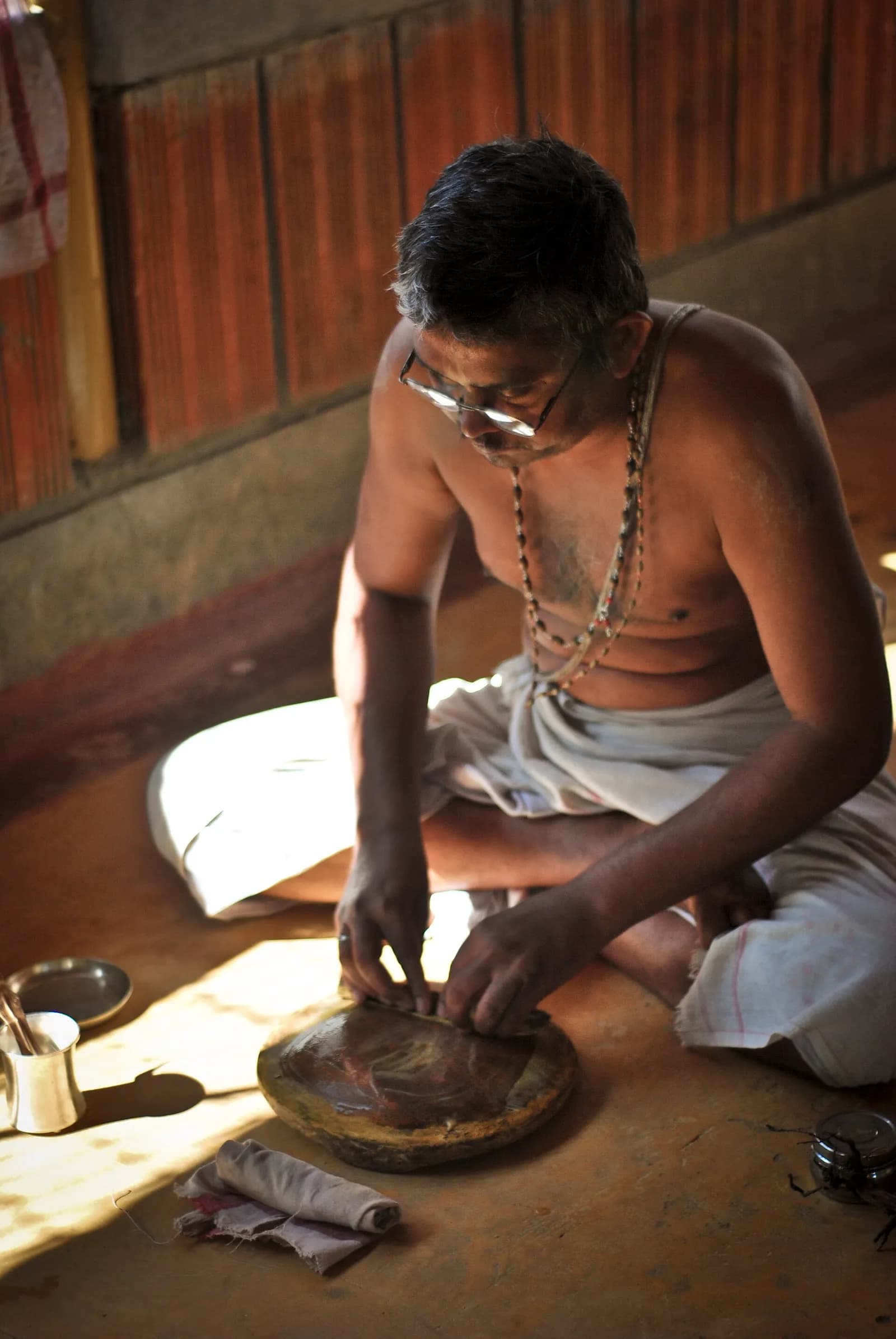
The Deity is anointed with that same paste: in worship sandalwood is the chief unguent. The Hari-bhakti-vilasa of Srila Sanatana Gosvami, a book on service, calls it the most auspicious of fragrances and the best unguent for the body of the Lord. True, in the same place it sets aguru above sandalwood, and kunkuma above aguru2. Sandalwood is also among the eight fragrant powders dear to Hari, and with it begins the preparation of the gandha – the fragrant paste which is applied from a conch with a leaf of tulasi.
Not every sandalwood will do. The best is held to be malayaja, the sandalwood of the Malaya hills. And what to replace it with, if there is no malayaja, the same book decides differently in different places: in one the wood of the kadamba is named, in another the devadaru, the Himalayan cedar3. As for its crimson namesake, the red sandalwood, these texts do not advise offering it to the body of the Deity: in the rite the two sandalwoods have different services – the white one cools and gives fragrance, the red one colours.
The Sandalwood of Kubja
In Mathura, on the way of Krishna and Balarama to the arena of Kamsa, there stood by the road the hunchbacked Kubja, a maidservant of Kamsa nicknamed Trivakra, “bent in three places”. Her trade was to prepare unguents for the king. Seeing the young Krishna, she offered Him what she was keeping for her master:
dāsy asmy ahaṁ sundara kaṁsa-sammatā
trivakra-nāmā hy anulepa-karmaṇi
mad-bhāvitaṁ bhoja-pater ati-priyaṁ
vinā yuvāṁ ko 'nyatamas tad arhati
“O beautiful One, I am a maidservant of Kamsa, valued by him for the unguents I prepare; I am called Trivakra. But who, besides You two, is worthy of my unguents, so beloved of the lord of the Bhojas?”
Her ointment was sandalwood paste with four fragrances in equal parts: saffron, musk, aguru and tagara. It was made for Kamsa, but, by Kubja’s own words, only the Two were worthy of it. She anointed the body of Krishna with sandalwood, and He in return took her by the chin, pressed on her feet – and her three bends straightened: the hunchback became a slender beauty. So the sandalwood prepared for a king went to the One for whose sake it was worth preparing at all.
Chaitanya Mahaprabhu
In Navadvipa, five centuries later, sandalwood was laid on the golden body of Sri Chaitanya Mahaprabhu: before kirtan He anoints Himself with sandalwood paste and puts on sandalwood bracelets. And in Puri, in His last years, Mahaprabhu bade His companions sing that very stanza of Srila Jayadeva Gosvami about the Malayan wind and the clove creepers, “lalita-lavaṅga-latā” – and Himself danced to it as He walked with them through the garden.
Ayurveda
For Ayurveda white sandalwood is what it is for the poets: coolness. Its taste (rasa) is bitter and sweet, its nature (virya) is shita, cooling, the after-taste (vipaka) pungent; it quenches pitta and kapha. That is why it is given for heat of every kind: for burning, thirst, fever, skin diseases. The heartwood ground into a paste is applied to the body to still the swelter, and sandalwood oil has been used from of old for inflammations and skin diseases; it is counted too among the varnya – the remedies that “improve the colour of the skin”. Only it is not to be confused with red sandalwood: under one name are two trees of different families. All they share is the fame of cooling remedies, and nothing more.
Botany
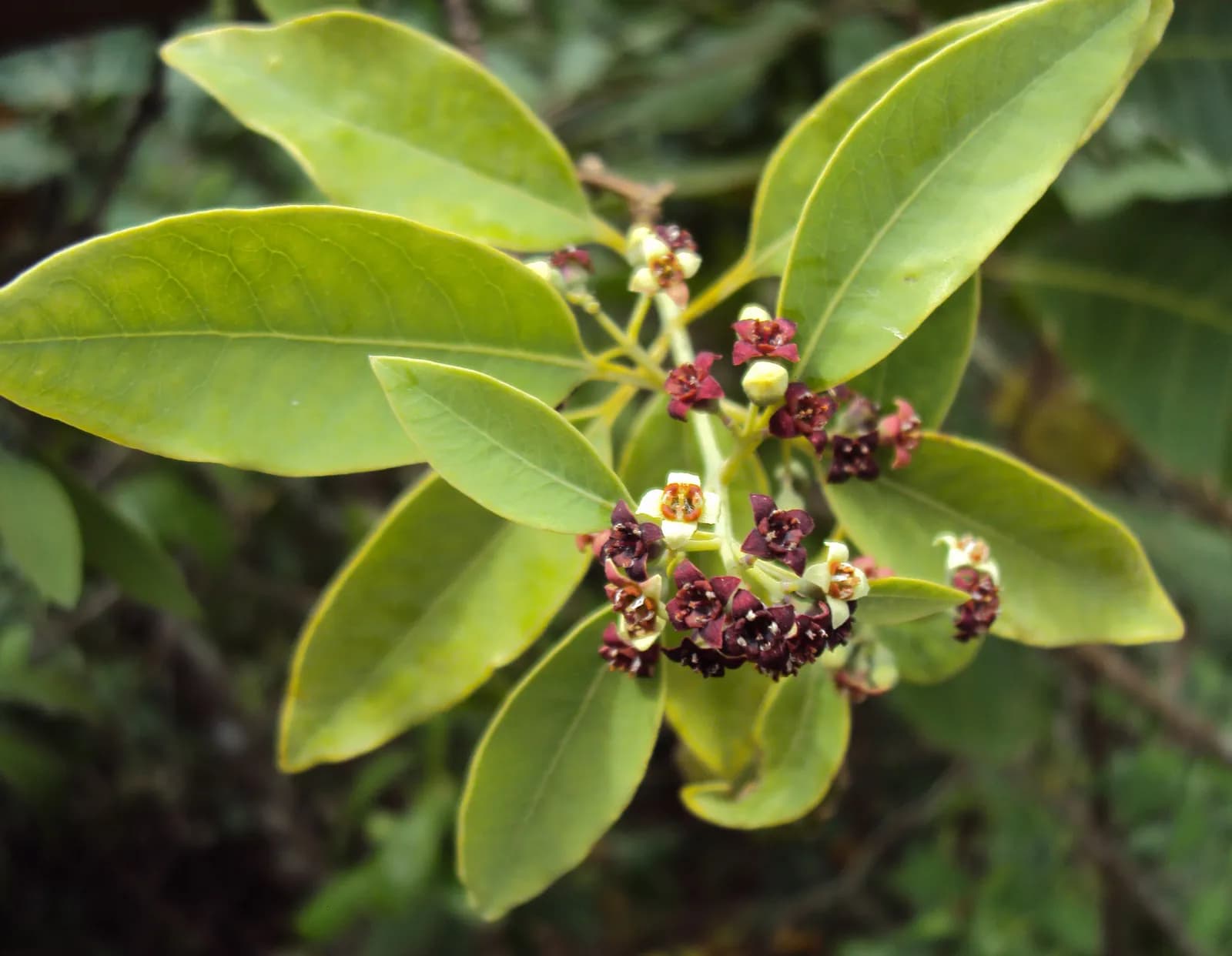
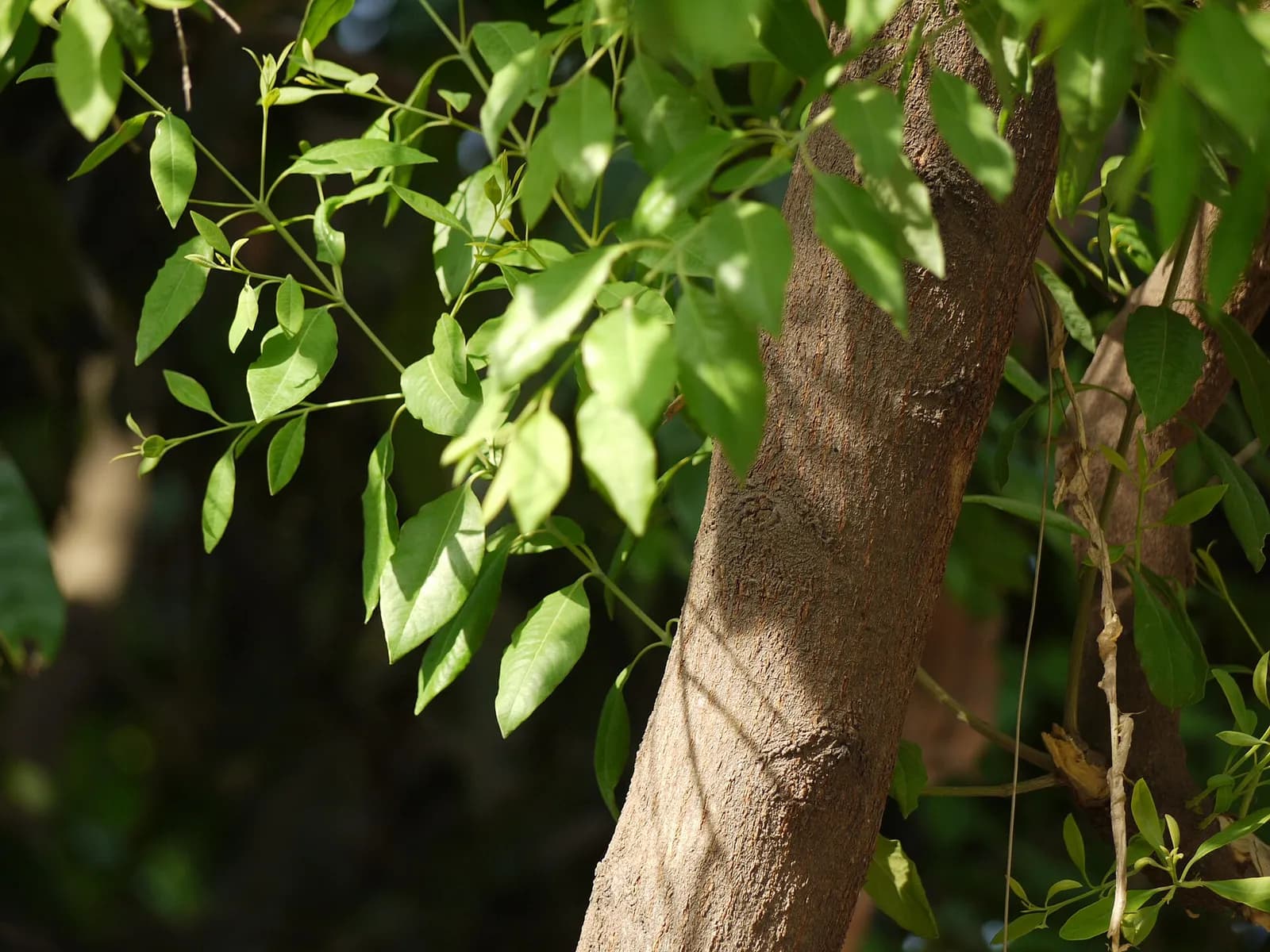
White sandalwood is Santalum album of the sandalwood family (Santalaceae), kin of the European mistletoe. In the botanical sense the true sandalwood is this one, and not the crimson Pterocarpus. The tree is evergreen and very slow-growing, its age up to a hundred years; in Australia it barely reaches four metres, while in India it rises to twenty. The bark of young trees is smooth and reddish-brown, in old ones almost black and in deep fissures through which the red shows. The leaves are thin and set in pairs, glossy green above and glaucous beneath; the flowers are small, only 4–6 mm, gathered in panicles, and from yellowish they turn red-brown; in India they appear in March and April. The tree lives half at another’s expense: with root-suckers it grips the roots of its neighbours and draws water and nourishment from them. Its chief thing is in the trunk: the heartwood on a fresh cut is pale yellow and has no smell at all, and with the years it darkens to yellow-brown and gathers its fragrance – noticeable after ten years, in full strength by twenty. The outer layer of the trunk, the sapwood, stays white; in distilling the oil it is not separated out. For that wood and for the oil from it sandalwood was felled for centuries, and the wild tree is now under protection. The chief sandal forests are in Karnataka and the neighbouring districts of Maharashtra, Tamil Nadu and Andhra Pradesh.
Sources
We build Vrajapedia together – with stories, verses, photographs and parikrama experience. If you know something more, tell us and it will appear on this page.