Tamarind
The tamarind is a sour and unremarkable tree. You will not meet it in the poetic lists of the flowering groves of Vrindavana beside the kadamba, the ashoka and the jasmine. The fame of the tamarind lies elsewhere. On the bank of the Yamuna, by Chira-ghat, there stood an old tamarind that had grown there in the days of Krishna’s pastimes. Under it, five hundred years ago, Sri Chaitanya Mahaprabhu sat and repeated the holy name. The place is called by that very fact – Imli-tala, “under the tamarind”. And the sour pulp of its fruit was put to use in the kitchen of Vraja: with it were soured the dishes prepared for Krishna. It entered the lila not by beauty but by taste and shade.
In the Kitchen of Vraja
In the descriptions of Vrindavana the tamarind does not appear. The poets and commentators list the trees of these groves at length, from the mango and the kadamba to the sandalwood and the banyan, but the tamarind does not get into them. It is not one of those trees that give shade to trysts or drop their flowers at the feet of the Divine Couple. Its work was found in the kitchen.
The sour pulp of the tamarind is one of the chief seasonings of the Indian table, and the kitchen of Vraja knew it well. Srila Krishnadasa Kaviraja Gosvami in the Govinda-lilamrita sets out in detail the midday feast which Srimati Radharani prepares with Her friends for Krishna. Among the dishes the tamarind is named too, and not as a sour addition to the pot but as a sweet delicacy of its own:
matsyaṇḍikā rasa-ciroṣita-pakva-ciñcā
dhātrī-rasāla-badarī śakalāni tadvat |
niṣkāsya bhos tvam iha manthanikākulebhyaḥ
kṛtvānanendumukhi kāñcana-bhājaneṣu ||
“And also, O moon-faced one, take out of the pots the ripe tamarind, amalaki, mango and jujube that have been steeping in sugar for many days, and lay them out on golden dishes.”
With him the tamarind is a seasoning as well: listing what gives dishes their sour taste, he puts it first. Tamarind, amrataka and sour mango give twelve shades of sourness, from a light tartness to a thick acidity1. The ripe fruit steeped in sugar, and the sour juice in a hot dish: so an unremarkable tree entered the food of Krishna.
Imli-tala: the Tamarind Under Which Chaitanya Sang
One tree made the tamarind famous in Vraja. When Sri Chaitanya Mahaprabhu came to Vrindavana and day after day went round its holy places, He settled into an order of His own. In the mornings He bathed at Chira-ghat on the Yamuna and went to rest under a tamarind nearby2. And the tree was old:
kṛṣṇa-līlā-kālera sei vṛkṣa purātana
tāra tale piṅḍi-bāndhā parama-cikkaṇa
“This tamarind tree, Tentulitala, was very old, it had been growing there since the days of Lord Krishna’s pastimes. Beneath the tree there was a platform that shone brightly in the sun.”
Tentuli is the Bengali name of the tamarind; in Hindi it sounds as imli, and so the place is called Tentuli-tala, and Amli-tala, and Imli-tala, “under the tamarind”. The Yamuna flowed nearby, a cool wind blew, and the Lord sat in the shade of the old tree. Here He sang:
teṅtula-tale vasi' kare nāma-saṅkīrtana
madhyāhna kari' āsi' kare 'akrūre' bhojana
“Under this old tamarind tree Sri Chaitanya Mahaprabhu used to repeat the holy name of the Lord. And at midday He returned to Akrura-tirtha to take His meal.”
Soon the people of Akrura-tirtha learned of Him, crowds gathered, and singing in peace was no longer possible3. But the place remained honoured: under this tree, which had stood here already in the days of Krishna, Chaitanya Mahaprabhu sang.
Beyond Vraja
Srila Sanatana Gosvami in the Hari-bhakti-vilasa, a book on service, enters the tamarind in the list of havishya, the simple pure food for those who keep a vow: it is named there beside the haritaki, the amalaki, the banana and the orange4. Sour, yet blameless for a fast.
Outside the Vaishnava circle the tamarind has another kind of fame. The Kularnava Tantra counts it among the nine kula-vrikshas – the trees where the yoginis dwell: one does not eat off the leaves of such trees, and the trees themselves are especially honoured. And in southern India the tamarind passes for a tree where ghosts live: it stands in the list of plants which people connect with witchcraft and the evil eye. One tree, and three kinds of fame: for a Vaishnava a food permitted in a fast, for the tantrics a dwelling of yoginis, in southern India a haunt of ghosts.
Ayurveda
Ayurveda calls the tamarind amlika or tintidi and defines it first of all by its taste – the sour one (amla). According to the Charaka-samhita it is light (laghu) and “not very hot”, pacifies vata and pitta and binds; it is used for disorders of digestion (grahani), for piles and for poisoning by strong drink5. The pulp of the fruit goes both into food and into medicinal preparations, and in the alchemy of rasa-shastra the tamarind is counted among the sixty-seven mahaushadhi – the substances with which mercury is treated. Its acid is so strong that with this same pulp people clean tarnished copper, brass and bronze vessels and temple lamps.
Botany
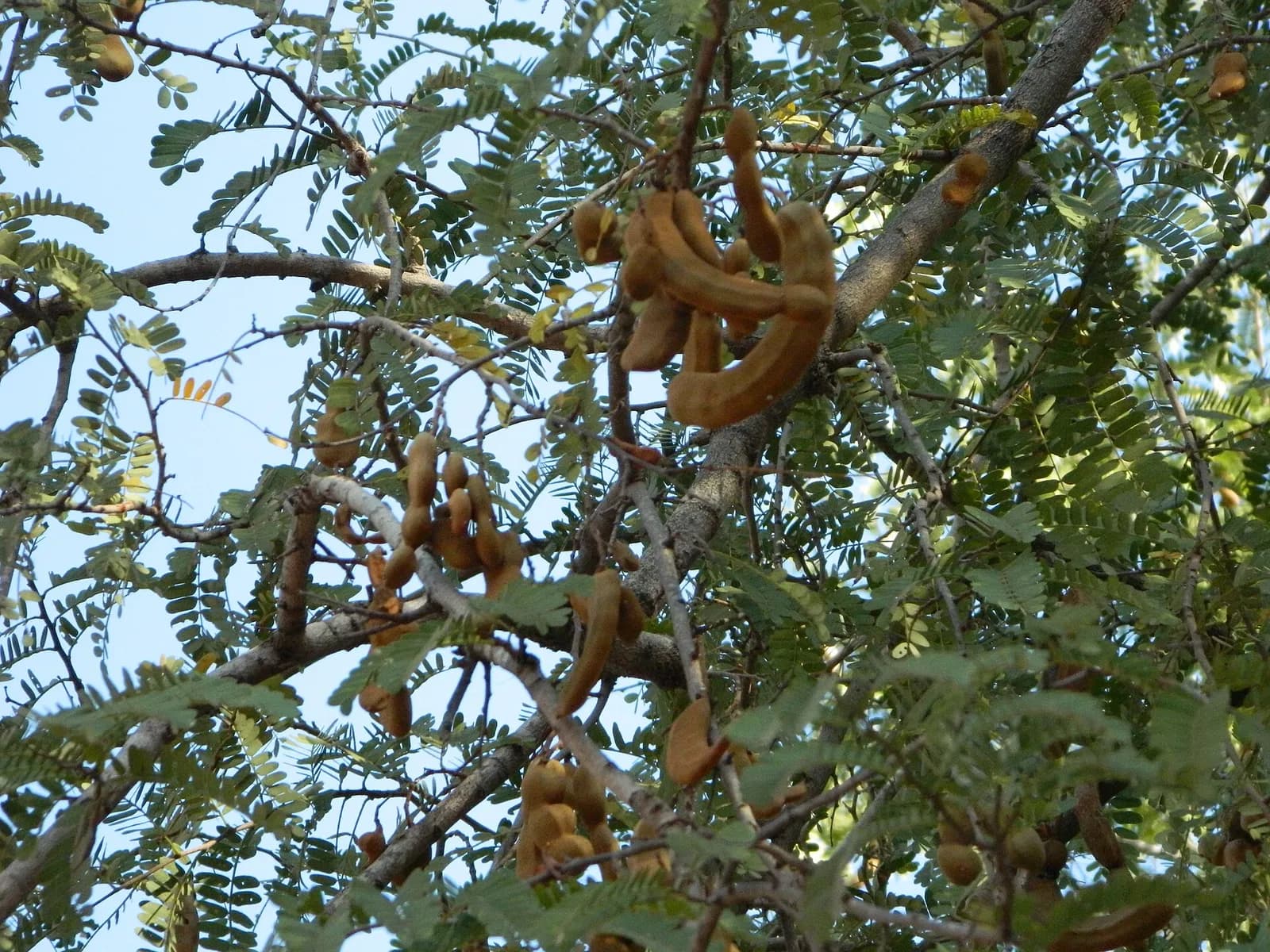
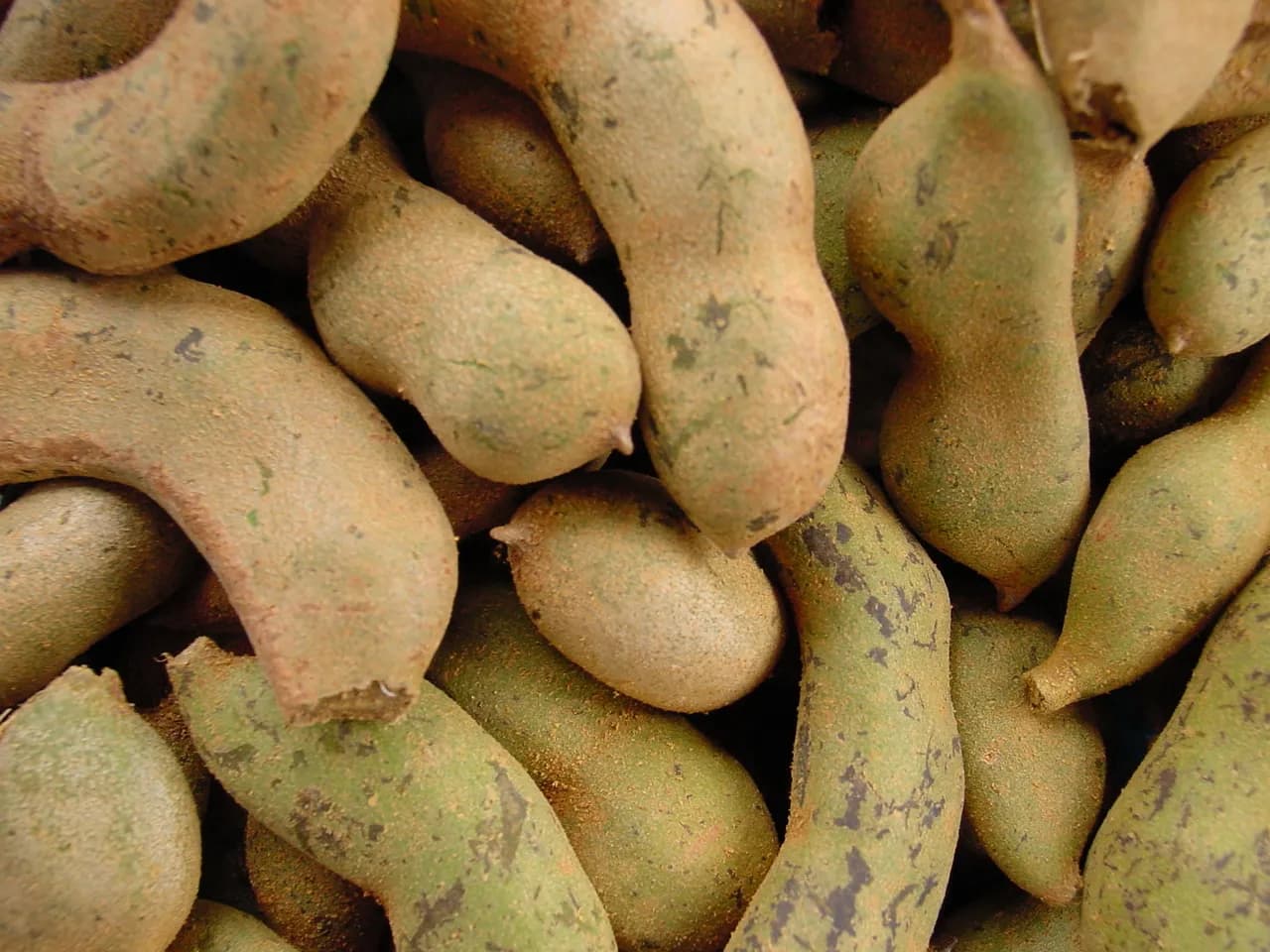
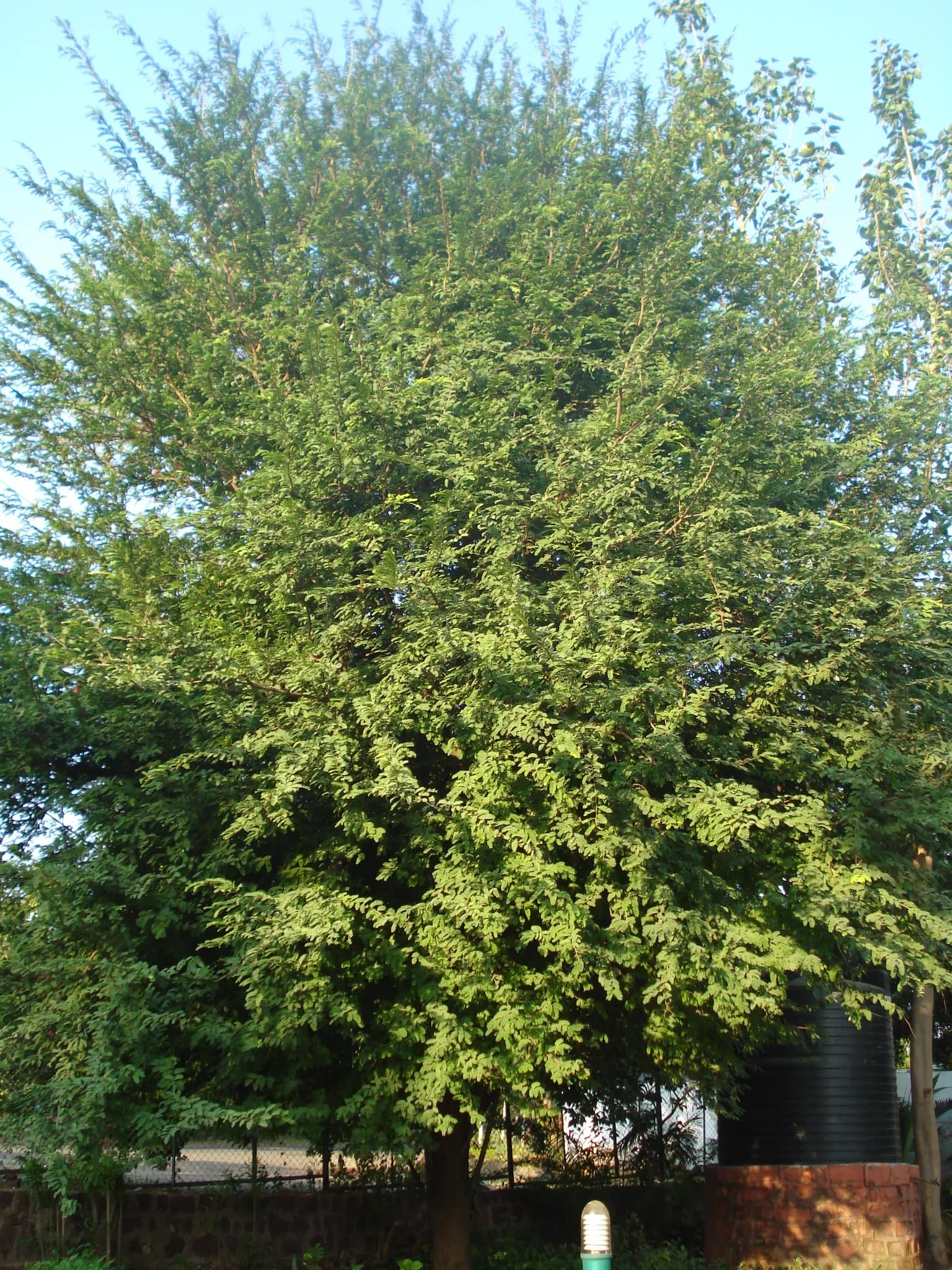
The tamarind is Tamarindus indica, the only species of its genus, of the legume family (Fabaceae). It is a tall evergreen tree with a short thick trunk, drooping branches and a dense dome-shaped crown; usually it is no more than fifteen metres, though some grow to thirty. The leaves are pinnate, about 25 cm long, of ten to eighteen pairs of small oblong leaflets. The tree keeps its foliage all year round and only in the driest places sheds it for a short while in the heat. The tamarind blossoms with small pale yellow flowers veined with purple or red, gathered in drooping racemes. The fruit is a “sausage” pod of 5 to 15 cm; under the brittle shell is a fibrous pulp, at once sweet and very sour, and eight to ten hard seeds. The tree comes from tropical Africa, but it settled in India so long ago that it became native here: it has Sanskrit names, and a name of its own in Hindi – imli. And the word “tamarind” itself came into the European languages from the Arabic tamr hindī – “the Indian date”.
Sources
We build Vrajapedia together – with stories, verses, photographs and parikrama experience. If you know something more, tell us and it will appear on this page.