Sthala-padmini (the Land Lotus)
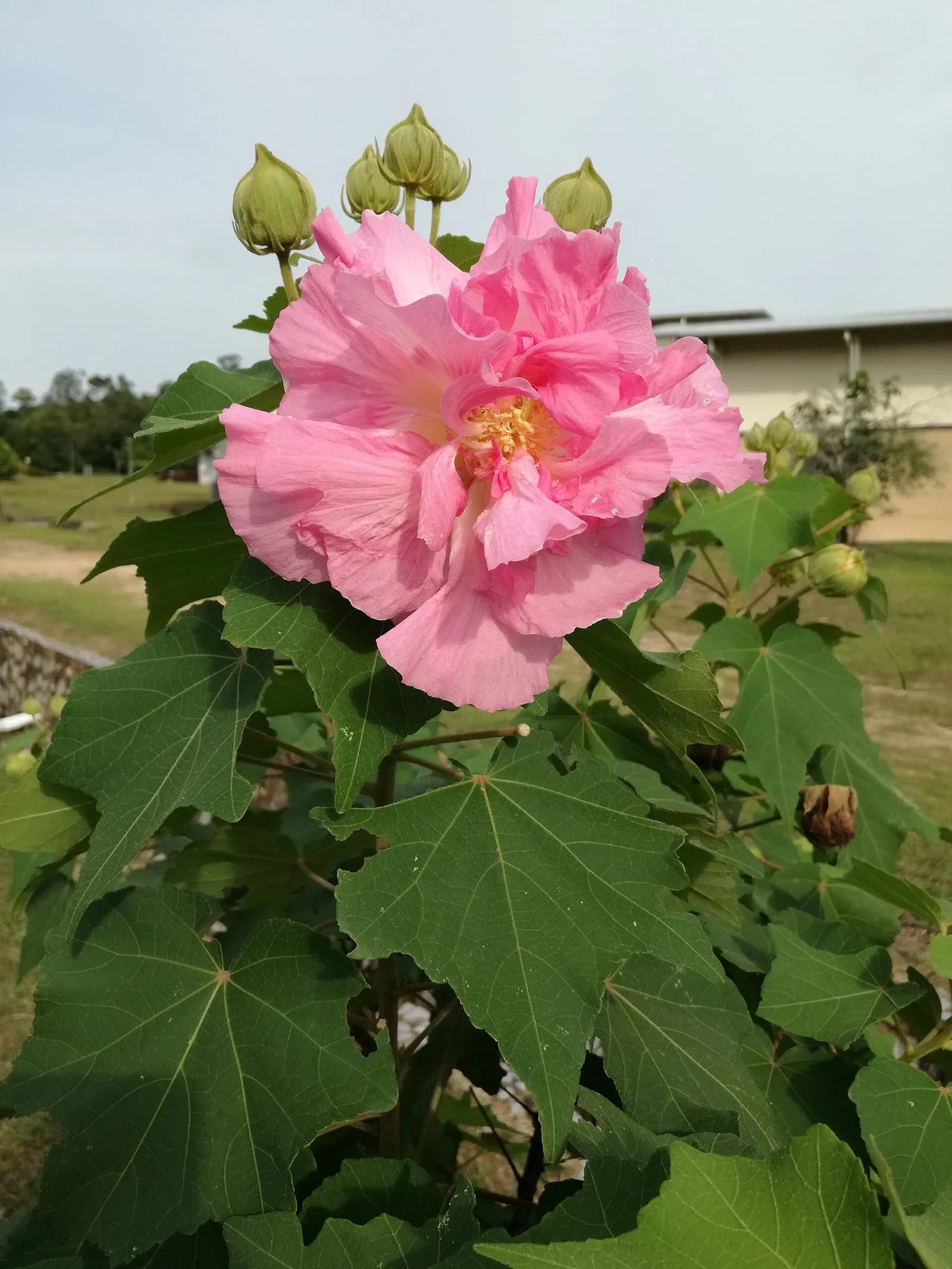
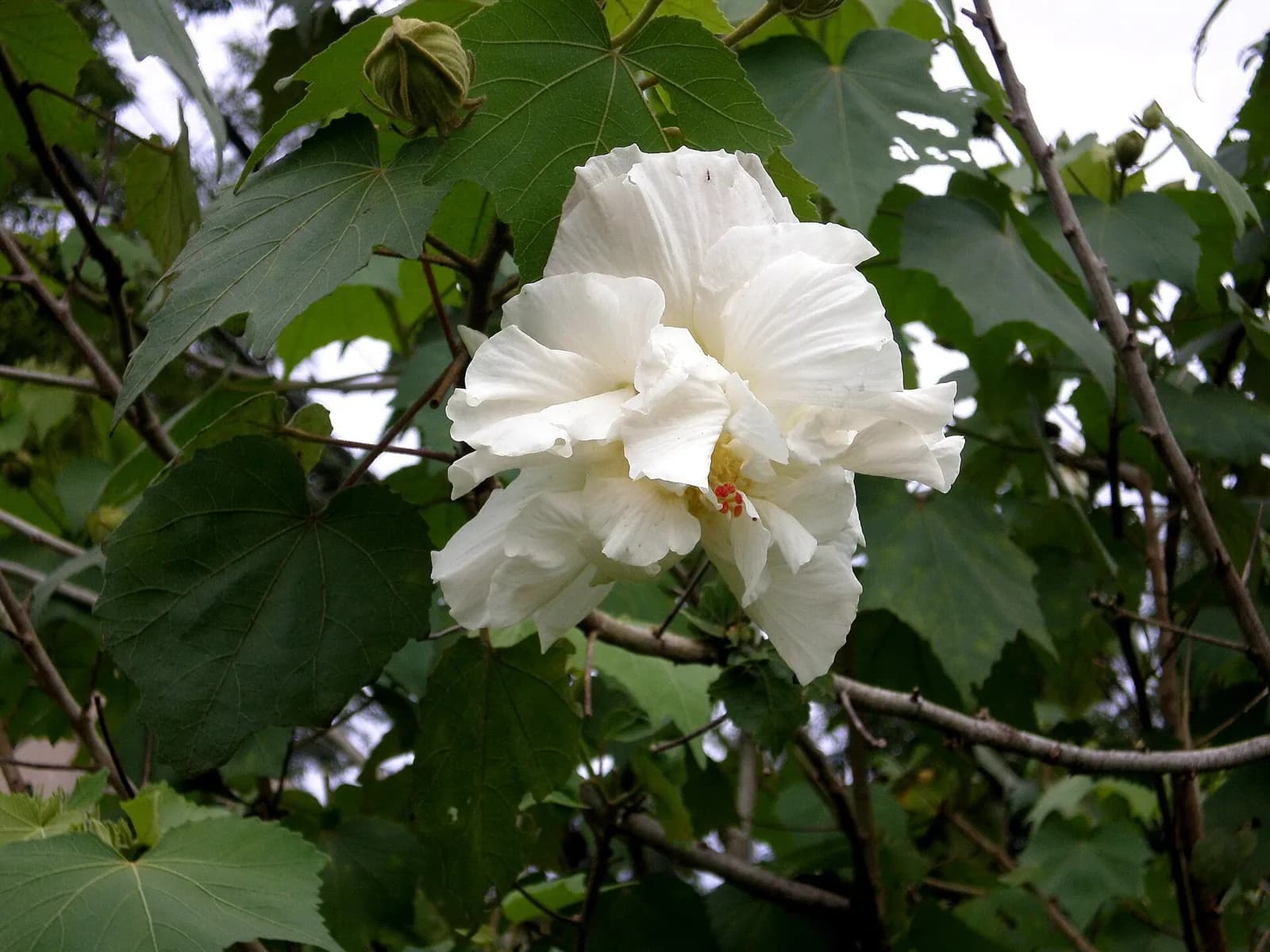
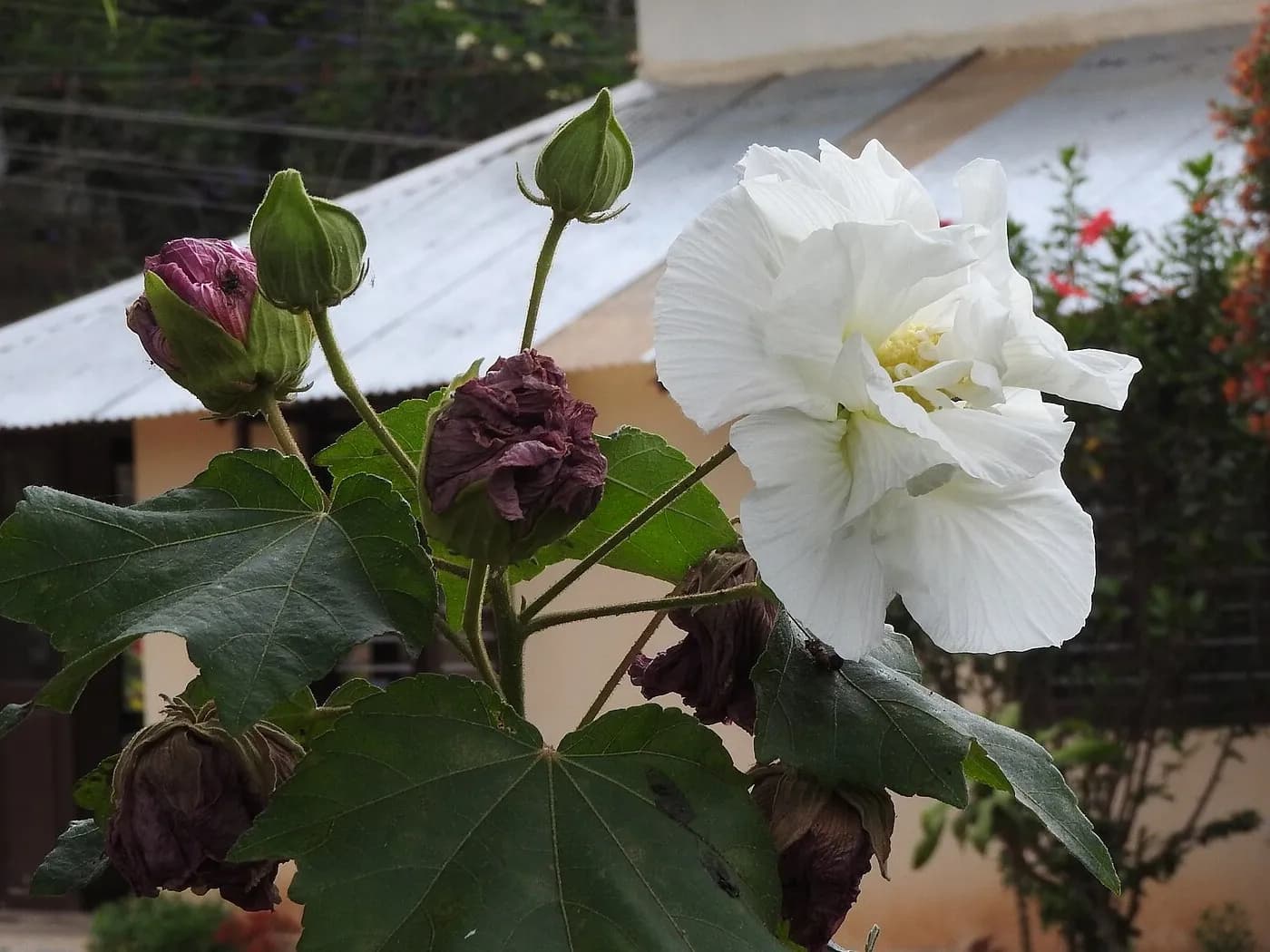
A flower that reddens towards evening: in the morning it opens pure white, by midday it turns pink, and by sunset it fills with deep scarlet. Sanskrit calls it sthala-padma or sthala-kamala – “the land lotus”: a lotus that grows not on water but on dry ground. The poets of Vraja gave it to the feet of Radha and Krishna: nothing in Vrindavana is more tender than its petals, and its evening crimson they likened to the scarlet lac on those feet.
The Land Lotus in Vrindavana
The feet of Radha and Krishna have long been called lotus feet – padambuja. But the water lotus stays in its pond, while the poets of Vraja have for these feet a flower that grows on the very ground they tread.
Srila Prabodhananda Sarasvati, listing what makes the eternal forest so charming, sets the land lotus in one row with the punnaga, the karavira, the kunda, the ashoka and the bakula – with those that bloom in every season, with ever new fragrances1.
In Srila Rupa Gosvami’s Ujjvala-nilamani there is a scene in which Krishna leads Radha through the forest and shows Her how the whole of Vrindavana serves Her alone. Every flower is given to a part of Her body, and He begins from below, with the feet:
sthala-kamalam alīnāṁ stauti gītaiḥ padaṁ te
rada-tati-mati-namrā vandate kunda-rājī |
adharam anubhajantī lambate bimba-mālā
vilasati tava vaśyā paśya vṛndāṭavīyam ||
“With the song of the bees the land lotus praises Your feet; the rows of jasmine bow before the rows of Your teeth; clusters of bimba serve Your lips. Behold – this whole wondrous forest of Vrindavana shines, obedient to You!”
The Feet That Shame the Flower
The order here is not accidental. The jasmine reaches upwards, to the teeth; the bimba hangs in a cluster towards the lips; and the land lotus, the lowest of them, remains at the feet and from there sings their praise in the voices of the bees. Out of the whole flowering retinue of Vrindavana Krishna sets this one at Radha’s feet.
Why this one is chosen is explained by Srila Jayadeva Gosvami. In the tenth canto of the Gita-Govinda Krishna appeases the angry Radha and asks for a small service: to let Him paint Her feet with scarlet lac. His argument is that same flower:
sthala-kamala-gañjanaṁ mama hṛdaya-rañjanaṁ
janita-rati-raṅga-para-bhāgam |
bhaṇa masṛṇa-vāṇi karavāṇi caraṇa-dvayaṁ
sarasa-lasad-alaktaka-rāgam ||
“O sweet-voiced One, Your feet put to shame the beauty of the land lotus and redden My heart… Speak but a word – and I shall cover them with shining scarlet lac.”
The Play of Colour: White Becomes Red
The whole play here is in colour. The land lotus reddens by itself towards evening – and Radha’s foot, rubbed with scarlet lac, repeats the same play of colour: white becomes red. Krishna says that Her feet “put to shame” the flower (gañjana), that is, they redden more brightly and more tenderly than it. And to cover them with lac means to complete the likeness, to paint them in that very evening crimson of the land lotus.
At the feet of Krishna Himself the verse has simply a lotus – the land one will be brought in by the commentator. In the Gopi-gita, the song of separation from the rasa-lila, the gopis fret that hard grass and thorns wound His soles when He goes off with the cows into the forest by day:
calasi yad vrajāc cārayan paśūn
nalina-sundaraṁ nātha te padam |
śila-tṛṇāṅkuraiḥ sīdatīti naḥ
kalilatāṁ manaḥ kānta gacchati ||
“Dear master, our beloved, when You leave the cowherd village, driving the cows before You, we go out of our minds with anxiety at the thought that sharp thorns, hard grass and the shoots of plants are hurting Your feet, which are more tender and beautiful than a lotus.”
Which lotus, the verse does not specify. Srila Vishvanatha Chakravarti does, and he does it as a quarrel between the gopis’ mind and their own reason. Reason soothes: if the forest is hard on Krishna, why does He go there Himself every day? The mind answers: “O foolish ones! Both His soles are more tender than even the land lotus, and in the forest there are stones, shoots of grass and gravel – how should they not suffer?” Reason does not give in: but He walks on the soft sand of the path. The mind: and do the cows graze on the path alone?2
Other Images
Since the flower is given to the feet, the poets of Vraja come back to it again and again. Srila Raghunatha dasa Gosvami in the Stavavali, describing how Radha walks, says that even the gait of a swan is coarser than Her step, and Her feet themselves are –
…mṛdutarā pada-dvandvaṁ phulla-sthala-kamala-vṛndād api…
“…the pair of Her feet is more tender than a whole host of opened land lotuses, and in generosity She surpasses a grove of wish-fulfilling trees.”
Bhrama: Mistaking in the Forest
The land lotus can also lead one astray. Srila Rupa Gosvami has a stanza about the bewilderment of love: “Krishna, Krishna! No, no, it is a tamal. The flute, the flute! No, no, it is the humming of bees. Gunja, gunja! No, no, these are bandhukas. Eyes, eyes! No, no, it is a pair of lotuses.” What these lotuses are, both commentators explain in the same way: beside a young tamal a bandhuka and a land lotus were in bloom3. But who is speaking here they read differently. In Srila Vishvanatha Chakravarti it is Radha Herself who sees the sapling, shows it to Lalita, cries out – and at once corrects Herself. In Srila Jiva Gosvami one gopi babbles in bewilderment while another corrects her.
And in the same poem of Srila Prabodhananda Sarasvati the land lotus describes the very radiance of the residents of the spiritual abode: some shine like molten gold, others cast the blue of the blue lotus, still others – with “the lustre of blossoming divine land lotuses”4. The same flower that is given to the feet conveys here the light of Their kingdom as well.
Ayurveda
Under the name sthala-padminī the flower entered the Sanskrit medical books as well, and not one of them only: it is known to the Bhavaprakasha and the Kaiyadeva-nighantu, the Dhanvantari-nighantu and the Raja-nighantu (5.79). In the Bhavaprakasha it stands in the section of flowers, the pushpa-varga: it is counted among the medicinal flowers, not among the trees or the herbs.
Its taste (rasa) is pungent, bitter and astringent, its potency (virya) is anushna, slightly warm: neither burning nor cooling. Such a combination, according to Ayurveda, pacifies kapha and vata. The flowers, the leaves and the stem are all used – they are put into remedies for cough and shortness of breath, for inflammations and for difficult urination.
Botany
The land lotus of the verse of Vraja is Hibiscus mutabilis, the “changeable hibiscus”, the closest kin of the java hibiscus: both are of the genus Hibiscus, of the mallow family. The identification is confirmed by the commentator of the Gita-Govinda as well: analysing that very verse about the feet, Bhaktivedanta Narayana Gosvami calls the land lotus a hibiscus. In Hindi it is called sthal-kamal, in Bengali – sthal-padma. It is a deciduous shrub or a small many-stemmed tree of one and a half to five metres, with large palmately lobed leaves, softly downy underneath, and flowers of ten to fifteen centimetres. Its chief mark is in its name: mutabilis means “changing”. It changes colour in a single day: white in the morning, pink at midday, red towards evening. Red, the flower holds on the branch for several days more, and so on a single bush flowers of three ages burn at once. Scientists explain the change by the accumulation of red anthocyanin pigments: in a red flower there are three times more of them than in a pink one, and eight times more than in a white one. But for a poet it is enough that the flower, with no lac at all, turns red by nightfall.
Its homeland is not Indian: in the wild this hibiscus grows in southern and south-eastern China and on Taiwan, while India is counted by the botanical catalogues among the countries into which it was introduced. The flower with which the poets of Vraja described the tenderness of Radha’s feet is itself a newcomer to India.
Sources
We build Vrajapedia together – with stories, verses, photographs and parikrama experience. If you know something more, tell us and it will appear on this page.