Airavata-kunda
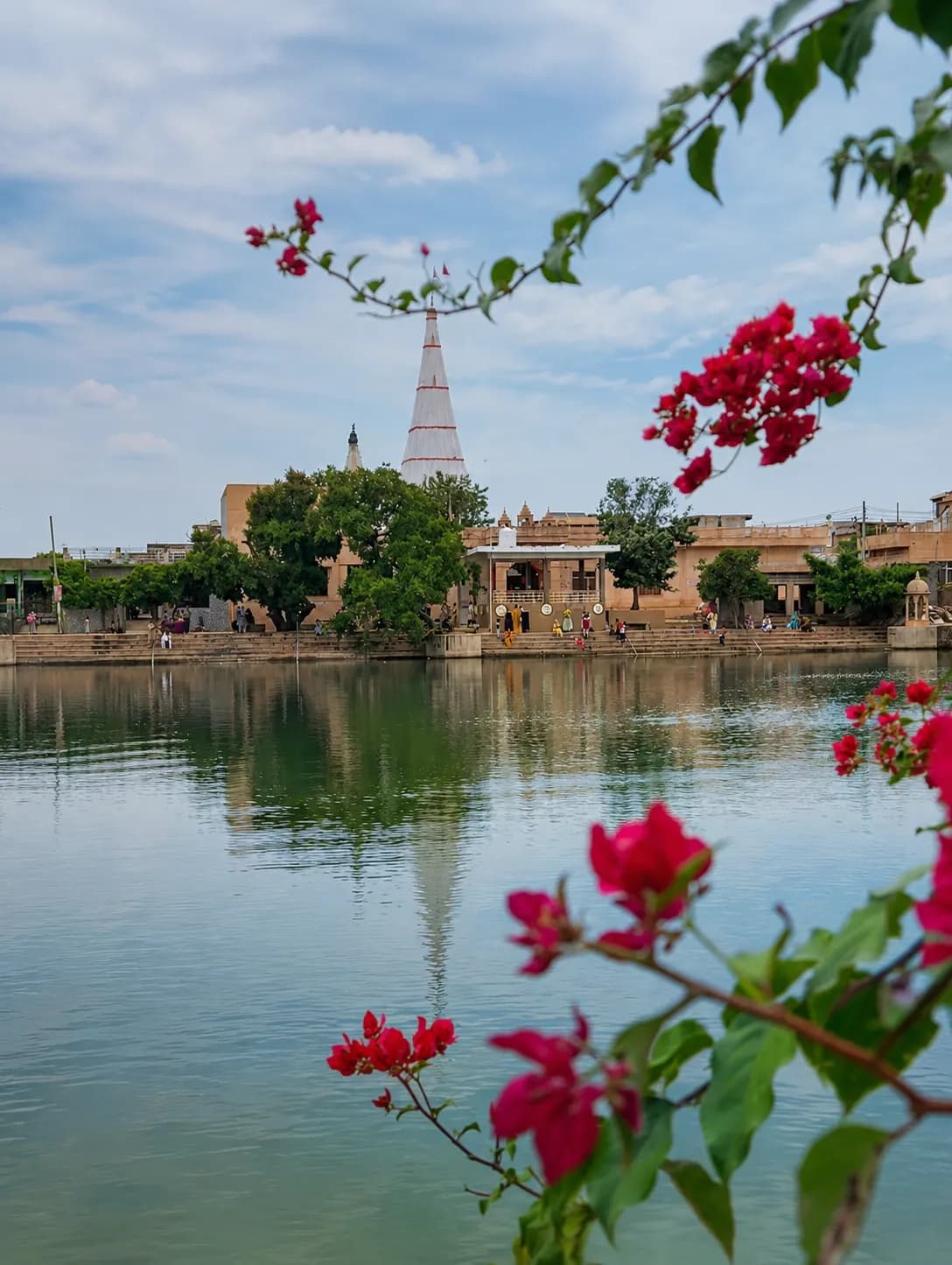
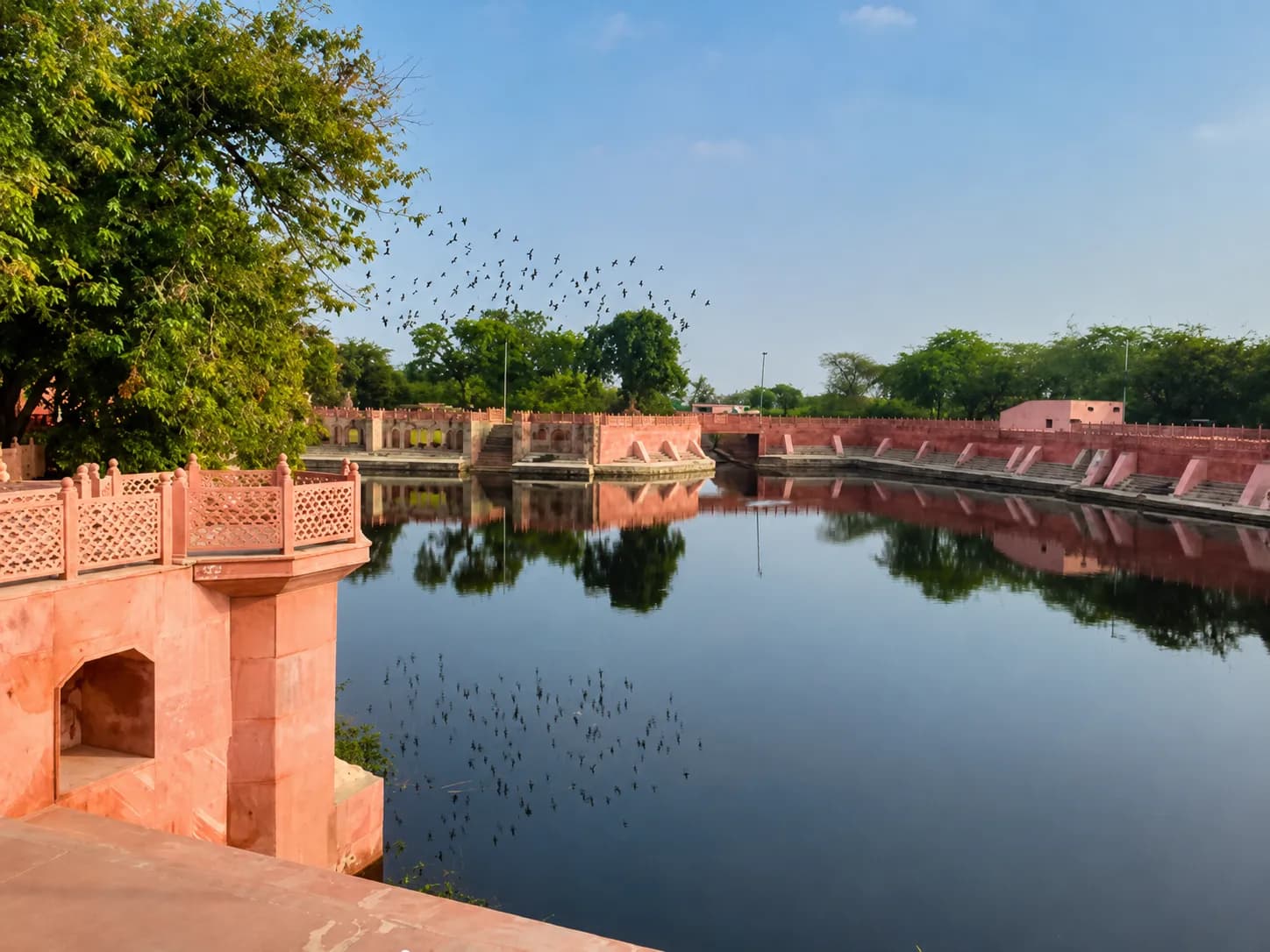
Airavata-kunda is a small lake at the eastern foot of Govardhan in the forest of Kadambavana, off the path of the inner parikrama. After the Govardhan lila Indra performed the bathing of Krishna at Govinda-kunda, and it was for this that his elephant Airavata brought here the water of the heavenly Ganga. And afterwards the charanamrita left over from the ceremony flowed down, among other places, into this same lake.
The Water for Krishna’s Abhisheka
It all began with an offence. Krishna persuaded the people of Vraja not to make their customary offering to Indra but to honour the hill of Govardhan, which feeds their cows. The offended king of the gods sent upon Vraja the clouds of universal destruction – and for seven days they poured torrents of rain, while Krishna held the lifted hill above the cowherds. When the rain ended, Indra understood whom he had dealt with and came to ask forgiveness. He did not dare to approach alone: Surabhi, the mother of cows, agreed to intercede for him.
Indra prostrated himself at Krishna’s feet, and the demigods arranged an abhisheka – a solemn bathing at which Krishna was proclaimed Govinda. The Srimad-Bhagavatam names the one who brought the water as well:
evaṁ kṛṣṇam upāmantrya surabhiḥ payasātmanaḥ |
jalair ākāśa-gaṅgāyā airāvata-karoddhṛtaiḥ ||
indraḥ surarṣibhiḥ sākaṁ codito deva-mātṛbhiḥ |
abhyasiñcata dāśārhaṁ govinda iti cābhyadhāt ||
“Having presented her request to Lord Krishna, mother Surabhi began to bathe the Lord with her milk, while Indra, obeying the will of Aditi and the other mothers of the demigods, bathed the Lord with the waters of the heavenly Ganga from the trunk of Airavata, who carries Indra on his back. Thus, in the presence of the demigods and great sages, Indra crowned Lord Krishna, the descendant of Dasharha, and gave Him the name Govinda.”
A single line – airāvata-karoddhṛtaiḥ, “lifted by the trunk of Airavata”. But a question arose for the commentators at once: how much water fits into a trunk?
The Jewelled Vessels
Srila Sanatana Gosvami answers this question in the Brihad-vaishnava-toshani: Airavata lifted the water with his trunk by means of jewelled vessels – otherwise, he writes, so much of the purest water could not have been fetched at once. Srila Jiva Gosvami in the Laghu-vaishnava-toshani repeats the same thought and refers to the Vishnu Purana, where the elephant carries water in a vessel, ringing a jewelled bell as he goes.
In the Gopala-champu this scene is shown entire: at a movement of Indra’s brow Airavata carefully raised his trunk and swiftly brought a jewelled vessel full of the water of the heavenly Ganga. And where this water was kept before the ceremony is told by Rajashekhara dasa: the lake was created by the elephant himself, and here too he kept the water for the abhisheka which Indra performed at Govinda-kunda, and this water came from the heavenly Ganga, known by the name Mandakini.
How many trunks Airavata had the sources count differently. The Garga-samhita gives four:
śuṇḍā-daṇḍaiś caturbhiś ca dyu-gaṅgā-jala-pūritaiḥ |
śrī-kṛṣṇaṁ snāpayām āsa matta airāvato gajaḥ ||
“With four trunks filled with the water of the heavenly Ganga, the intoxicated elephant Airavata bathed Shri Krishna.”
Padmalochana dasa in the Madhurya-dhama speaks of seven trunks and many diamond pitchers, and the Srimad-Bhagavatam of a trunk in the singular. The numbers differ, but they say one thing: there was a great deal of water.
Sivarama Swami adds the second half of the story as well. In the Nava-vraja-mahima he writes that the water left after the abhisheka was preserved in the lakes of Govardhan and became one more place of Krishna’s eternal pastimes, and Airavata-kunda is one of them.
The Ganga Water Purified by the Dust of Vraja
Sivarama Swami notes that after the abhisheka Krishna often grazed the cows in the shade of Kadambavana and played there with His friends. Wind and rain carried the dust from His feet into the lake, and sometimes Krishna bathed in it Himself. And then, in his words, the water of the heavenly Ganga in this kunda became as sacred as the water of the abhisheka itself, which had flowed down into the Manasi-Ganga.
To this he devoted a separate appendix in his book – a discussion of how the pure becomes purer. The Ganga is sacred because it washed the feet of Vamanadeva; the Yamuna is purer than the Ganga because it is connected with Krishna; and the dust from the feet of Krishna’s devotees purifies water more than the dust of Krishna’s own feet. And Kadambavana is full not only of this dust: the cows, the cowherd boys and the gopis add their own shades to the forest earth. The conclusion is this: the water of Airavata-kunda, like the water of many lakes of Vraja, is liquid chintamani, the stone that fulfils desires. Its touch is able to grant any spiritual perfection – in a bath, in a drop on the head, in a sip.
The Four Kundas of Kadambavana
Airavata-kunda is one of the four kundas of Kadambavana, and each marks its own moment of one and the same story. Sivarama Swami lists them as the most notable places of this forest, which lies between Manikandali and Jatipura.
There is no separate verse about Airavata-kunda itself. But Srila Raghunatha dasa Gosvami in the Vraja-vilasa-stava glorifies the whole grove in which it lies:
sīri-brahma-kadamba-khaṇḍa-sumano-rudrāpsaro-gaurikā |
jyotsnā-mokṣaṇa-mālyahāra-vibudhārīndra-dhvajādy-ākhyayā |
yāni śreṣṭha-sarāṁsi bhānti parito govardhanādrer amū |
nīḍe cakraka-tīrtha-daivata-giri śrī-ratna-pīṭhāny api ||
“I glorify all the best lakes and ponds around the hill of Govardhan – Baladeva-kunda, Kadamba-khanda, Kusuma-sarovara, Rudra-kunda, Apsara-kunda, Gauri-tirtha, Chandra-sarovara, Rina-papamochana-kunda, Malyahara-kunda, Vibudhari-kunda and Indra-dhvaja-vedi, and also Chakra-tirtha, Daiva-giri and the various jewelled pavilions.”
Airavata-kunda Today
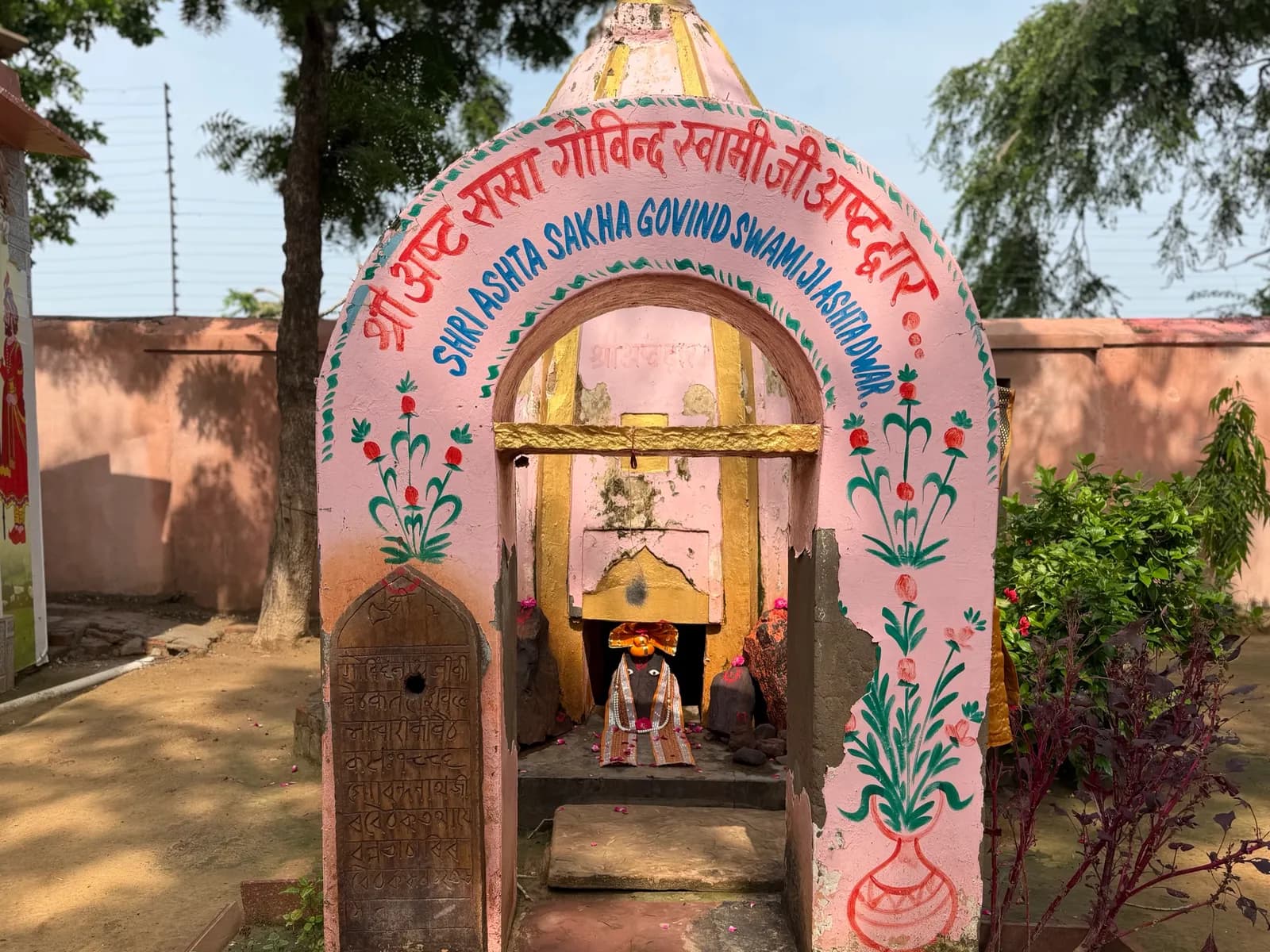
The kunda is easy to miss. Rajashekhara dasa warns: fifty metres off the path, and you will not notice it. Recently the Vaishnavas restored it. Padmalochana dasa writes that there is now always water in the lake and a wall has been raised around it; according to pilgrims it is low, about a metre.
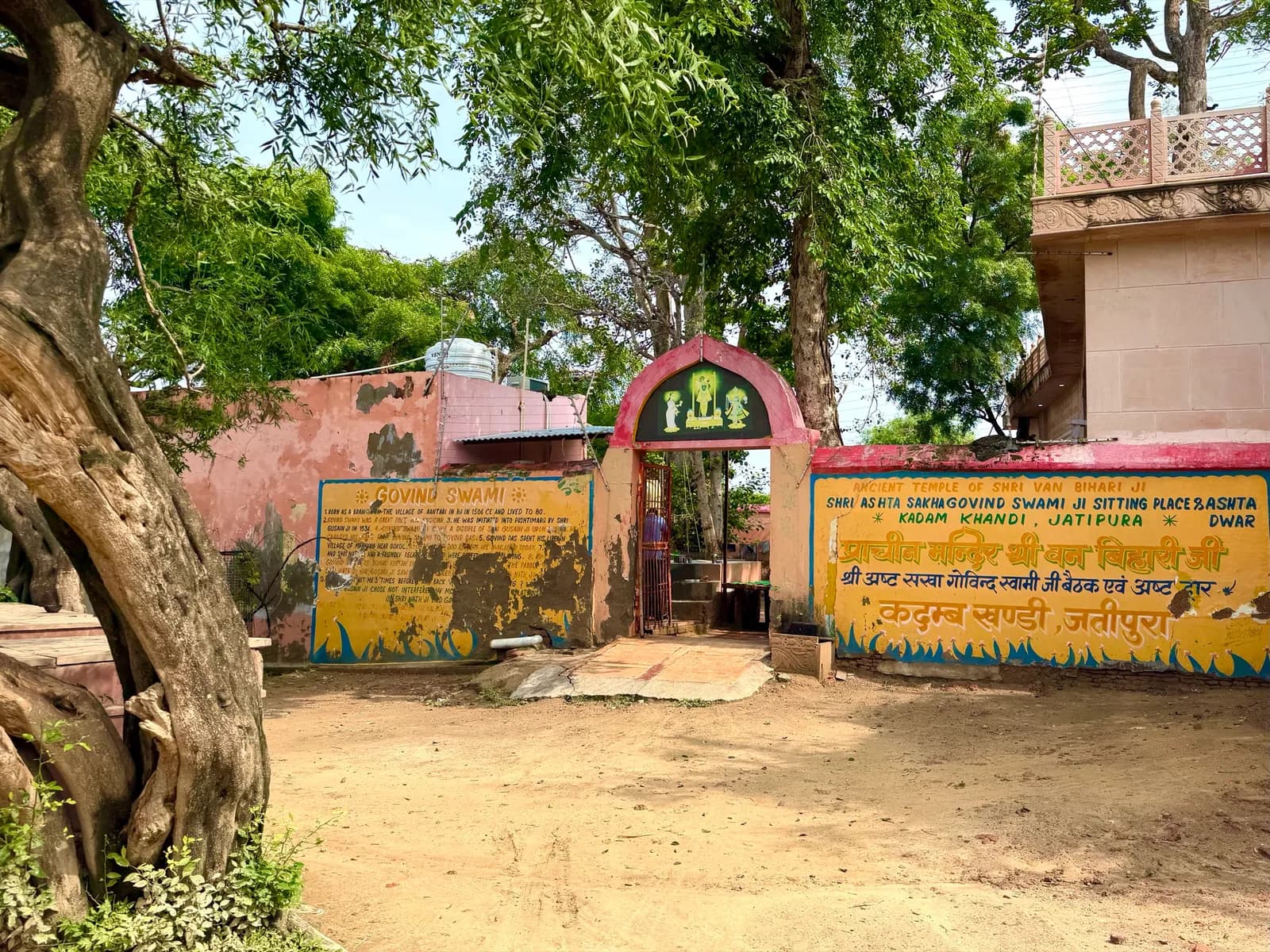
Next to the kunda is the samadhi of Govinda Swami, a poet of the ashta-sakha. So are called the eight poets of the sampradaya of Vallabhacharya, who are held to be the closest friends of Krishna come in the Kali-yuga.
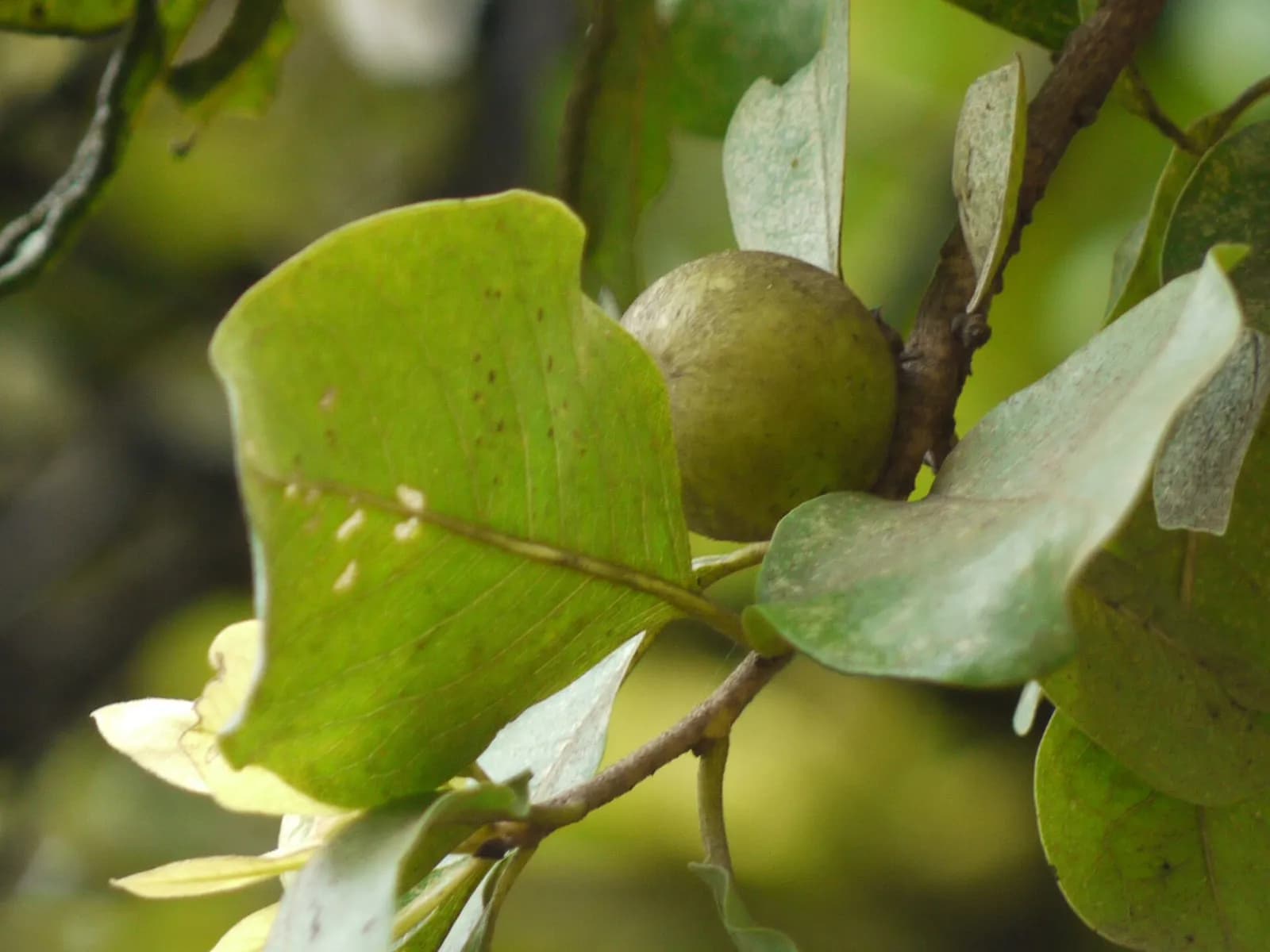
But of the kadamba grove that gave the forest its name almost nothing is left: over the last forty years the trees were cut down. In the shastra Kadamba-khanda stands among the best places of Govardhan, and on the ground there remain of it four kundas and a name.
Sources
We build Vrajapedia together – with stories, verses, photographs and parikrama experience. If you know something more, tell us and it will appear on this page.