Description

Bhaktivedanta Narayana Gosvami
From the book “Sri Vraja-maṇḍala-parikramā”:
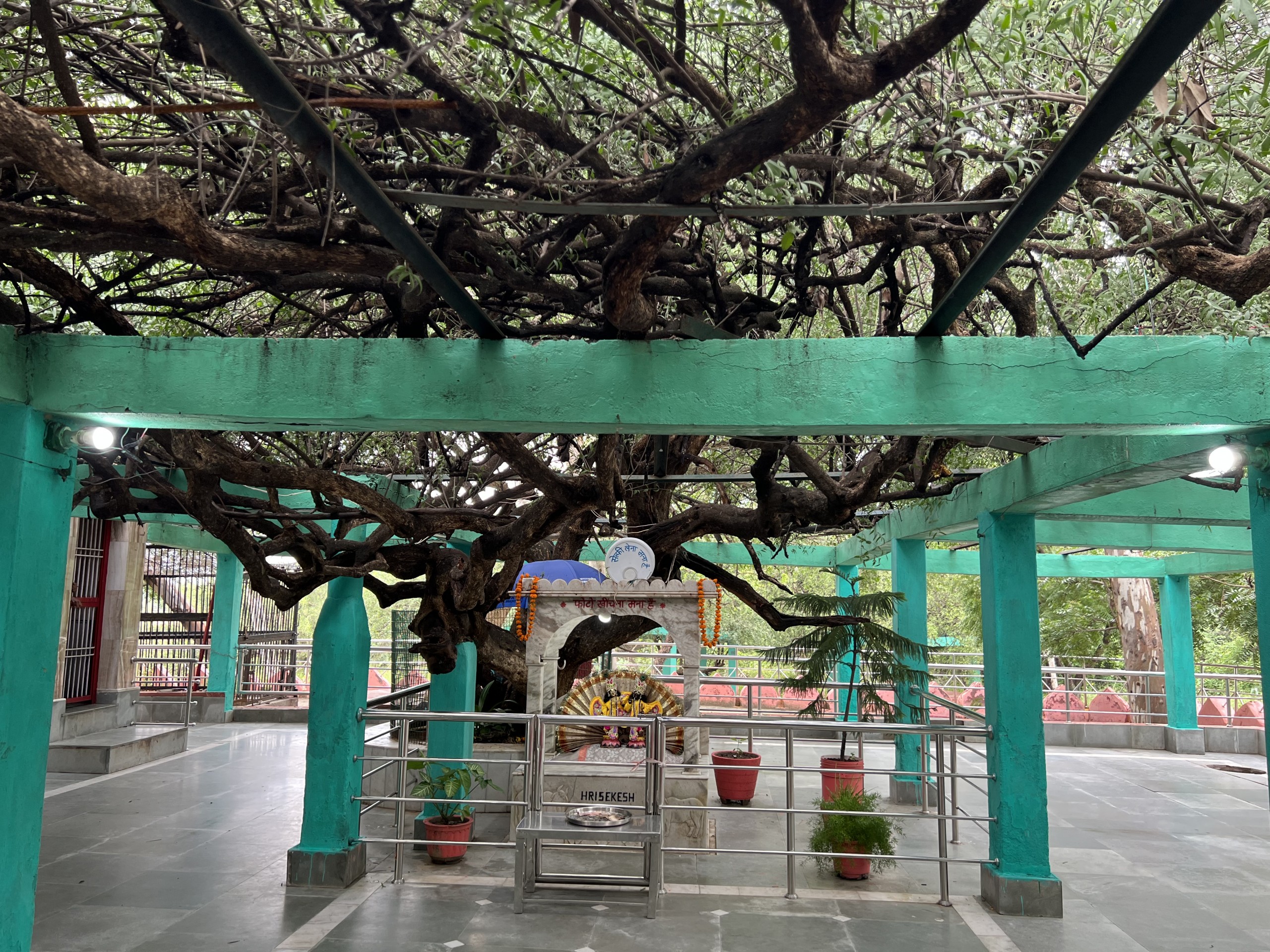
This place is situated exactly half-way between Nandagaon and Jāvaṭa. Being a place of Rādhā and Kṛṣṇa’s rāsa-līlā, a platform has been constructed here in memory of this pastime.
While grazing the cows in the afternoon, Kṛṣṇa used to climb this kadamba tree and call Śyāmalī, Dhaulī, Pītāmbarī, Kālindī and His other dear cows with His flute. Hearing Kṛṣṇa’s call, all the cows would assemble here immediately, and Kṛṣṇa would count them on His jewelled necklace. If some cows were missing, He would again call out their names by sounding His flute, and only when they were all assembled would He return home with the herd.
Sometimes, in the gentle light of the full-moon night, Kṛṣṇa would climb this kadamba tree and call the sakhīs by playing their names on the sweet notes of His flute. These gopīs would forget their bodies, minds and worldly cares, arriving to meet Kṛṣṇa in a spell-bound condition. They would then perform rāsa with Kṛṣṇa, which was full of singing and dancing.
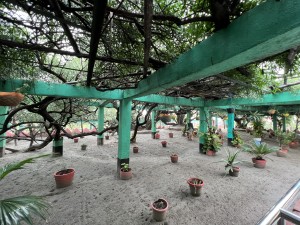
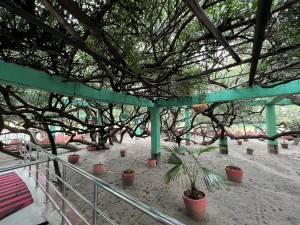
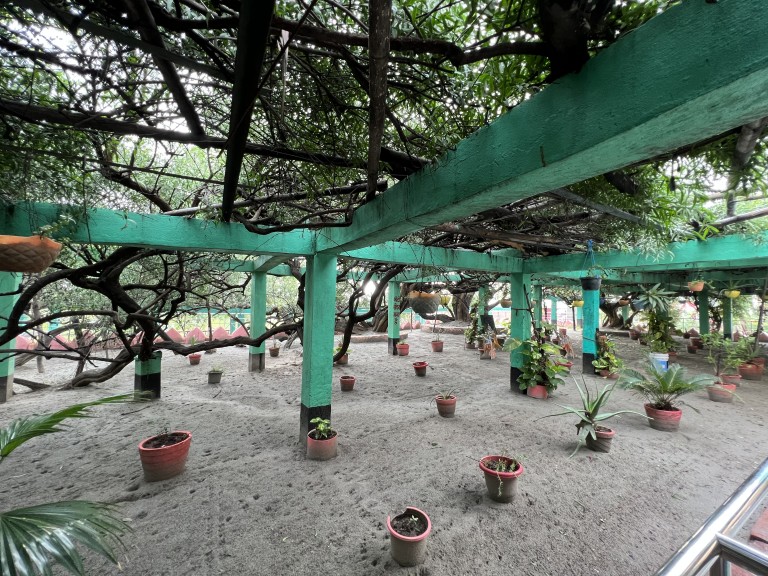
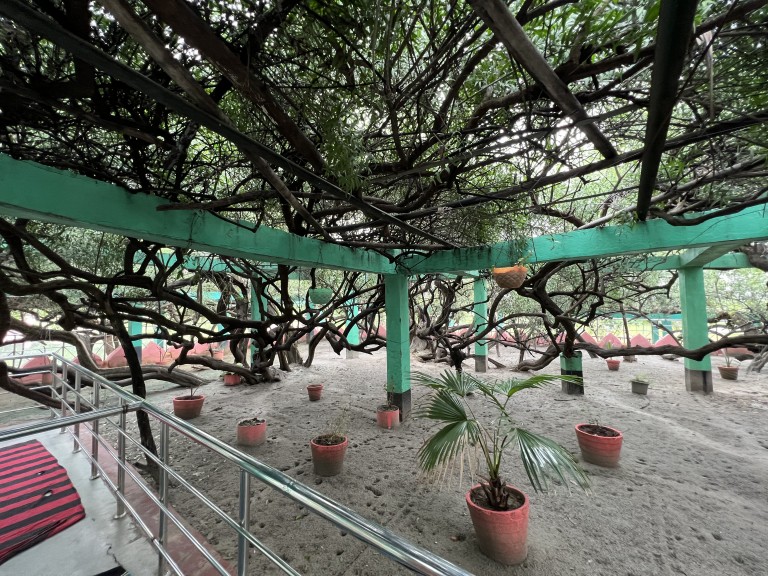
Since Kṛṣṇa climbed a kadamba tree and with His call (ṭer) gathered the cows and gopīs here, this place is known as Ṭerkadamba. There used to be many kadamba trees here, but they have all disappeared on account of stagnant rainwater. Great souls who perform bhajana here periodically plant kadamba trees at this place.
On the day of Gopāṣṭamī, the Vrajavāsīs bring small Vrajavāsī boys dressed like Kṛṣṇa and Balarāma from Nandagaon to this place and stage a programme of congregational singing called samāja. They also worship the cows beautifully and feed them grass and jaggery.
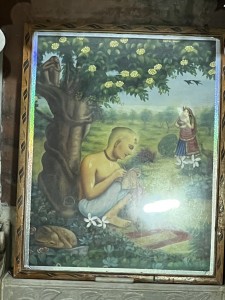
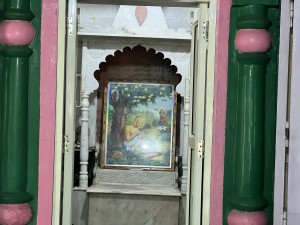
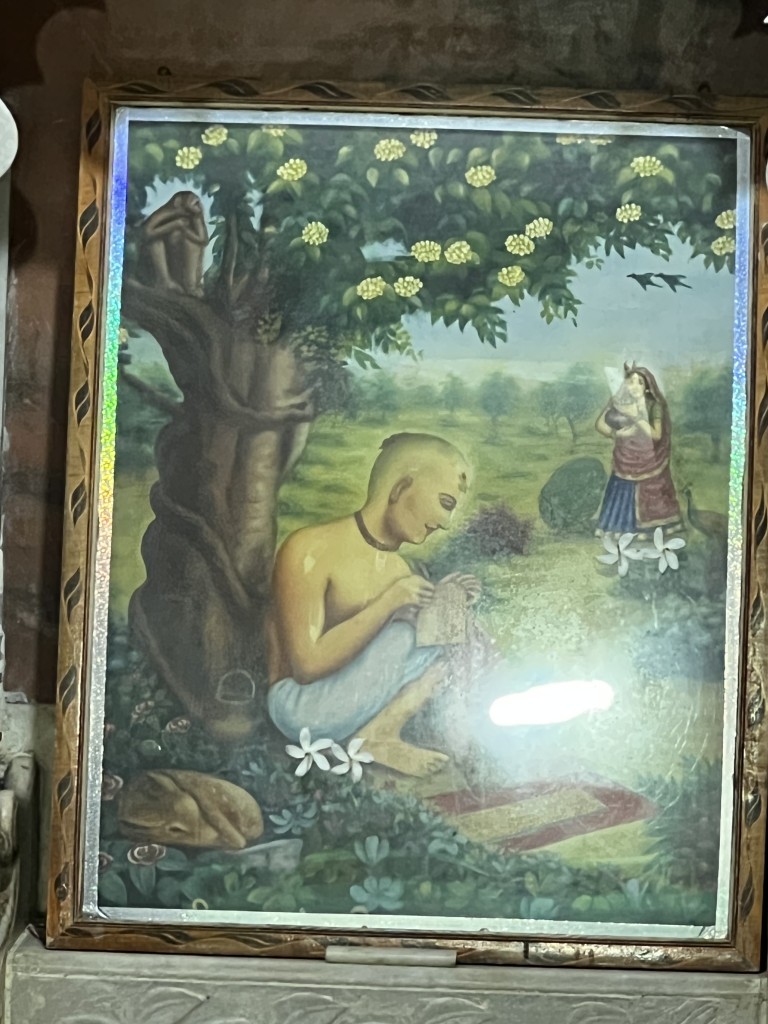
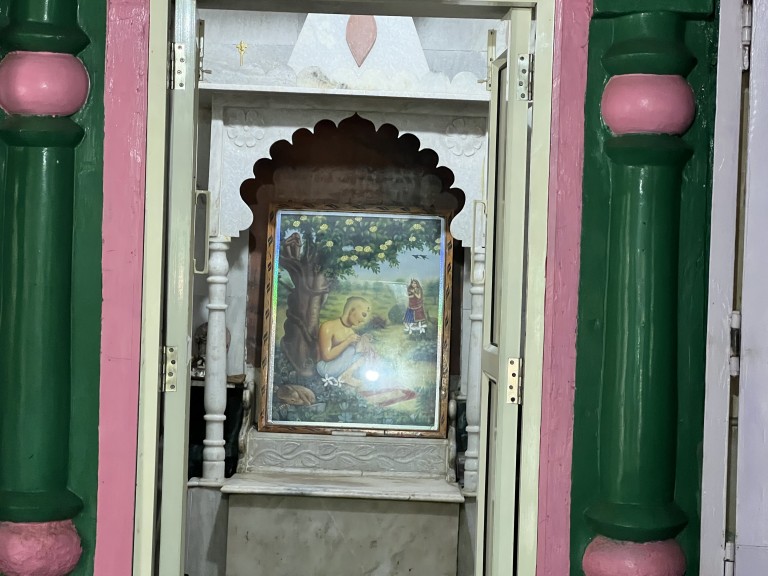
Adjacent to Ṭer-kadamba, to the west, is the bhajana-kuṭī of Śrī Rūpa Gosvāmī. He often performed bhajana here at this secluded place, remembering Kṛṣṇa’s sweet pastimes. He also composed many of his treasured books here. Whenever the sentiments of deep separation from Śrīmatī Rādhikā, who is comprised of mahābhāva, manifested in his heart, verses of separation would emanate from his mouth. At that time, all the leaves of the kadamba tree here would dry up in the fire of separation, and fall to the ground. And when the meeting of the Divine Couple manifested in his heart, he recited verses of Their meeting, and the kadamba tree would sprout new leaves.
Once, Śrīla Sanātana Gosvāmī came here to meet with Śrīla Rūpa Gosvāmī. They began to talk about Kṛṣṇa’s ambrosial pastimes and became so absorbed in the narrations about Him that they forgot about the time. In the afternoon, when their absorption abated somewhat, Śrīla Rūpa Gosvāmī thought, “It is time to honour prasāda, but I have nothing to offer Śrī Sanātana Gosvāmī.” This caused him some concern. Just then, a beautiful girl in ordinary dress came there and said to Rūpa Gosvāmī, “Bābā, My mother has sent rice, milk and sugar with Me. Quickly make sweet-rice and eat.” Saying this, the girl left, only to return a short while later. “Bābā,” She said, “because you are talking, you have no time to cook. I will cook for you.” She collected some dry cow-dung patties that were nearby and produced a fire simply by Her breathing. In little time, She presented Śrīla Rūpa Gosvāmī with very sweet and fragrant sweet-rice and said, “Bābā, offer this to Ṭhākurajī and quickly take some yourself. I must go, or else My mother will chastise Me for being late.” And the beautiful girl departed.
Śrī Rūpa Gosvāmī offered the sweet-rice to Kṛṣṇa and placed it before Sanātana Gosvāmī. Upon eating the sweet-rice, transcendental visions (sphūrtis) of Rādhā and Kṛṣṇa manifested in the hearts of the two brothers. They began to lament, calling out, “O Rādhā, O Rādhā!” Sanātana Gosvāmī said, “I have never tasted such sweet-rice. Rūpa, did you desire something to eat? That kiśorī was none other than Kṛṣṇa’s dearest Śrīmatī Rādhikā. In the future, please do not trouble Her like this.” Śrī Rūpa Gosvāmī began to lament, understanding his fault. When he took a little rest, Śrīmatī Rādhikā appeared in his dream and pacified him with sweet words.
Rajashekhara Dasa
From the book “Chaurasi-kosa Vraja Mandala Parikrama”:
There used to be a large kadamba-khandi (kadamba grove) at this place but now only a few kadamba trees remain. The word ‘ter’ or ‘tera’ means that Krishna was sitting on the ‘end’ of a tree branch after climbing one of the kadamba trees. After the go-charana-lila or cow herding adventures during the day, Krishna would return in the late afternoon with His cows to Ter Kadamba where He would climb one of the kadamba trees in this grove and while sitting on a tree branch, He would call all the cows to assemble there by playing on His flute. When all the cows had assembled, Krishna would count them on His special counting beads known as go-mala and when He was sure that all the cows were accounted for, He would take them to Pavana-sarovara to drink water; from there the cows would then return to Nanda Baba’s goshala. On another occasion during the dead of night, Krishna sat in the same kadamba tree and while playing His flute He called all the gopis to assemble at Ter Kadamba to take part in rasa-lila pastimes. There is a kunda here known as Ter Kadamba-kunda, which is where the rasa-lila was performed. A rasa-mandala platform has also been established here to commemorate the rasa-lila pastimes that took place at Ter Kadamba.
This is the place at Ter Kadamba where Shrila Rupa Goswami performed his bhajana and where he wrote a number of his well-known books during the period of his stay at Nandagrama. It has been said that when Rupa was writing about the anguished feelings of separation experienced by Radha and Krishna, when They were apart from each other, it caused the leaves of the kadamba trees to dry-up and fall to the ground. But when Rupa started writing about the ecstatic reunion between the ‘divine lovers’ Radha and Krishna, the leaves on the kadamba trees would again start sprouting anew; so powerful were the emotions being generated from the heart of Shrila Rupa Goswami. It is now acknowledged that Rupa Goswami was the most important disciple of Lord Chaitanya Mahaprabhu and was the one person amongst Mahaprabhu’s followers who did the most to establish the philosophy and teachings that form the very foundations of the Gaudiya Vaishnava sampradaya and Lord Chaitanya’s glorious sankirtana movement.
As the most important disciple and principle ‘anga’ or arm of Lord Chaitanya Mahaprabhu, Rupa Goswami fulfilled all the tasks delegated to him by the Lord, including the excavation of Vrindavana’s holy places, delineation of the principles and practices of bhakti-yoga, establishing temples of Radha Krishna and introducing the regulations governing Deity worship. Rupa Goswami also discovered Govindaji, the presiding Deity of Vrindavana Dhama, at the site now recognized as the Vrindavana Yoga-pitha. Rupa Goswami also discovered Vrinda Devi, the presiding Deity of Vrindavana forest, when she appeared to him in a dream and revealed the place where she lay hidden at Brahma-kunda. Rupa Goswami also wrote a large number of important books that establish the science of devotional service, with Bhakti-rasamrita-sindhu (The Nectar of Devotion) being the most famous amongst his works. In fact, Rupa Goswami’s celebrated Bhakti-rasamrita-sindhu is a true Vedic classic and is the principle guide-book for all Gaudiya Vaishnava followers of Lord Chaitanya in the world today. Those who do not follow the principles laid down in the Bhakti-rasamrita-sindhu, cannot be counted amongst the true followers of Lord Chaitanya Mahaprabhu. According to the Gaura-ganoddesha-dipika, in Krishna’s Vrindavana pastimes, Shrila Rupa Goswami is Rupa-manjari, one of the most intimate maidservants of Radharani and the most confidential assistant to Lalita-sakhi, Radha’s closest friend and adviser.
There are many wonderful stories about the activities of Shrila Rupa Goswami. The Bhakti-ratnakara says, “One day Shrila Rupa Goswami was thinking he would like to offer some sweet rice to Sanatana Goswami. Thinking like this he immediately hesitated, but Shrimati Radharani understood his mind. In the guise of a cowherd girl, She came there in a joyful mood with ghee, milk, sugar, etc. She said to Rupa Goswami, ‘Please accept these items and cook an offering for Lord Krishna after which you should accept the prasada. My mother asked Me to tell you this, so please don’t feel embarrassed in your mind.’ Speaking in this way, Radharani left in amusement. Rupa Goswami then immediately started cooking. After making the offering to Krishna, in great ecstasy Rupa served Sanatana Goswami some of the prasada. Sanatana could not understand how he felt so much happiness in his heart just by smelling the fragrance of that prasada. After taking one or two morsels of the prasada, Sanatana became agitated and could not check his tears. Sanatana Goswami then inquired from Rupa about the ingredients for the prasada, to which Rupa Goswami narrated the whole incident. Hearing the story, Sanatana forbade him to endeavor for such things in the future. After speaking thus, he accepted the prasada. Rupa Goswami, however, was regretful. Shrimati Radharani appeared to Shrila Rupa Goswami in a dream and solaced him. Sanatana also came to know this. O Shrinivasa, in this way the wonderful qualities of Rupa Goswami were made known to the Vaishnava community.”
Photo (4)