Description

Rajashekhara Dasa
From the book “Chaurasi-kosa Vraja Mandala Parikrama”:
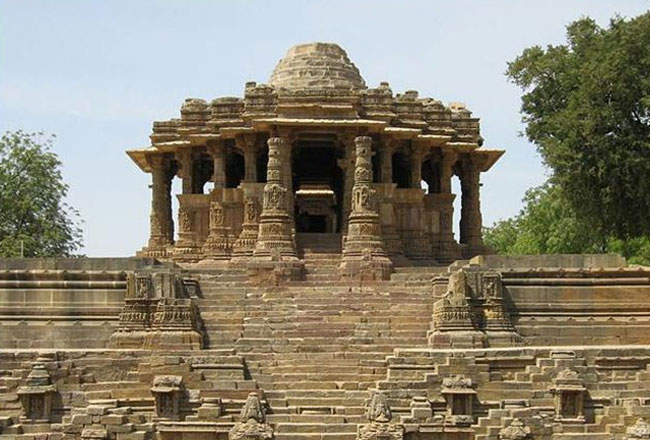
Kamsa-tila is situated on a small hillock that was formerly situated in the middle of a large showground known as Ranga-bhumi. A royal pavilion was erected on top of the hillock from where King Kamsa could view the festivities in the showground below. The word ’tila’ means a ‘hill’ or a ‘hillock”. Kamsa-tila is the actual place where Krishna killed the demon Kamsa inside the Ranga-bhumi arena. The Ranga-bhumi is also known as the Ranga-shala and it is the place where Kamsa had organized a large public celebration called the Dhanur-yajna or ‘Sacrifice of the bow’. The word ‘ranga-bhumi’ means a ‘show-ground’ and ‘ranga-shala’ means an ‘arena’ where festivals and public spectacles like wrestling matches, fairs, or Vedic sacrifices are held. The Ranga-bhumi was a vast open-spaced area of about a square mile, but now only a small enclosed area of the Ranga-bhumi can be seen here. On the day of the Dhanur-yajna sacrifice, a wrestling match had also been arranged and large crowds had gathered to see the great spectacle.
When Krishna and Balarama first tried to enter the Ranga-shala, the great elephant known as Kuvalayapida, who had been posted at the gateway of Ranga-bhumi by Kamsa, attempted to trample Krishna to death, however, Krishna very easily slew the great elephant. When Krishna entered the arena of the Ranga-shala sprinkled in blood and carrying on His shoulder the tusk of Kuvalayapida, Kamsa got the shock of his life. The Shrimad Bhagavatam (10.43.18) says, “When Kamsa saw that Kuvalayapida was dead and the two brothers were invincible, he was overwhelmed with anxiety.” Krishna then immediately broke the great sacrificial bow of Lord Shiva just as a child may break a dry twig, sending a great shattering sound reverberating in all directions.
Krishna and Balarama were then coerced into a wrestling match with Kamsa’s enormous strongly built wrestlers, including the two champions Chanura and Mushtika, who had been ordered by Kamsa to kill both the brothers during the wrestling contest. However, after a titanic battle, Krishna and Balarama slew Chanura and Mushtika as well as all the other wrestlers employed by Kamsa, much to his great horror. After slaying Chanura and Mushtika, Krishna suddenly jumped on to the raised platform where Kamsa was sitting in his royal pavilion, and catching hold of him, threw him from the royal balcony on to the ground below. Krishna then dragged Kamsa around the arena by his hair in full view of the crowds. Krishna then killed Kamsa by striking him on the head with His powerful fist. Because Kamsa was killed near this hill, it became famous as Kamsa-khali, or the place where King Kamsa was delivered. Thus Krishna fulfilled the prophesy and put an end to the tyrannical reign of King Kamsa’s by swiftly sending the demon to the kingdom of death.
After Kamsa had been killed by Krishna, his dead body was dragged down to the Yamuna to be cremated. Because Kamsa’s huge body was so heavy it could not be carried but had to be dragged along the ground, and as it was dragged, it gouged out a deep channel in the earth starting from the Ranga-bhumi down to the Yamuna riverbank, which became known as Kamsa-khara. In his previous life, Kamsa had been born as Kalanemi, the son of the great demon Hiranyaksha, and in that previous life he had also been slain by Lord Vishnu.
Photo (1)