Description

Bhaktivedanta Narayana Gosvami
From the book “Sri Vraja-maṇḍala-parikramā”:
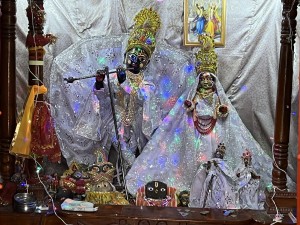
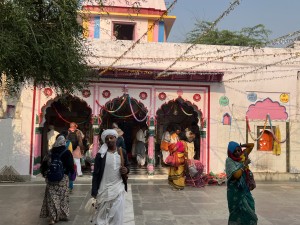
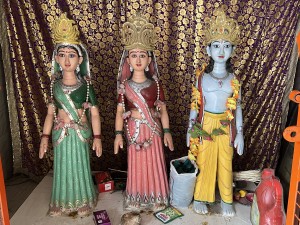
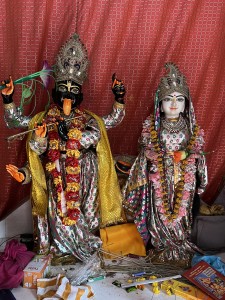
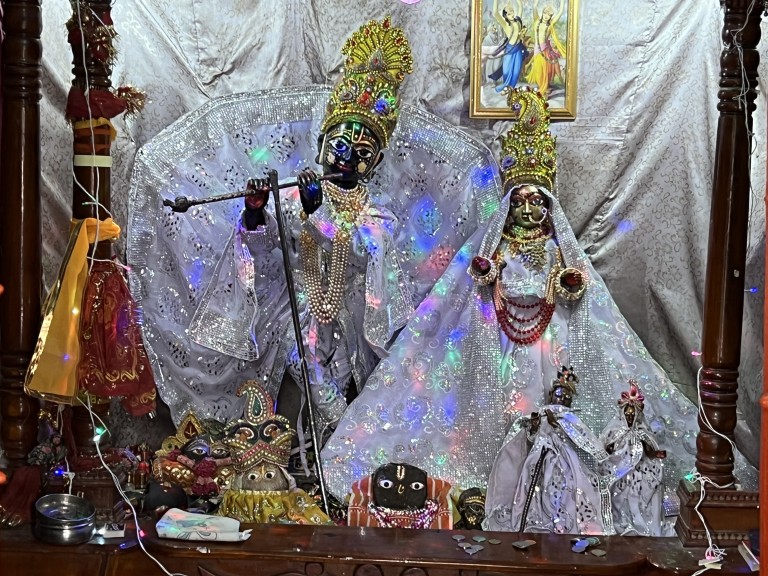
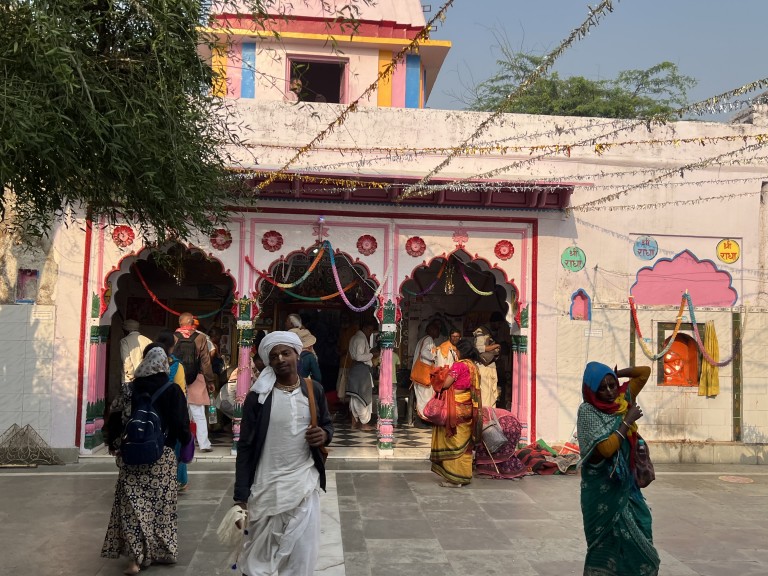
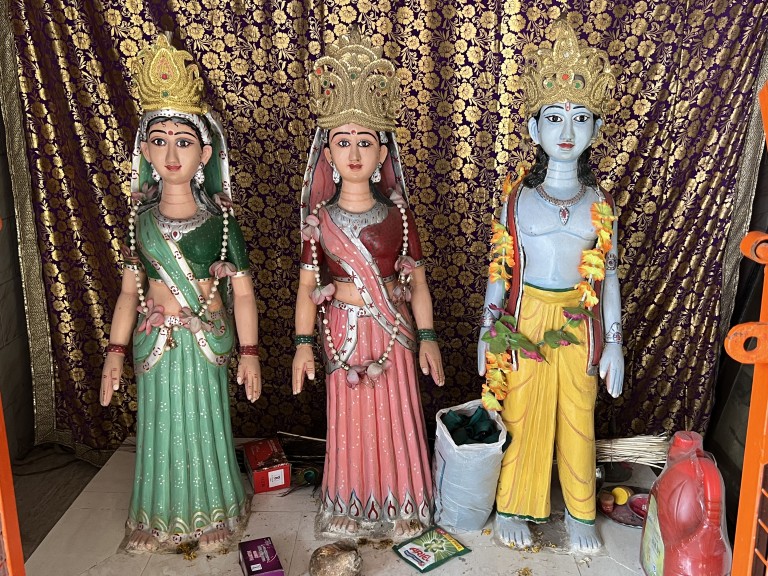
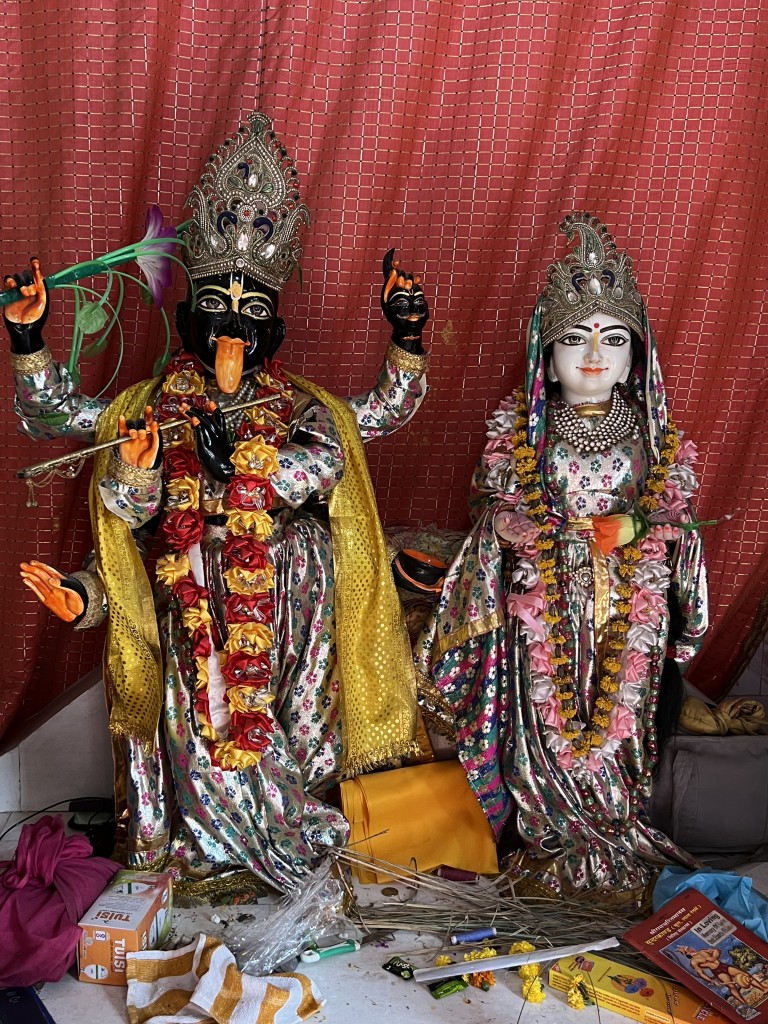
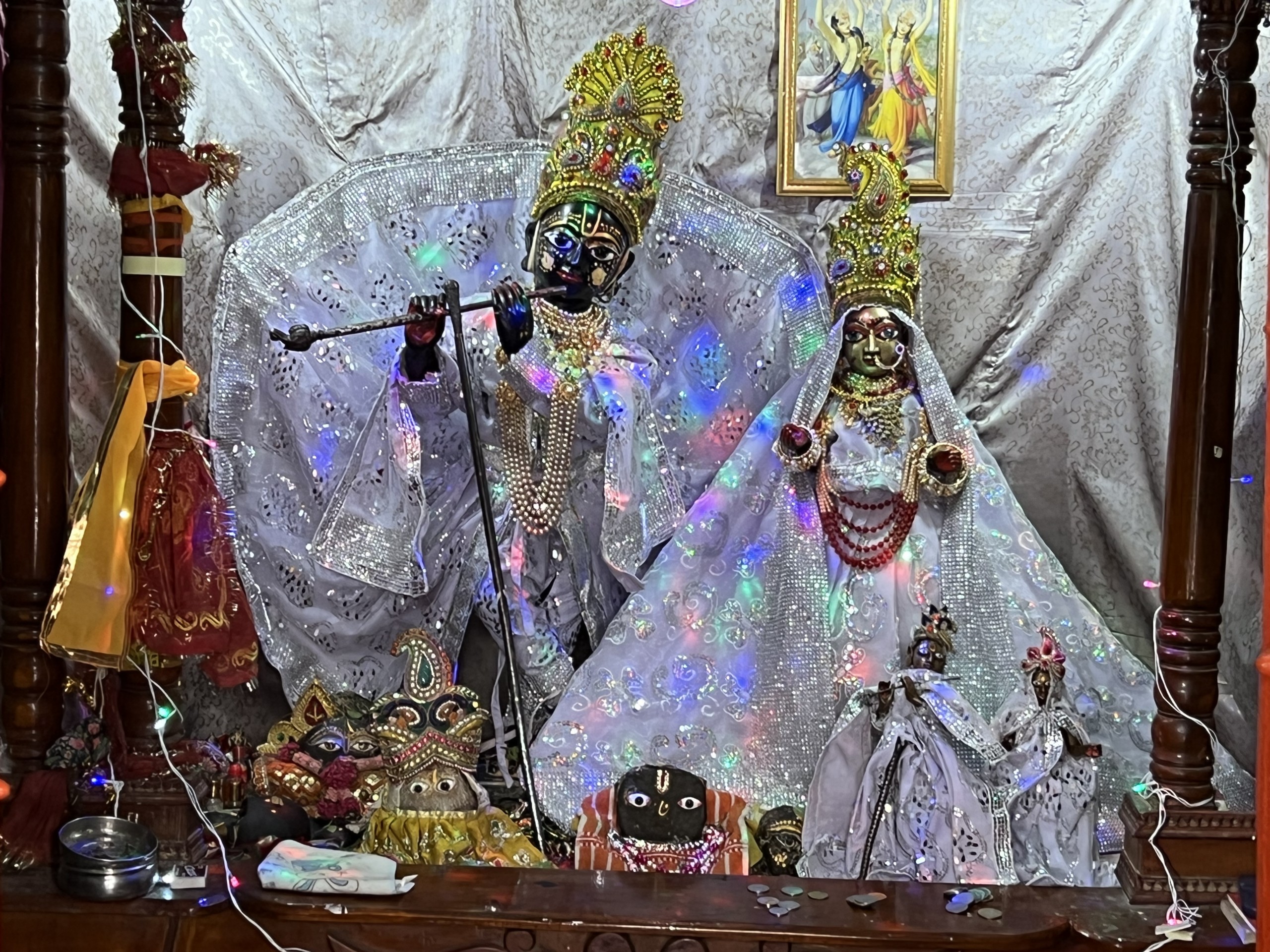
In the western part of the village, on a high hillock, is the large house of Jaṭilā, in which there are deities of Jaṭilā, Kuṭilā and Abhimanyu. Now a temple of Śrī Rādhā-Kāntajī is also there. The sakhīs arrange meetings between Śrīmatījī and Kṛṣṇa here by deceiving Jaṭilā, Kuṭilā and Abhimanyu.
Rajashekhara Dasa
From the book “Chaurasi-kosa Vraja Mandala Parikrama”:
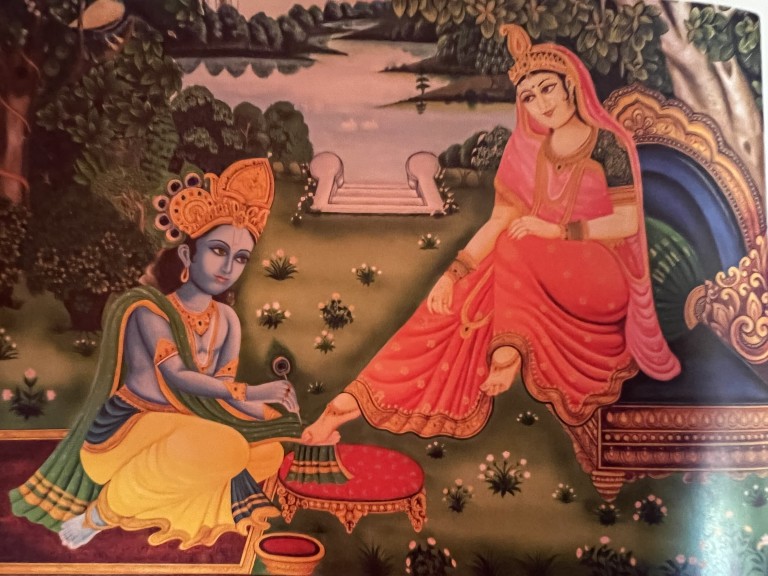
This is the place on a small hillock where the ancestral home of Jatila was situated and where, after marriage, Radharani lived with Her supposed husband Abhimanyu, his mother Jatila and his sister Kutila. The word ‘haveli’ means a ‘large residence’ with many rooms where many generations of the same family live together. This haveli is now a temple where one can see the Deities of Radha and Krishna known as Shri Shri Radha-Kanta. In another shrine to the left of the Deity room one can see the Deities of Jatila, Kutila, and Abhimanyu and on the roof there is a shrine known as Shringara-sthala which is dedicated the Krishna’s pastimes of combing Radha’s hair and decorating Her with cosmetics and jewelry. In the courtyard of the temple is a tree which local people call a moti-per or pearl-tree. It is said that when Krishna planted pearls in His garden near Moti-kunda at Nandagrama, it was this particular variety of tree that grew there and became covered with pearls instead of fruits.
Photo (5)