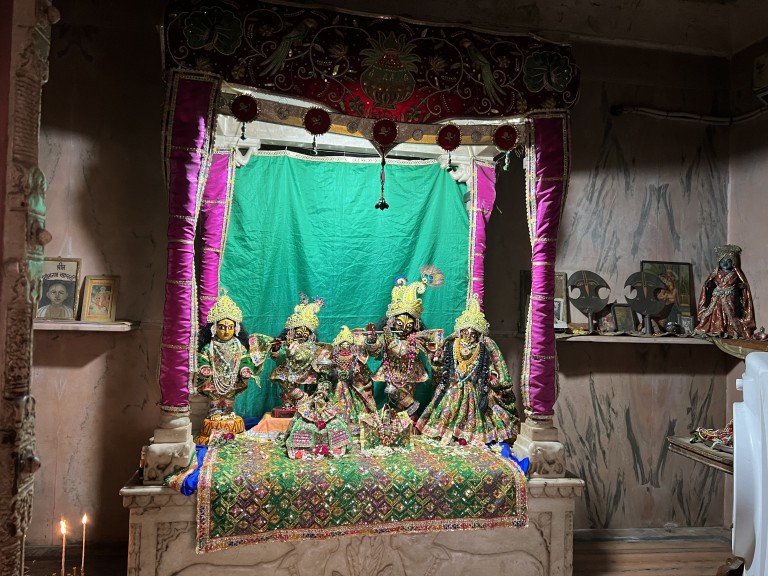
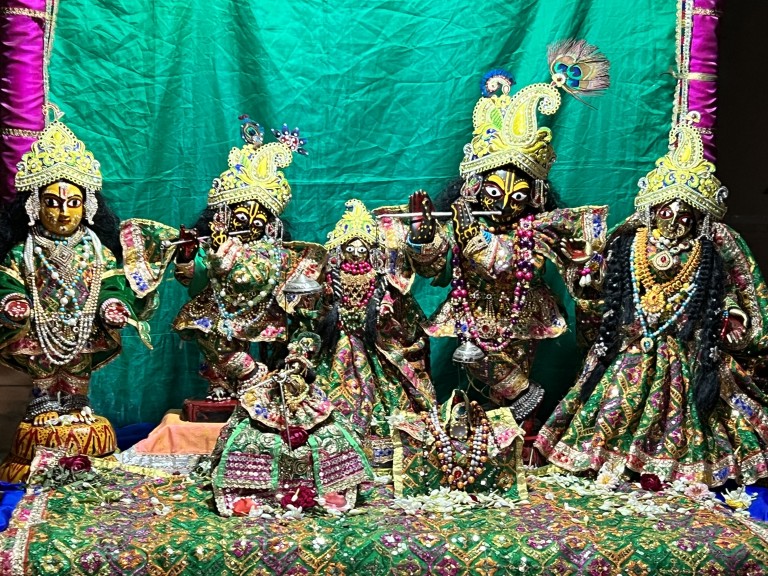
Description

Bhaktivedanta Narayana Gosvami
From the book “Sri Vraja-maṇḍala-parikramā”:
Before the arrival of Śrī Caitanya Mahāprabhu in Vṛndāvana, Śrī Lokanātha Gosvāmī and Śrī Bhūgarbha Gosvāmī came here. Being very humble and without any possessions (akiñcana), they performed bhajana at the many pastime places in Vraja-maṇḍala. Śrī Lokanātha Gosvāmī found the deity of Śrī Rādhā-Vinoda in Kiśorī-kuṇḍa in Umrāo-gaon near Chatravana and served Them there. Later, on the request of Rūpa, Sanātana and the other Gosvāmīs, he brought his worshipful Śrī Rādhā-Vinoda to Vṛndāvana and began to worship Them near the temple of Śrī Rādhā-Ramaṇa. Nowadays, the original deity that was worshipped by Śrī Lokanātha Gosvāmī is in Jaipura, and the pratibhū-vigraha is worshipped in that same temple in Vṛndāvana.
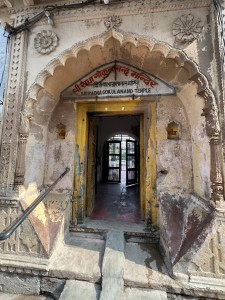
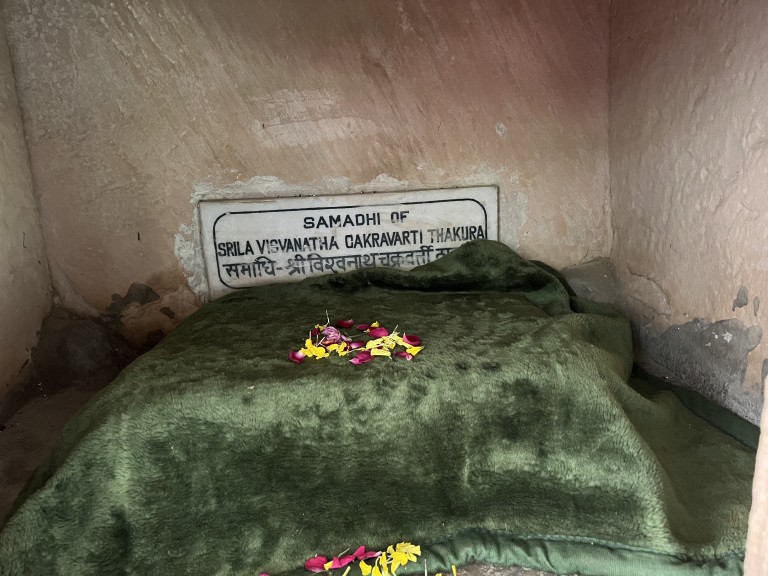
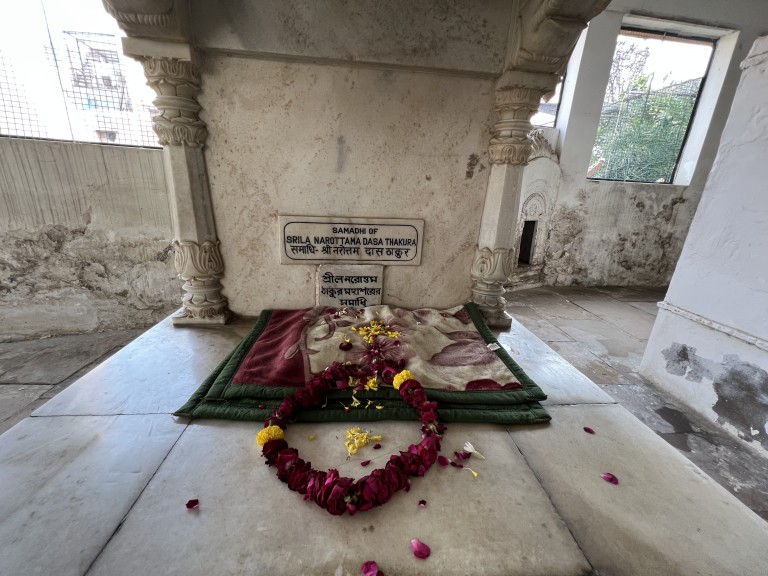
Śrī Gokulānanda, who appeared at Śrī Rādhā-kuṇḍa through Śrī Viśvanātha Cakravartī Ṭhākura, also arrived in this temple later on. The govardhana-śilā given by Śrīman Mahāprabhu to Śrī Raghunātha dāsa Gosvāmī used to be present here. The original deity of Śrī Gokulānanda is now also situated in Jaipura with Śrī Rādhā-Vinoda. In the courtyard of the temple are the samādhis of Śrī Lokanātha Gosvāmī, Śrī Narottama Ṭhākura and Śrī Viśvanātha Cakravartī Ṭhākura.
Rajashekhara Dasa
From the book “Chaurasi-kosa Vraja Mandala Parikrama”:
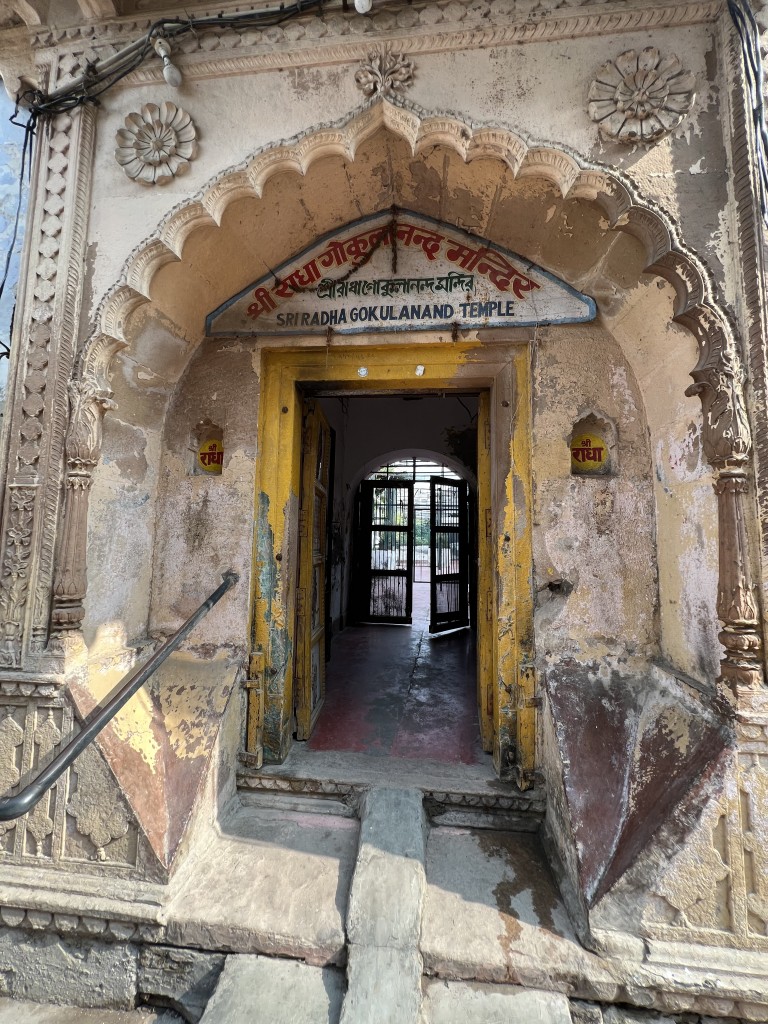
The temple of Shri Shri Radha Gokulananda is said to have been established by Lokanatha Goswami, who in the later years of his life had performed bhajana in this secluded garden located near the banks of the Yamuna. Although Lokanatha was not directly one of the Six Goswamis of Vrindavana, he was the first Gaudiya Goswami to arrive in Vrindavana Dhama and he was also the eldest and most highly respected amongst the other Goswamis. He became one of the most renowned amongst the Gaudiya Goswamis residing in the holy Dhama and is often referred to as being the ‘Seventh Goswami’. The temple of Radha Gokulananda that he founded is included amongst the famous ‘Seven Goswami Temples of Vrindavana’. It appears that the temple of Radha Gokulananda may have previously been known as the temple of Radha Vinoda, as this name appears in some historical references. It was around one hundred years later when the Deity named Gokulanandaji, then worshiped by Shrila Vishvanatha Chakravarti, was actually installed in the temple. It is thought that the concept of the ‘Seven Goswami Temples of Vrindavana’ came into being during the renaissance period ushered in by Shrila Vishvanatha Chakravarti Thakura and his illustrious disciple Baladeva Vidyabhushana, who became the next Gaudiya Vaishnava acharyas in the Gaudiya Vaishnava sampradaya after Lokanatha Goswami’s famous disciple Narottama Dasa Thakura.
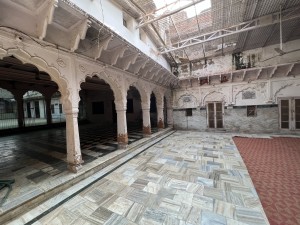
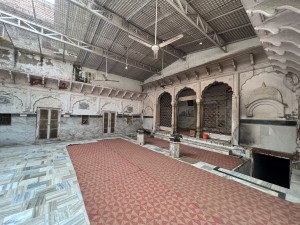
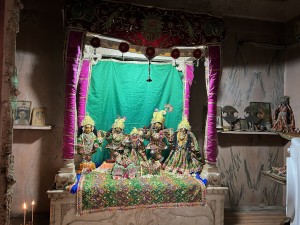
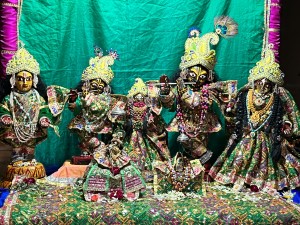
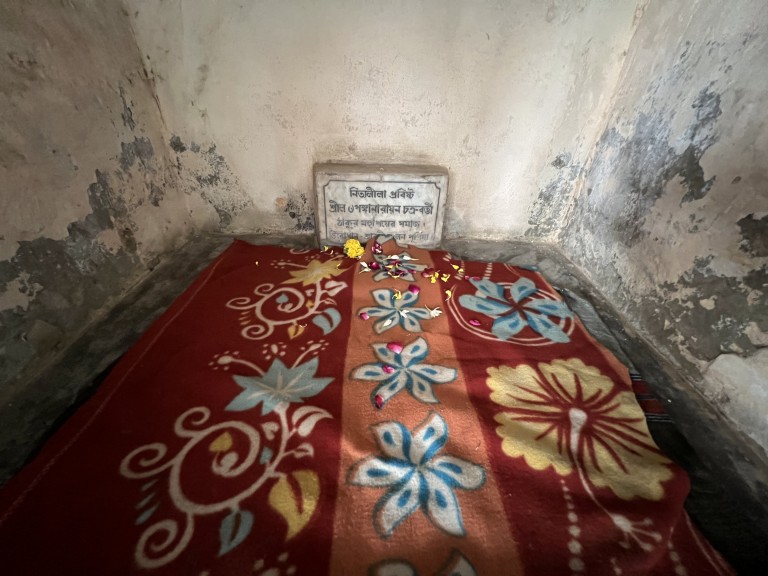
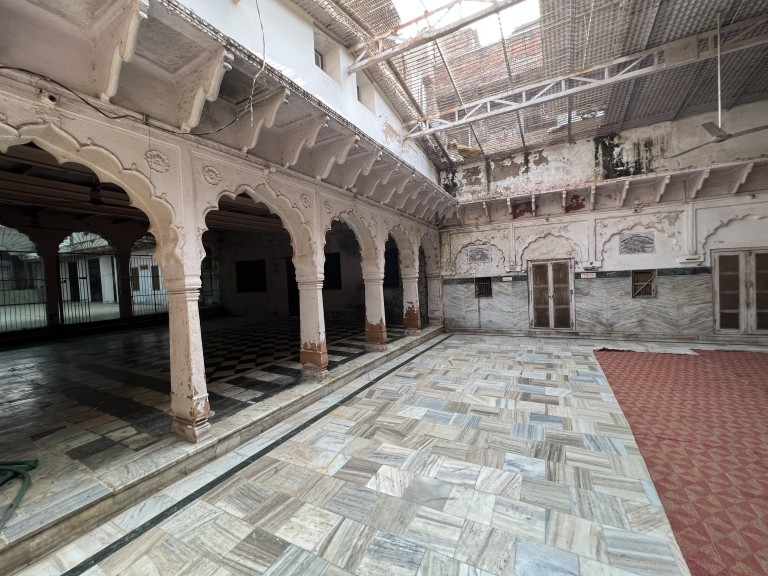
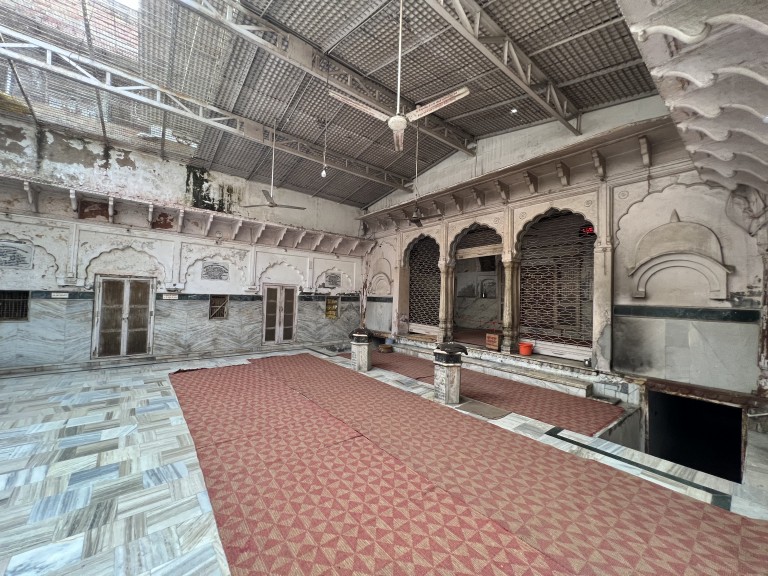
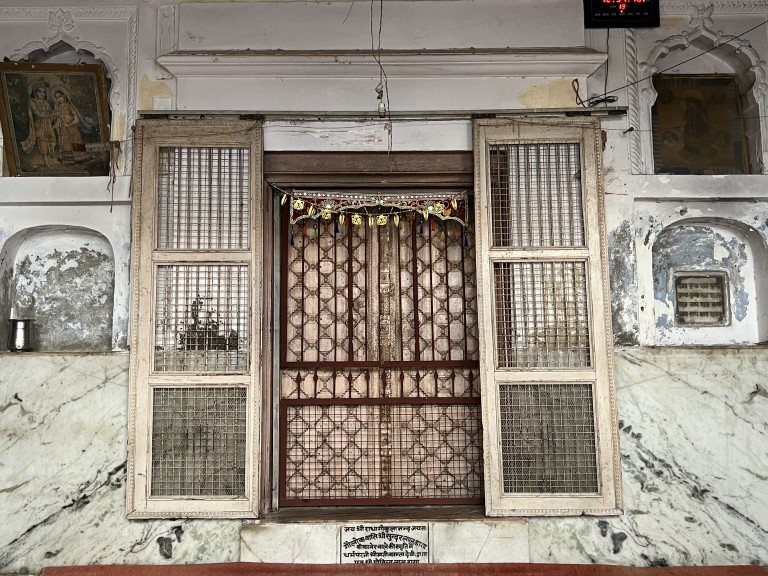
Just prior to the attack on Vrindavan by the tyrant Aurangzeb in 1670, the Deity of Radha Vinoda was taken out of Vrindavana along with other Gaudiya Goswami Deities and is now being worshiped in the city of Jaipura. The Deity of Radha Gokulananda in the temple is thought by many to be the original Deity worshiped by Vishvanatha, but some others disagree, saying the original Deity is in Jaipura along with Radha Vinoda. The other Deities that can be seen in this temple are all pratibhu-murtis including: Gauranga Mahaprabhu (Narottama Dasa), Radha Vinoda (Lokanatha Goswami), Radha Vijaya-Govinda (Baladeva Vidyabhushana), and also the pratibhu murti of Mahaprabhu’s famous govardhana-shila (Raghunatha Dasa Goswami). This govardhana-shila was worshiped by Lord Chaitanya Mahaprabhu who gave it as a gift to Raghunatha Dasa Goswami. The original shila which bears the thumb impression of Lord Chaitanya is presently being worshiped at Bhagawata Nivasa in the Ramana Reti area of Vrindavana. Within the compound of the Radha Gokulananda Mandira one can see the samadhis of Lokanatha Goswami, Vishvanatha Chakravarti Thakura, Narottama Dasa Thakura, and Ganganarayana Chakravarti.
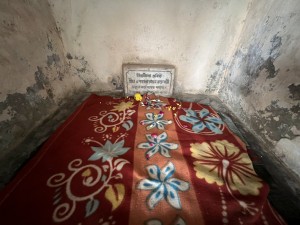
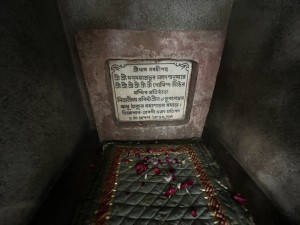
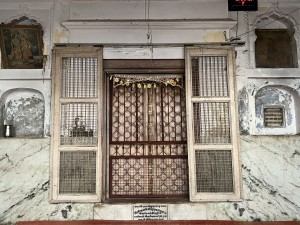
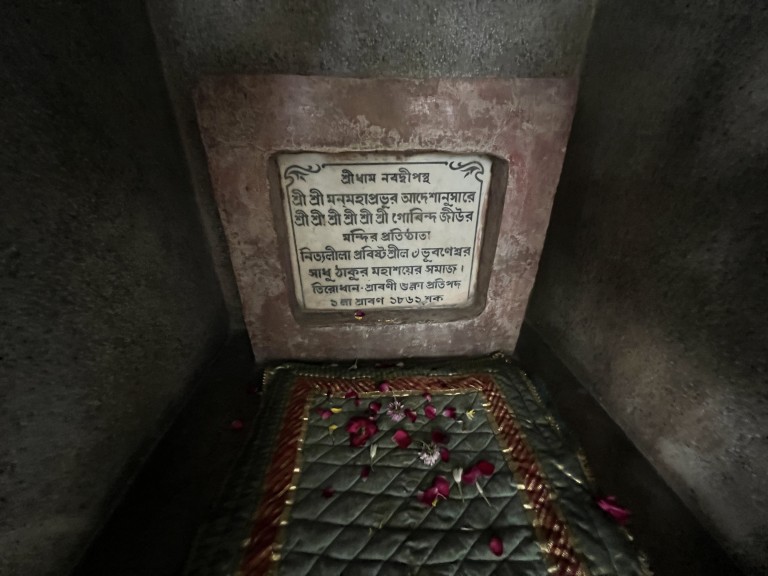
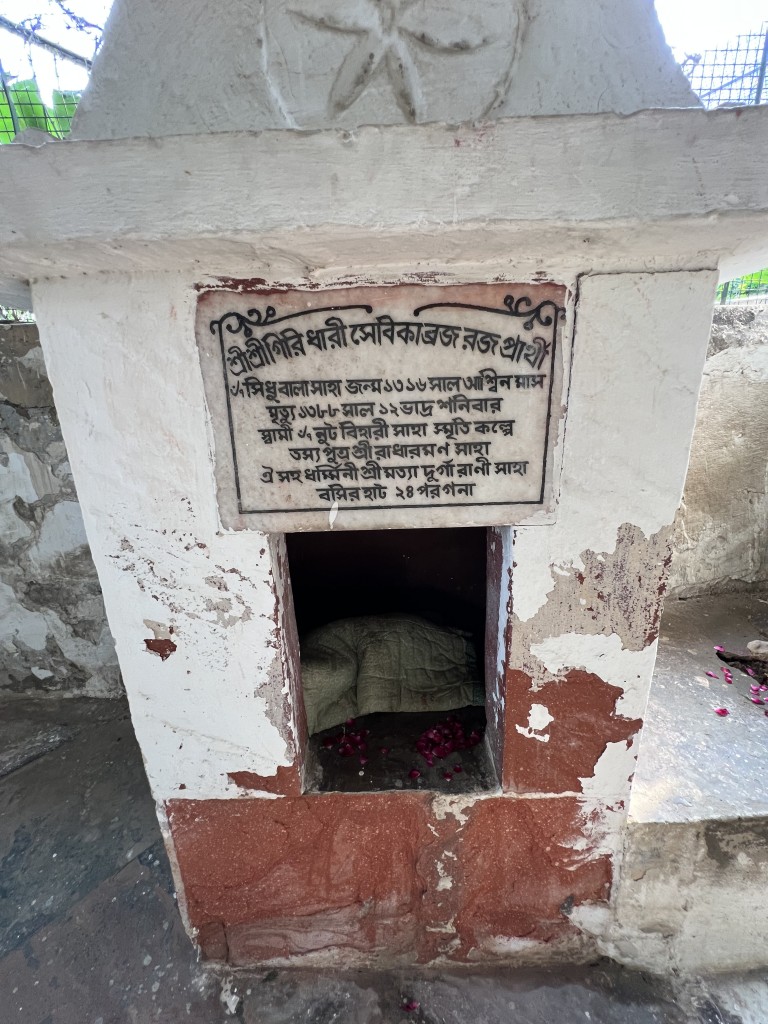
Lokanatha Goswami Samadhi
According to his biographers, Lokanatha Goswami was born into a Bhatta-brahmana family in Talakhari village of Jessore District, Bengal (now in Bangladesh) in the year 1483. According to a purport in Chaitanya-charitamrta (Adi-lila 12.12.88), Lokanatha Goswami is mentioned as being one of the most important disciples of Gadadhara Pandita. After renouncing householder life, Lokanatha Goswami met Lord Chaitanya Mahaprabhu in Navadwipa just prior to Lord Chaitanya taking sannyasa. It is said Lord Chaitanya ordered him to go to Vrindavana and search out the sacred forests and other important holy places scattered around Vraja Mandala. (Some say that this order was received in a dream). Lokonatha’s lifelong friend and companion Bhugarbha Goswami, who was his paternal uncle and also a disciple of Gadadhara Pandita, had received a similar order from Lord Chaitanya and therefore accompanied Lokanath Goswami on his journey to Vrindavana arriving there in the year 1509. It is said that Lokanatha and Bhugarbha were practically inseparable and the extent of their friendship is described in the Bhakti-ratnakara, “Lokanatha’s affection for Bhugarbha was well known everywhere. They had different bodies, but in spirit they were one.” In order to locate the sacred forest the two Goswamis simply wandered here and there around Vraja calling out the names of the twelve forests. It is said that Vrinda Devi revealed the exact location of each forest to the two Goswamis. Due to his natural humility, Lokanatha forbade Krishnadas Kaviraj to write anything about him in the Chaitanya-charitamrita, thus only his name gains mention. Sanatana Goswami had mentioned his name in the mangalacharana to his famous book Hari-bhakti-vilasa, as well as in Vaishnava-toshani, his commentary on the tenth-canto of Srimad-Bhagavatam. Lokanatha Goswami constantly travelled throughout Vraja Mandala while visiting the various holy places where Krishna had performed His pastimes. He also spent some period of time performing bhajana on the banks of Sangama-kunda at Khadiravana, but when he visited Kishori Kund in the village of Umrao near Chatravana, he was so impressed with the transcendental beauty of the place that he stayed there for some years engaged in bhajana. One day, Lokanatha Goswami discovered the Deity of Shri Shri Radha Vinoda, hidden within the depths of Kishori-kunda. After discovering the Deity, Lokanatha Goswami devoutly worshiped the Deity for the rest of his life. It is well known that Lokanatha Goswami was extremely renounced and never accepted a bhajana-kutira. He always kept his Deity in a cloth bag hung around his neck and close to his heart like a necklace. During the rainy season he would keep the Deity in the crevice of a tree while he himself would simply sit on the ground in the pouring rain next to the tree chanting the holy names on his japa beads.
Due to his natural humility, he did not feel qualified to accept any disciples, although many were ready to accept him as their guru. However, Lord Chaitanya appeared to him in a dream and told him that in the future he would have to accept at least one very special devotee as his disciple, whose name would be Narottama Dasa. When eventually Narottama Dasa arrived in Vrindavana, Lokanatha was still not in the mood of initiating any disciples, but once again Lord Chaitanya appeared to him in a dream and asked him to give his mercy to Narottama Dasa, who was certainly the most worthy candidate. After receiving the dream, Lokanatha Goswami relented and accepted Narottama Dasa Thakura as his only disciple. It is believed that Lokanatha Goswami entered samadhi in the year 1585 (others have given the dates 1583 and 1588). His sacred body was entombed next to the temple of Radha Gokulananda that he had founded. According to the Gaura-ganoddesha-dipika (187) in Krishna’s Vrndavana pastimes Lokanatha Goswami is the gopi named Lila Manjari, “lokanathakhya-gosvami shri-lila-manjari pura”. (According to some he was Manjulali-manjari)
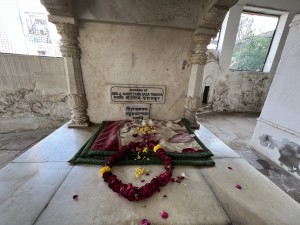
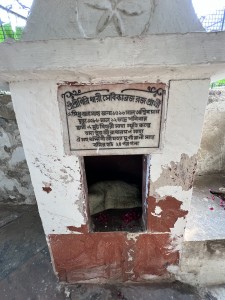
Narottama Dasa Thakura Pushpa Samadhi
Shrila Narottama Dasa Thakura disappeared from this world while in Bengal in the year 1611. This samadhi contains a flower garland (pushpa) worn by Narottama Dasa, his outer cloth, a kaupina, and his japa beads. Some say that this was his baithaka or sitting place during the time that he stayed here near where his guru resided on the bank of the Yamuna River. He was the only disciple of Lokanatha Goswami and became famous for the large number of devotional songs that he wrote. Through his singing and expert mridanga playing, he made the Manohar-Shoy style of kirtana, originated by Shrinivasa Acharya, famous throughout the land. He was also a powerful preacher and converted thousands to the bhakti cult of Lord Chaitanya in Bengal and Assam, as well as the state of Manipura, where he was the first to introduce the sankirtana movement.
Some years before Narottama’s birth, Lord Chaitanya was on a tour of Bengal where he visited Navadwipa and then Ramakeli, which is now in Bangladesh, where He met the brothers Rupa, Sanatana and Sri Vallabha, who were at that time still engaged in Government service. While there, Lord Chaitanya went to take His bath in the nearby Padma River. On the opposite bank of the river was a village called Kheturi, where in the future Narottama Dasa would be born. While gazing into the water, Lord Chaitanya began to call out in a very ecstatic mood. “O Narottama! O Narottama!” Lord Chaitanya then informed the devotees accompanying Him, that in the future a very great personality would be born at Kheturi, his name would be Narottama and he would become so absorbed in nama-kirtana-rasa, it would be equal to the sankirtana-rasa experienced by Lord Chaitanya Himself. The Lord also told the devotees that He would now bathe in the River Padma, and later when Narottama would come there to, the waters of the river would extend to Narottama the Lord’s special mercy and divine love.
In the year 1534, the same year as Lord Chaitanya’s disappearance, Narottama Dasa took birth in the village of Kheturi. His father was a kayastha, who are generally accepted as kshatriyas but some consider them to be sudras. Narottama’s father however, was revered as a king due to his great wealth and ownership of vast tracts of land. As a boy, Narottama was a brilliant student and loved to hear about the pastimes of Lord Chaitanya Mahaprabhu. When he reached his teens, one night he had a dream in which Lord Nityananda appeared before him and told him. “Tomorrow morning you should take your bath in the River Padma, at that time you will receive Krishna-prema, pure love of God.” On waking the next morning, Narottama went immediately to the River Padma and on entering the water, experienced a sudden spiritual transformation. As Narottama became overcome with ecstasy, Lord Chaitanya suddenly appeared before him and embraced him within His arms, and Narottama felt the spirit of the Lord enter his heart. At that moment, Narottama’s dark complexion turned a molten gold, the same color as Lord Chaitanya’s transcendental body. On coming out of the water, Narottama began to dance in ecstasy up and down the river bank while loudly chanting the holy names of the Lord. As the morning wore on, suddenly realizing that Narottama was missing from home, his anxious parents came to the riverbank in search of their son. When they saw a golden complexioned youth dancing in ecstasy on the river bank, they could not at first recognize him as being their son, because his dark complexion and physical demeanor had so drastically changed. Eventually, they realized that this was in fact their son, and they immediately brought him back to their home. When they got their son home, they noticed that he was a completely changed person, who continually chanted the holy names of Krishna both day and night.
After some months, Narottama had another dream where Lord Chaitanya appeared before him and after tightly embracing him, ordered him to immediately leave for Vrindavana where he should accept Lokanatha Goswami as his spiritual master. Very soon after this dream, Narottama ran away from home and proceeded to Vrindavana, much to the despair of his loving parents. On arrival in Vrindavana, Narottama immediately went to see the Deity of Govindaji, and upon beholding the Deity’s beautiful form, fell unconscious on the ground while exhibiting all the eight symptoms of ecstatic love known as ashta-satvika-bhava. The news quickly spread about this most unusual incident and Jiva Goswami immediately came to the Govindaji Mandira to see Narottama. Some of the devotees in Vrindavana had heard about the predictions made by Lord Chaitanya and had been wondering when Narottama would appear. Narottama was immediately placed under the care of Lokanatha Goswami, stayed in a garden near Keshi Ghata where the Gokulananda Mandira now stands. As Narottama had been informed in a dream by Lord Chaitanya to accept Lokanatha Goswami as his guru, he diligently performed all kinds of menial service for Lokanatha, who had also been told in a dream by Lord Chaitanya to accept Narottama as his disciple. Nevertheless, due to his great humility, he did not feel qualified to initiate anyone, and therefore declined. Regardless of Lokanatha Goswamis unwillingness, Narottama continued to offer his menial service to Lokanatha and would even clean the area in the jungle which was used by Lokanatha as a toilet. Lokanatha then had another dream, where Lord Chaitanya again appeared and reminded Lokanatha that it was the Lord’s own cherished desire that he should accept Narottama as his disciple and initiate him. After receiving this dream, Lokanatha relented and accepted Narottama as his only disciple and requested Jiva Goswami to accept Narottama as his shikhsa disciple and train him in all the aspects of Vaishnava philosophy. Narottama then became part of Jiva Goswami’s famous troika of shiksa disciples, along with Shrinivasa Acharya and Shyamananda Pandita.
In the year 1582, Jiva Goswami sent these three illustrious and most brilliant disciples on a preaching mission to Bengal and Orissa, by bullock cart with a large trunk of books written by the Six Goswamis that had all been copied by hand and were to be distributed amongst the followers of Lord Chaitanya Mahaprabhu. This was the first ever book distribution party in the history of the Gaudiya sampradaya. Before leaving Madhu Pandita Goswami blessed them with flower garlands from Lord Gopinatha. After reached Bengal and having met all the Vaishnavas, Narottama Dasa returned to his home village of Kheturi and organized what was to become the first ever ‘Gaura Purnima Festival’, celebrating the appearance day of Lord Chaitanya Mahaprabhu. All the followers of Lord Chaitanya attended the festival including Jahnava Mata and her son Virabhadra. During the festival, with the help of Shrinivasa Acharya, Narottama installed five sets of Deities for the benefit of the devotees. One of those Deities, Vraja-mohana, is still being worshiped in Vrindavana near Gyana-gudri.
Narottama had one very close and dearly beloved companion named Ramacandra Kaviraja, and one important disciple named Ganganarayana Chakravarti. They both expertly assisted Narottama Dasa in his life’s mission of spreading the divine message of Lord Chaitanya, to every town and village. According to the Gaura-ganoddesha-dipika, Narottama dasa is Vilasa-manjari in Krishna’s Vrindavana pastimes.
The Story of Narottama’s Gauranga Deity
It is said that while on a visit to his hometown of Kethuri, Narottam had the desire to install a number of Deities on the auspicious occasion Gaura Purnima, Lord Chaitanya Mahaprabhu’s appearance day, for the purpose of expanding the preaching of the sankirtan movement. That night in a dream, Narottama saw six Deities, Vallabhi-Kanta, Sri Krishna, Vraja-Mohana, Radha-Kanta, Radha-Ramana and Gauranga Mahaprabhu. After the dream Narottam woke and spent the rest of the night shedding tears of joy. The next day Narottama began arranging for the Deities to be carved. Stone was brought and artisans started carving the six Deities with great devotion. Although the five Deities of Krishna were very beautiful, the Deity of Gauranga had not been carved so nicely and Narottama became disheartened and in an anguished mood began calling out in a loud voice, “Gauranga, Gauranga,” while shedding many tears.
That night in a dream, Lord Chaitanya Mahaprabhu appeared before Narottam saying. “My dear Narottama, with much care you are trying to carve a Deity of Me, but I will never remain in that murti. I will now inform you how to obtain a Deity of Me. Before I accepted sannyasa I had a neem-wood Deity carved of Myself, which I had immersed in the Ganges river. Because you are My most beloved devotee I am telling you this. That Deity is now inside the rice store-room of Vipradas.” After saying this, Sri Chaitanya Mahaprabhu disappeared. Narottama immediately awoke and saw that morning had arrived so he began making inquiring from the local people about the residence of Vipradas. Narottama was informed that Vipradas was a wealthy merchant who lived nearby and had a business trading in rice and other grains. Hearing this, Narottam went to the house of Vipradas.
On arrival, Vipradas offered his obeisances to Narottama and inquired what had brought him to his home. “I have come on a special mission and want to go to the place where you store your grains.” Vipradas replied that it is not possible because the place had become infested with many kinds of poisonous snakes and as soon as they see anyone they become angry and begin hissing loudly. Out of fear for those snakes no one can go near that store-room. Narottama said, “Don’t worry, when I arrive all the snakes will automatically leave.” After saying this, Narottama went to the rice store-room. Immediately on seeing him all the snakes left that place. After searching in the store-room Narottama soon found the Deity of Gauranga. Seeing the Deity, all of the people were surprised and from that time onwards there were no more snakes at that place, Vipradas became very happy and came with his whole family and took shelter at the feet of Narottama. Seeing the beauty of the Gauranga Deity, everyone felt very blissful. All those who had previously seen Chaitanya Mahaprabhu verified that the Deity looked exactly like the Lord Himself. It is said that the pratibhu-murti of Narottama’s Gauranga Deity is worshiped on the altar of the Radha Gokulananda Mandira in Vrindavana.
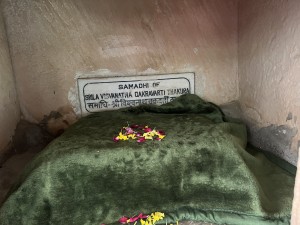
Vishvanatha Chakravarti Thakura Samadhi
Shrila Vishvanatha Chakravarti Thakura entered samadhi in the year 1708, and his sacred body was entombed here in the garden of the Radha Gokulananda Mandira. He was born into a brahmana family of Nadia District in 1638. As a student he became an expert scholar of Sanskrit, philosophy, rhetoric, and poetry, and could easily defeat anyone in an open debate. He was the diksha disciple of the illustrious Vaishnava guru Radharamana Chakravarti and accepted Narottama Dasa Thakura as his shisha-guru. Vishvanatha was married at a very early age by his parents as it was the local custom in Bengal at the time, but had absolutely no interest in family affairs. He immediately left home and went to Vrindavana, where he performed bhajana on the banks of Radha-kunda and stayed in the old bhajana-kutira of Krishnadasa Kaviraja Goswami. After some time, he returned to his home in Nadia, where, at the insistence of his parents, his guru implored him to at least spend one night in the bed of his young wife. He obeyed the order of his guru, but after lying in bed with his very beautiful young wife, he spent the whole night chanting the holy names of the Lord. His parents were disappointed, but his guru was delighted at his sense control realizing he was actually a very advanced Vaishnava.
His guru took him to stay in his own house and engaged him in making a copy of the Shrimad-Bhagavatam, which in those days was done by hand and took a considerable time. While intensely copying the Bhagavatam, Vishvanatha would sometimes enter into trance and exhibit ecstatic symptoms. On another occasion, the sun was beating down, but the spot where Vishvanatha sat appeared to be in the shade. Another time it began raining, but the place where Vishvanatha sat, no rain could be seen falling. A local landowner personally witnessed this event and broadcast the news throughout the village, much to the humble Vishvanatha’s embarrassment. After some time, his guru Radharamana Chakravarti, told Vishvanatha to return to Vrindavana and continue with his activities of serving the mission of Lord Chaitanya Mahaprabhu. Vishvanatha returned and again took shelter at Radha-kunda, where he began writing a number of important books. He also composed many devotional songs of which the most famous is Shri Shri Gurv-ashtaka, the famous prayer to the spiritual master sung in all ISKCON temples during the mangala-arati ceremony each morning.
When he returned to the holy Dhama, he was presented with the Deity of Radha Gokulananda by a brahmachari, who while visiting Mathura, had received a dream in which the Deity informed the brahmachari that He wanted to be worshiped by Vishvanatha. Not knowing who Vishvanatha was, the brahmachari had to search for him. When the brahmachary found Vishvanatha, he was reluctant to accept the Deity because being a mendicant; he lived by begging alms and could not provide the Deity with the requisite standard of worship, therefore feeling disappointed the brahmachari left. That night, Vishvanatha received a dream in which the Lord informed him that he should accept the Deity and worship Him in whatever way he could, as this would make the Lord very happy. The brahmachari also had a dream in which the Lord told him to return again and this time Visvanatha would accept the Deity, which he did. While Vishvanatha was staying at Radha-kunda, he also took over the worship of the famous govardhana-sila given to Raghunatha Dasa Goswami by Lord Chaitanya Mahaprabhu.
Photo (11)