

Description

Bhaktivedanta Narayana Gosvami
From the book “Sri Vraja-maṇḍala-parikramā”:
Vrajeśvara Mahārāja Nanda would regularly sit here with his elder and younger brothers, as well as with the elderly gopas, priests and so on, to discuss Kṛṣṇa’s well-being. It is called a baiṭhaka because they would sit here together for discussions. Baiṭhnā means “to sit”. Nanda Mahārāja has several baiṭhakas in the eighty-four kosas of Vraja-maṇḍala. Wherever Nanda Bābā used to reside with his cows, gopas, gopīs and others is called Nanda-Gokula and there used to be periodic meetings like this in those places. Thus, other such baiṭhakas include Choṭī-baiṭhana and Baḍī-baiṭhana. The following pastime refers to this kind of baiṭhaka, or assembly.
Seven-year-old Kṛṣṇa held Girirāja-Govardhana for seven days on His little finger and thus smashed the pride of Indra. The astonished elderly gopas called an assembly. Upānanda, the eldest brother of Nanda Mahārāja, was the chairman of this meeting to which Nanda Bābā had also been called. The elderly gopas expressed their opinion that Śrī Kṛṣṇa was not an ordinary boy. “Soon after taking birth, He killed the terrible rākṣasī Pūtanā, as if He were simply playing,” they said. “Afterwards, He killed Śakaṭāsura, Tṛṇāvarta, Aghāsura and many other demons. He subdued the terrible snake Kālīya and sent him out of Kālī-daha. Just a few days ago, He held the huge mountain Girirāja on His little finger for seven days and saved Vraja from the heavy downpour of rain and raging storms. These are not the activities of an ordinary boy. It seems to us that He must be a perfected, liberated soul, a demigod or Nārāyaṇa Himself. It is not proper for us to consider Him to be the son of Nanda and Yaśodā, to chastise or threaten Him, or to address Him with words such as ‘thief’, ‘wilful’ and ‘impertinent’. Nanda, Yaśodā and the other gopas and gopīs should always deal with Him lovingly and respectfully.” All the gopas present heard this statement with much gravity and together they cautioned Nanda Bābā.
Nanda Bābā laughingly dismissed their words. “Respected gentlemen,” he said. “I have heard your statements, but I do not see even the slightest demigod-like symptom in Him nor any symptom of supreme godliness. I have known Him from His very birth. Does Bhagavān feel hunger or thirst? This boy cries fifty times a day for bread and butter. Does Bhagavān steal and tell lies? This boy goes to the homes of the gopīs and steals their butter, speaks lies and makes so much mischief. The neighbouring gopīs play games with Him and make Him dance for a hand-full of buttermilk and a laḍḍū. Whoever He is, He has taken birth in our home as our son; therefore, it is our duty to raise Him to become an ideal man of excellent conduct who possesses all good qualities. That said, there is one thing we should remember. At the time of Kṛṣṇa’s name- giving ceremony, Maharṣi Gargācārya predicted that this child of ours would have qualities like those of Bhagavān Nārāyaṇa. This explains everything.”
Assemblies were held to discuss Kṛṣṇa’s well-being, His betrothal and other such matters.
Rajashekhara Dasa
From the book “Chaurasi-kosa Vraja Mandala Parikrama”:
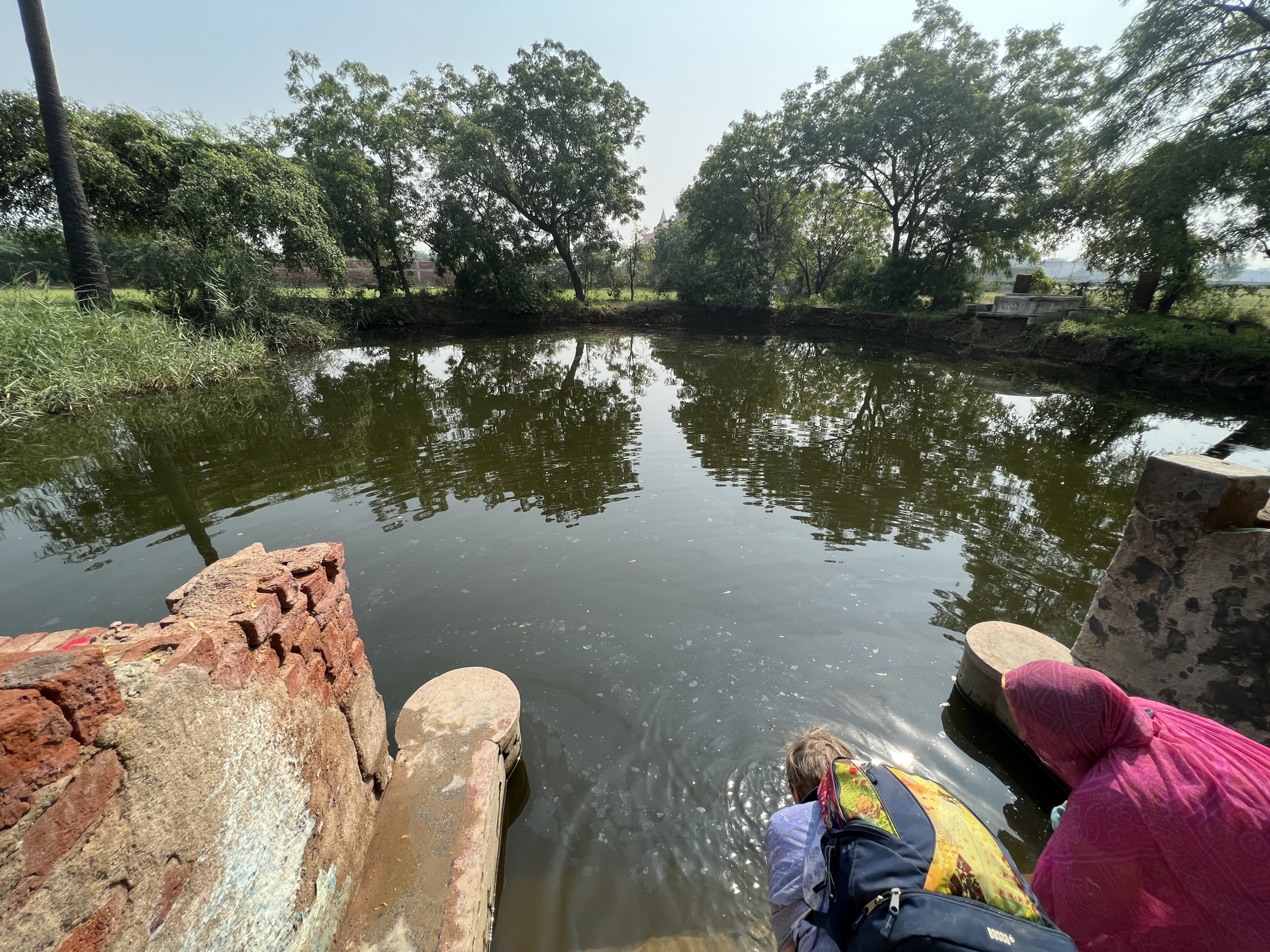
This is the kunda where Nanda Maharaja used to take his morning bath. There is a small temple on the bank of the kunda containing the Deities of Nanda Baba with Krishna and Balarama sitting on his lap. Also here is the baithaka or sitting place of Nanda Maharaja. The word ‘baithaka’ means a ‘seat’ or ‘sitting place’ and is derived from the word ‘baithna’ meaning ‘to sit’. After bathing, Nanda would sit here and meet some of his friends. Whenever there was a meeting amongst the cowherd men, they would always gather at this baithaka to discuss various important matters.


