Description

Bhaktivedanta Narayana Gosvami
From the book “Sri Vraja-maṇḍala-parikramā”:
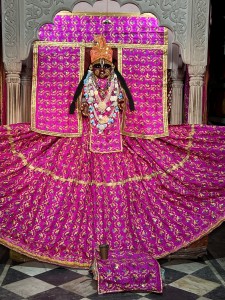
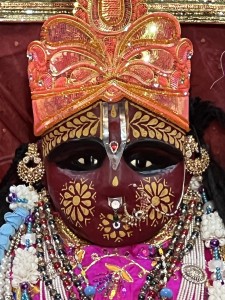
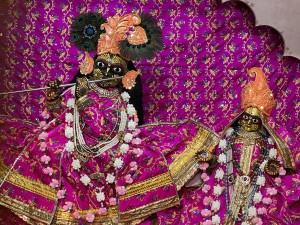
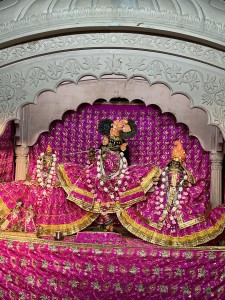
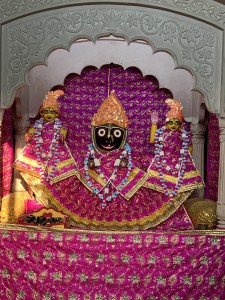
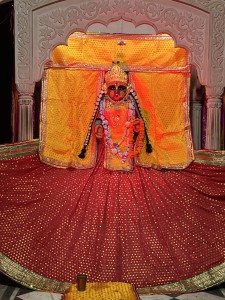
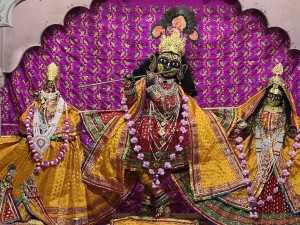
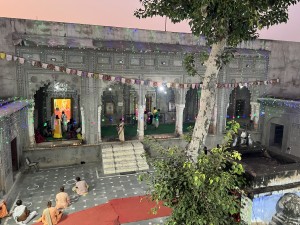
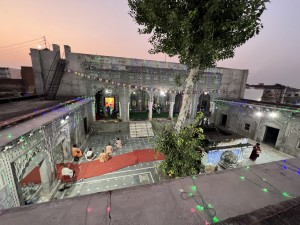
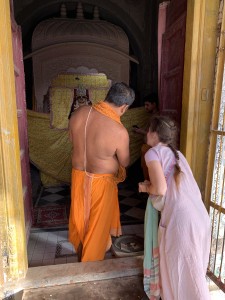
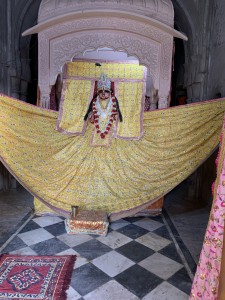
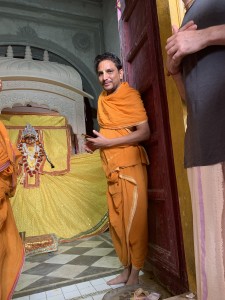
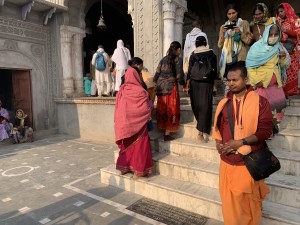
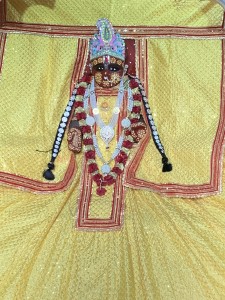
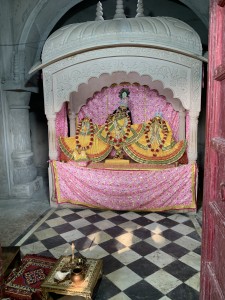
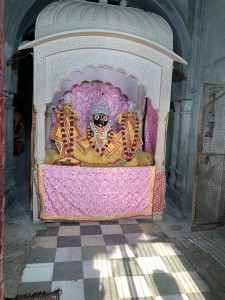
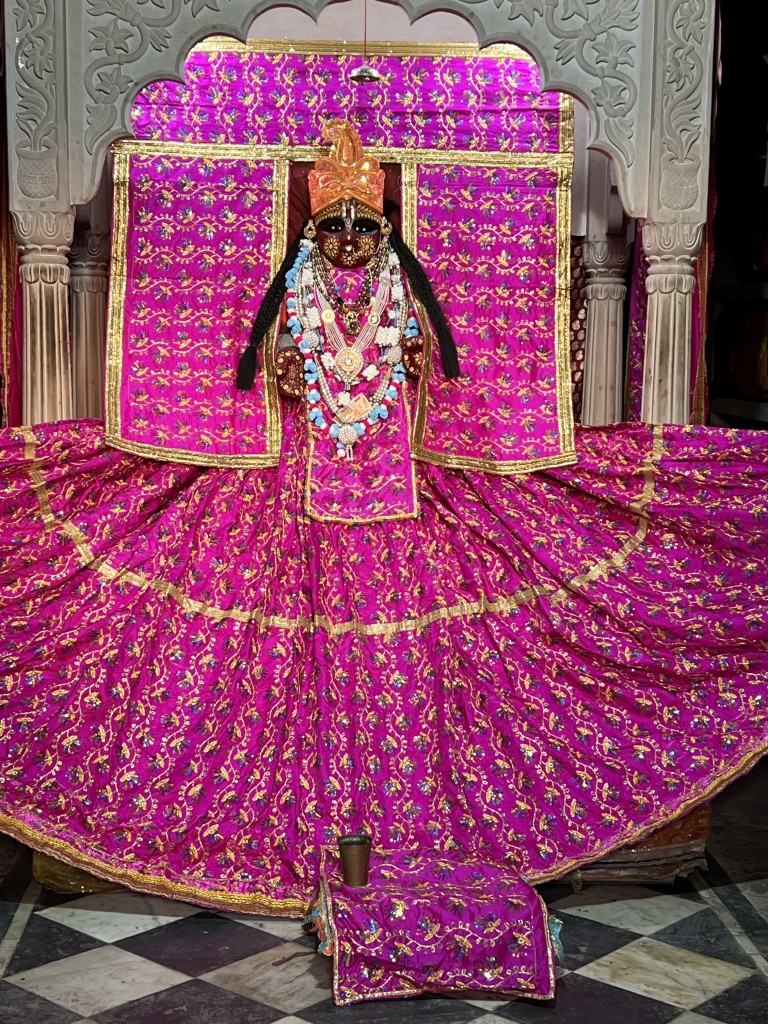
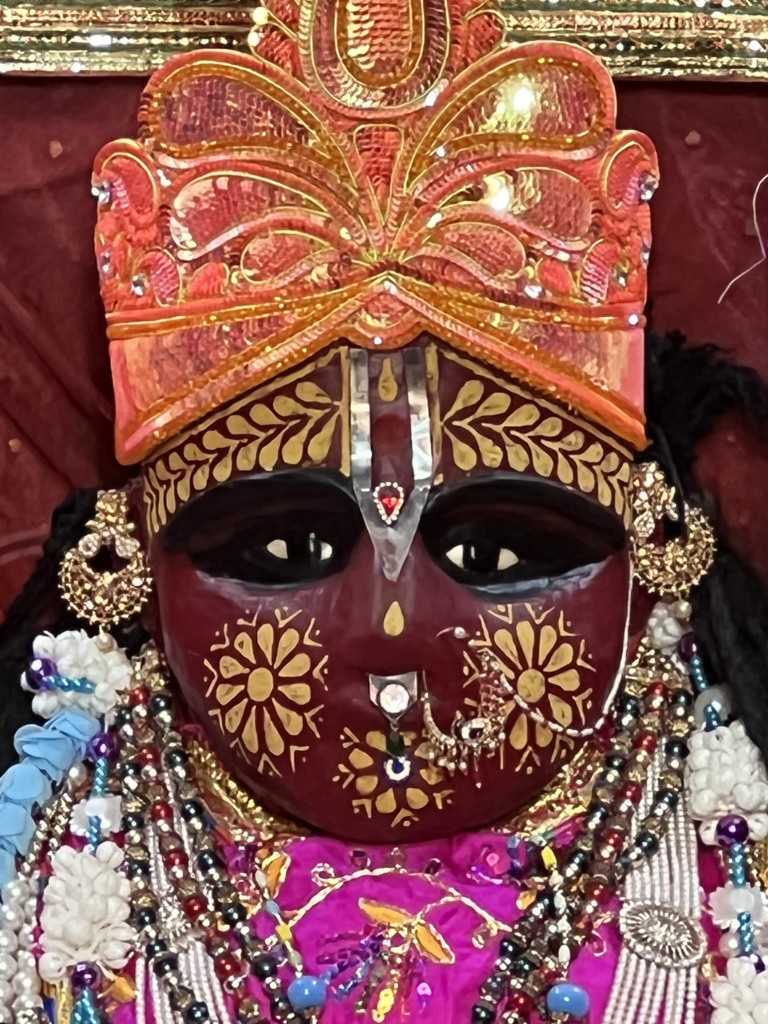
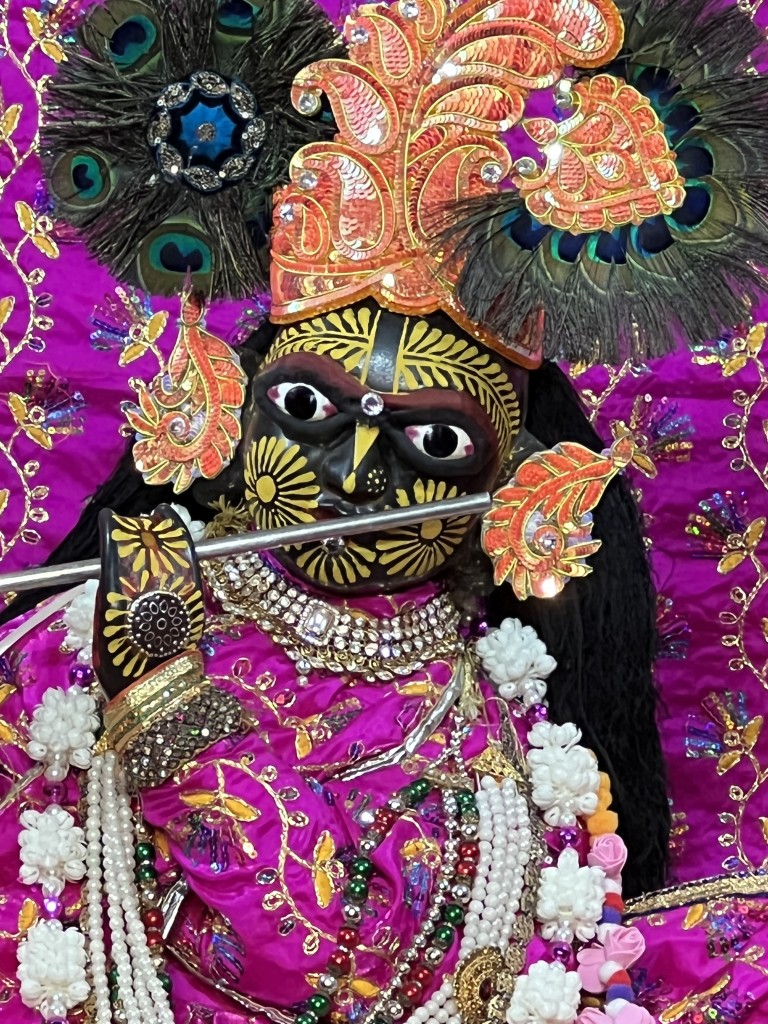
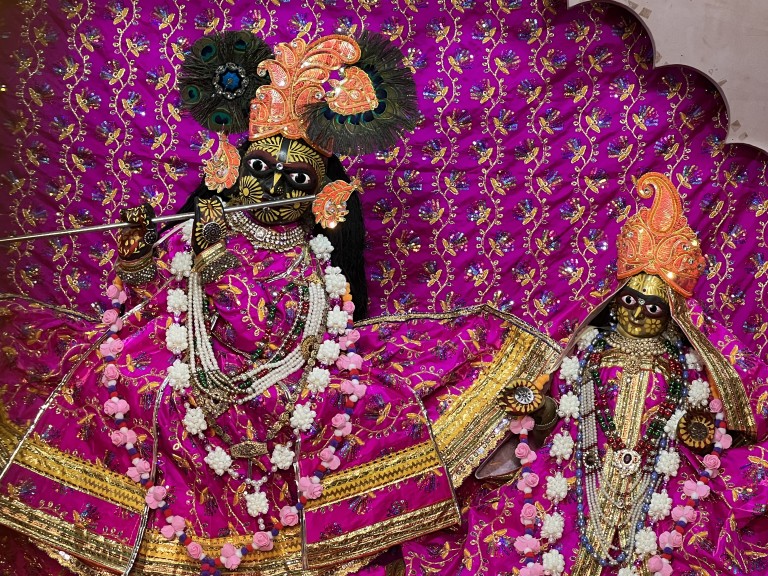
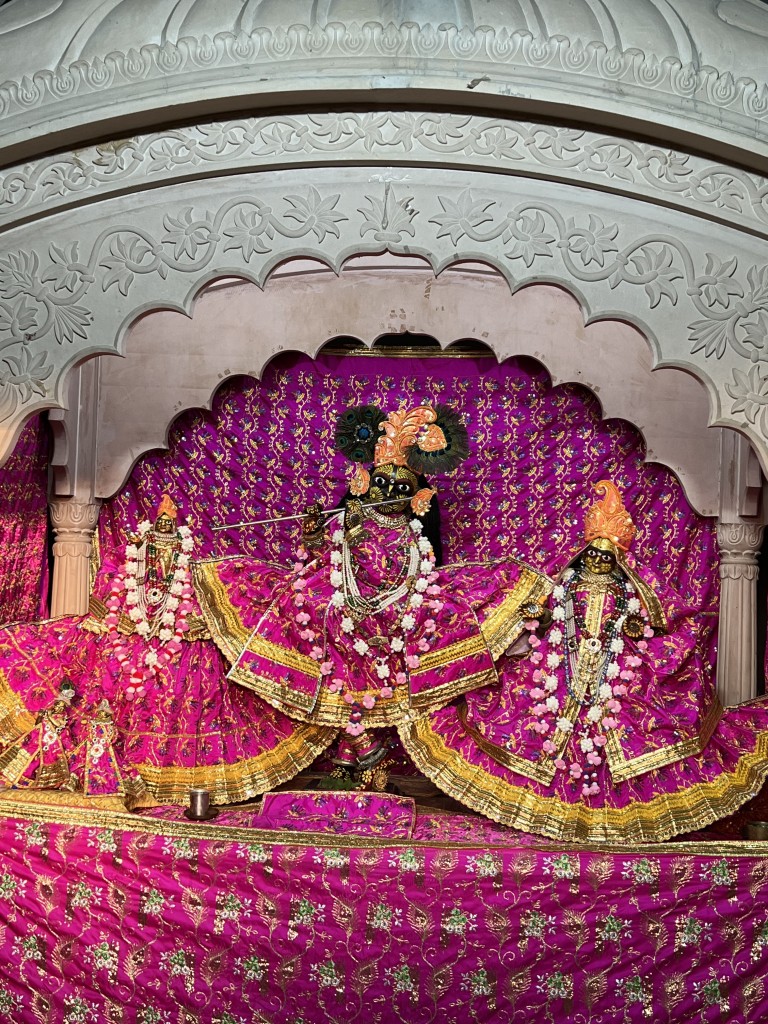
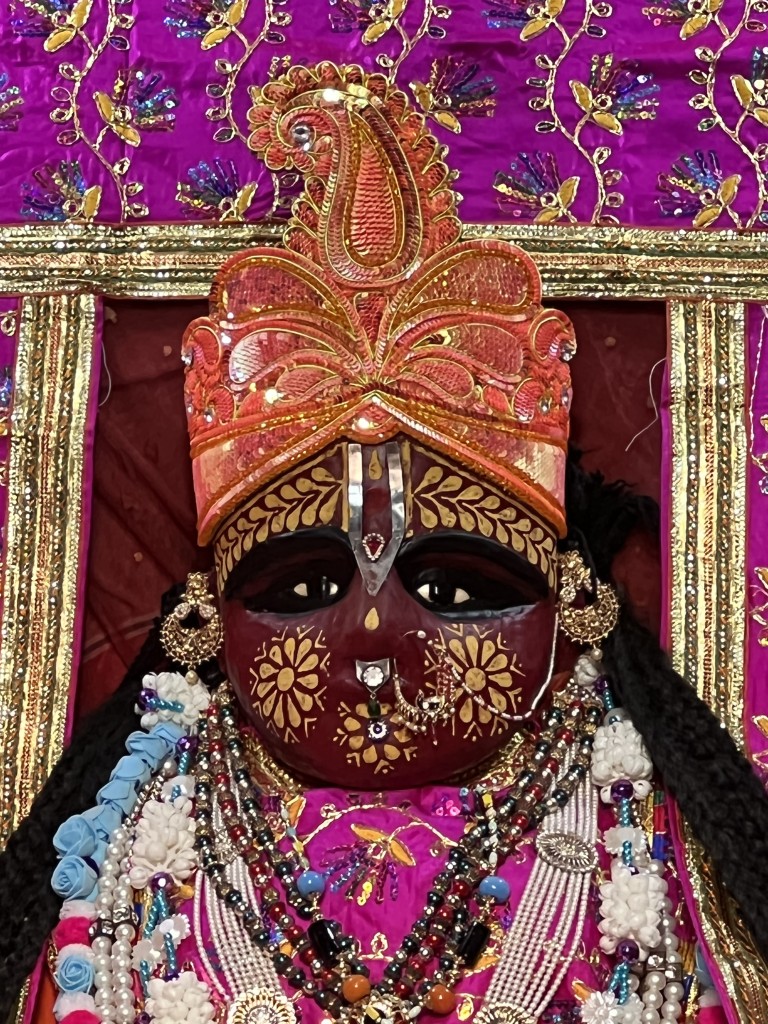
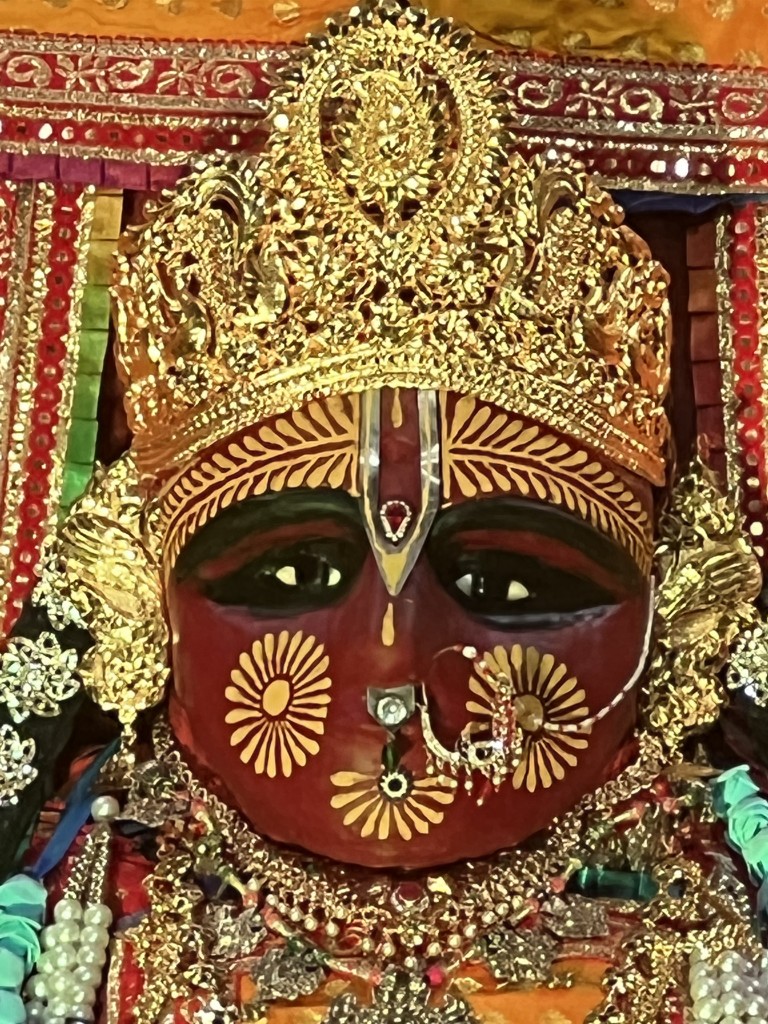
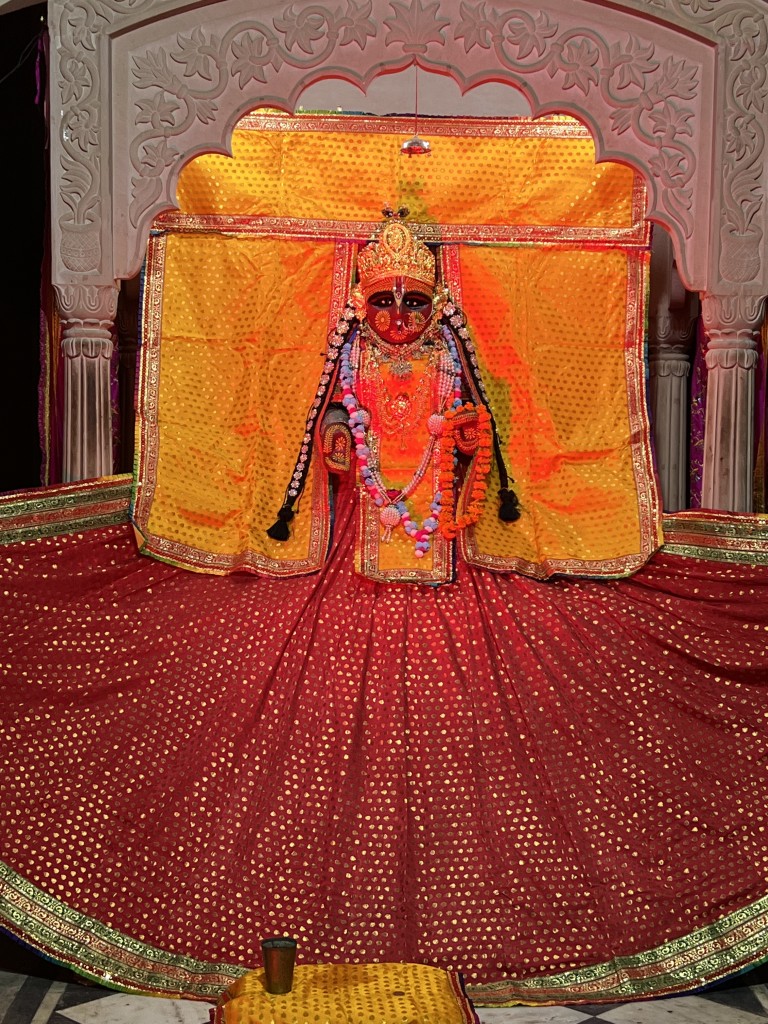
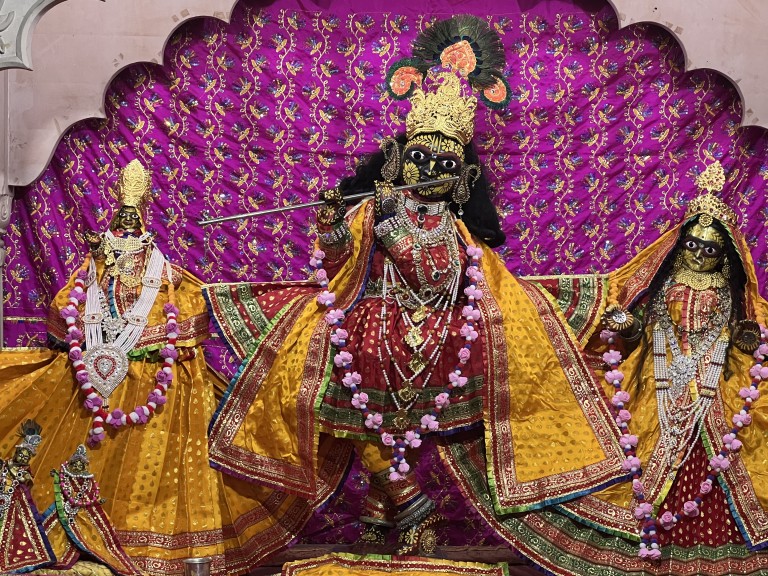
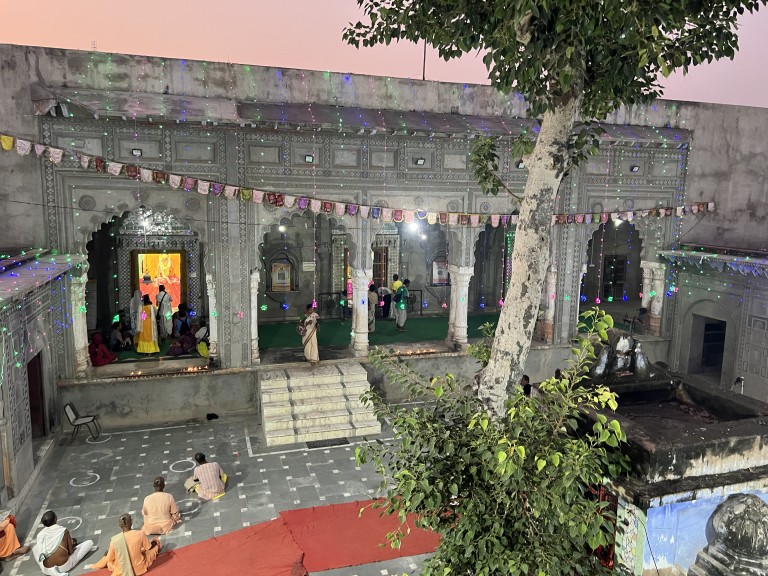
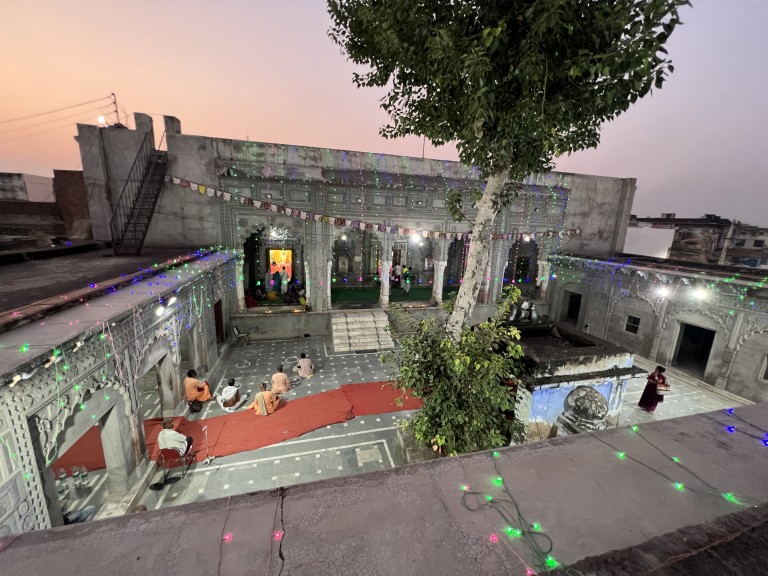
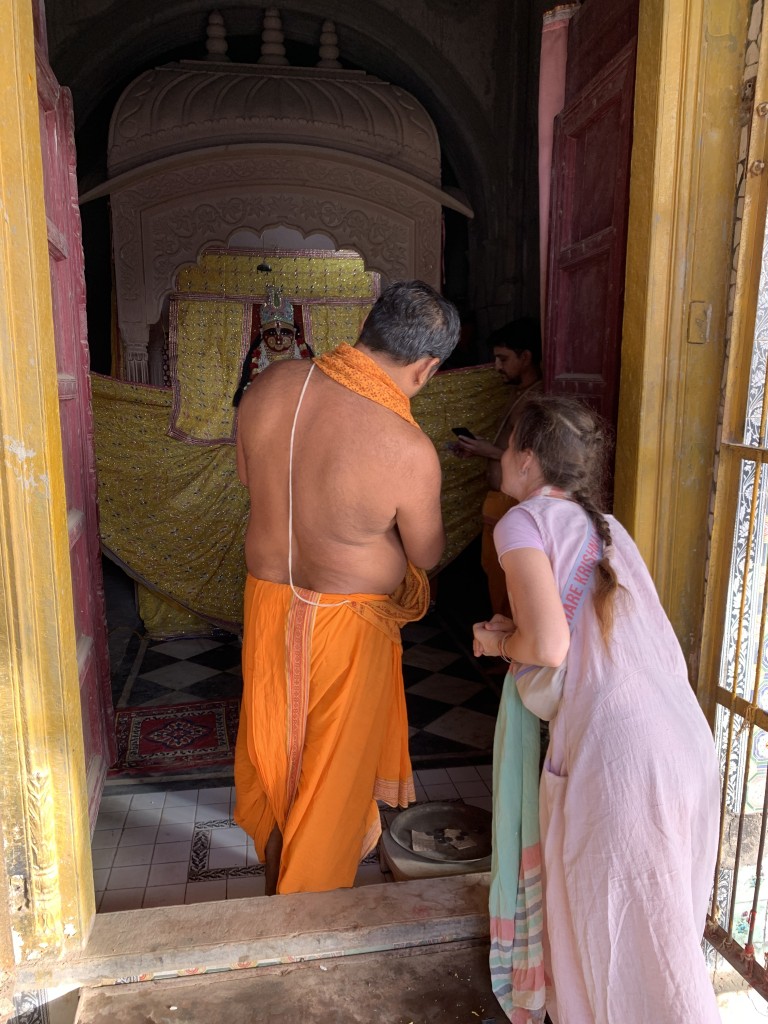
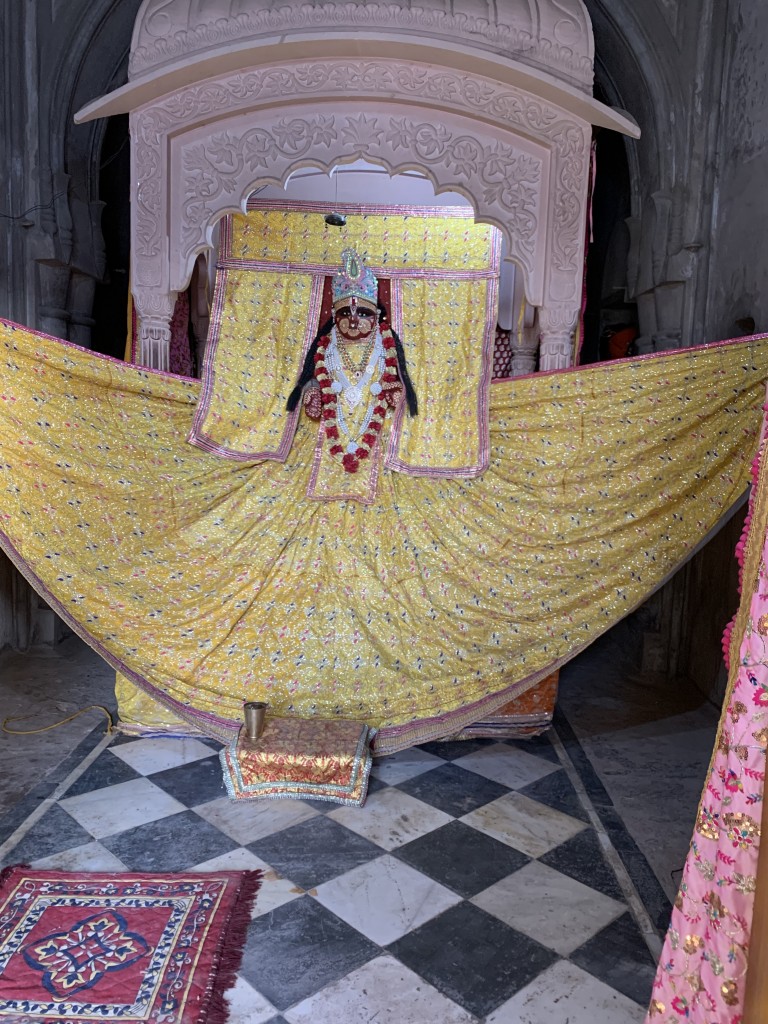
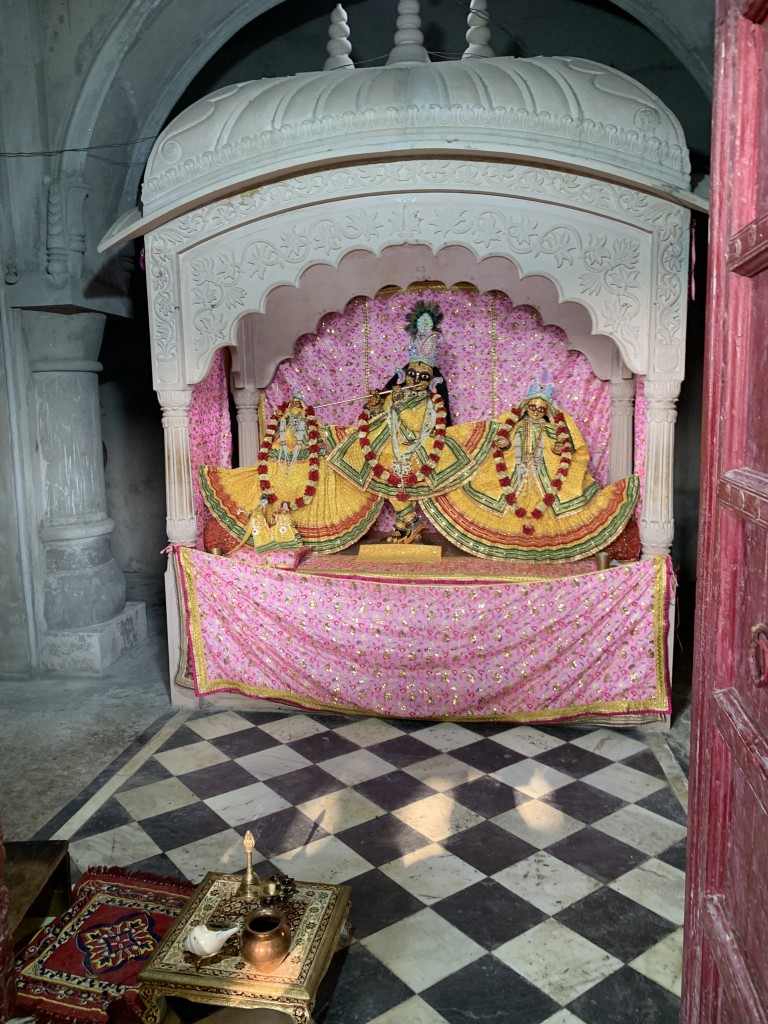
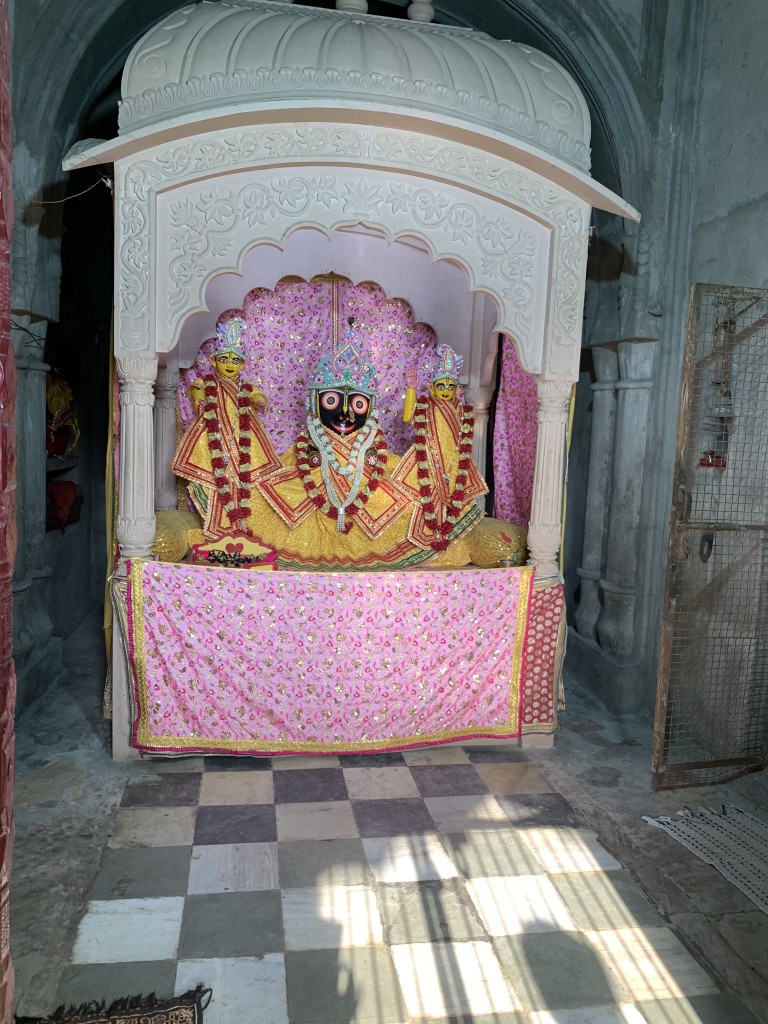
This is Kāmyavana’s most famous temple. Darśana of Vṛndā- devī is rare in Vraja-maṇḍala, but here one can have her special darśana. Śrī Rādhā-Govindadeva are also residing here. Nearby is Śrī Viṣṇu-siṁhāsana, or the throne (siṁhāsana) of Śrī Kṛṣṇa. Close by is Caraṇa-kuṇḍa, where the lotus feet of the Divine Couple Śrī Rādhā-Govinda were bathed.
After Śrī Rūpa, Śrī Sanātana and the other Gosvāmīs left this world, the narrow-minded Mughal emperor Aurangzeb destroyed the famous temples of Vṛndāvana, Mathurā and other locations in Vraja. At that time, the Mahārāja of Jaipura, who was a great devotee, brought the famous deities of Vraja to Jaipura. These included Śrī Govinda, Śrī Gopīnātha, Śrī Rādhā-Dāmodara and Śrī Rādhā-Mādhava. On his way, he rested for some days in Kāmyavana. The deities were taken from the chariots and kept at various locations where regular services to Them were performed, such as bathing, offering bhoga and putting Them to rest. They were later carried to Jaipura and other places. Eventually, large temples were constructed at the places where the deities of Śrī Rādhā-Govinda, Śrī Rādhā-Gopīnātha and Śrī Rādhā-Madana-mohana had stayed in Kāmyavana, and pratibhū-vigrahas of the original deities were installed there.
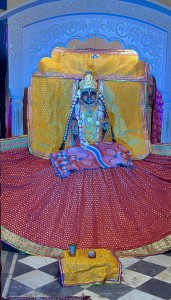
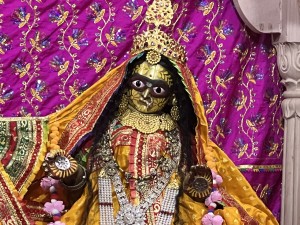
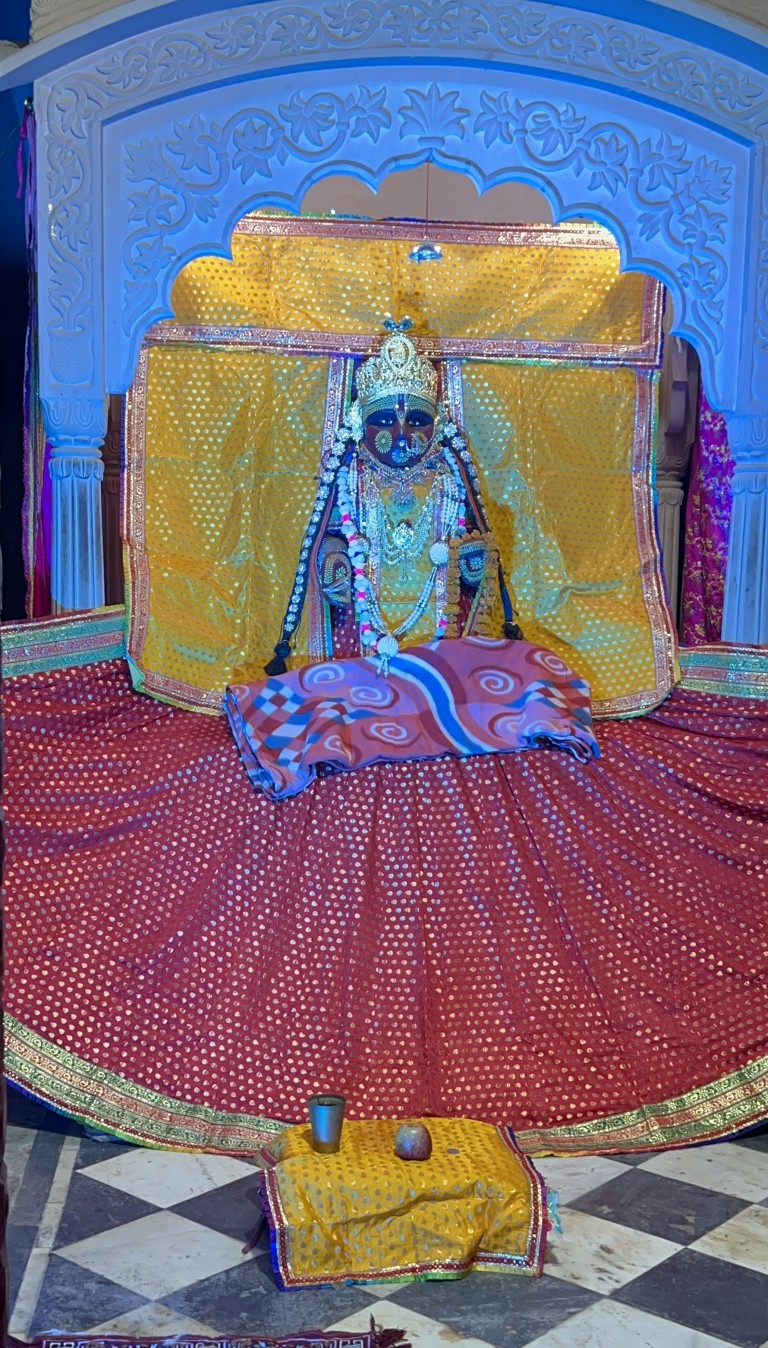
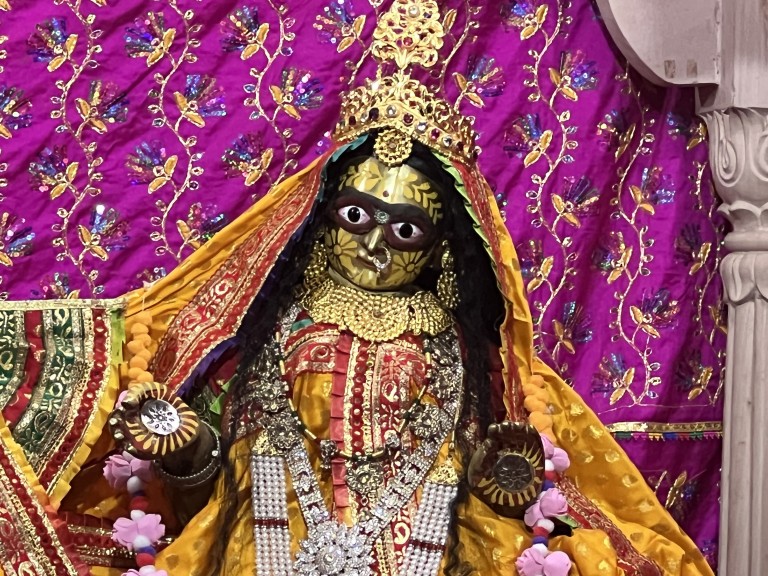
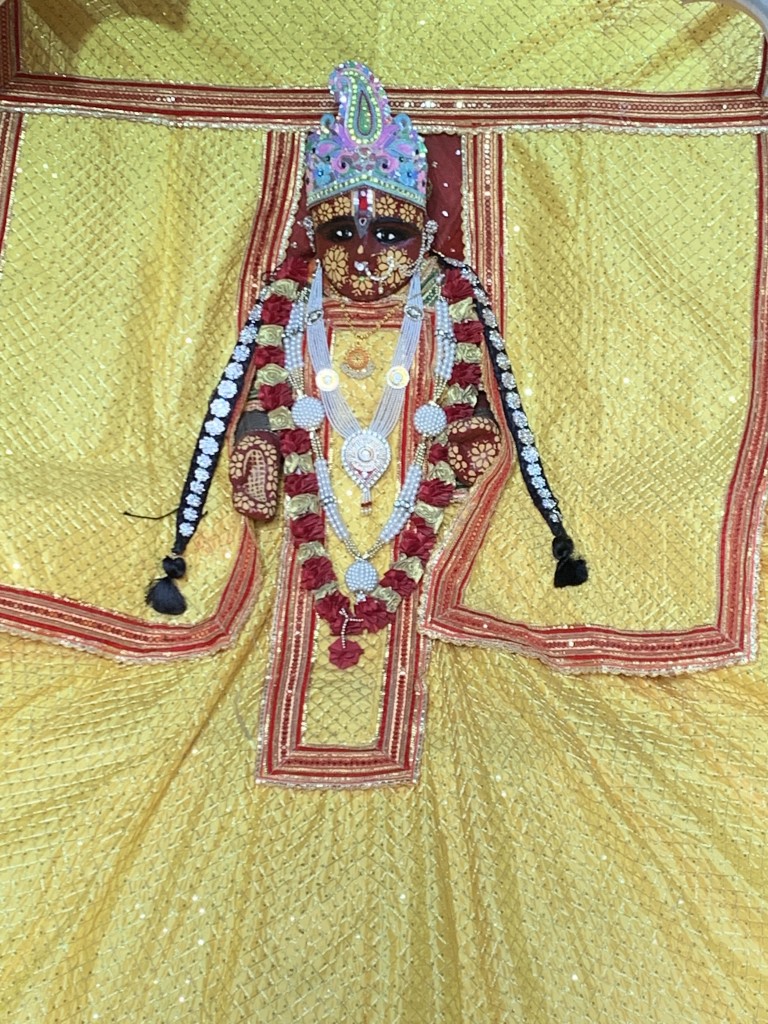
Śrī Vṛndā-devī came as far as Kāmyavana, but she did not leave Vraja to go further. There is thus a special darśana of Śrī Vṛndā-devī here.
Śrī Caitanya Mahāprabhu and His associates, like Śrī Rūpa and Śrī Sanātana Gosvāmīs, re-established the lost pastime places of Vraja-maṇḍala. Before their arrival in Vraja, Kāmyavana was considered to be Vṛndāvana. However, Śrī Caitanya Mahāprabhu established the place situated near Mathurā as Śrī Dhāma Vṛndāvana. It is impossible for Yamunājī, Cīra-ghāṭa, Nidhuvana, Kālīya-daha, Keśī-ghāṭa, Sevā-kuñja, Rāsa-sthalī Vaṁśīvaṭa and Śrī Gopīśvara Mahādeva to be situated in Kāmyavana. Therefore, that place where the pastime places like Vimala-kuṇḍa, Kāmeśvara Mahādeva, Caraṇa-pahāḍī, Setubandha Rāmeśvara and others are present is Kāmyavana, and it is without doubt separate from Vṛndāvana. Vṛndā-devī resides in Vṛndāvana only. She is the presiding deity of the groves of Vṛndāvana and of the pastimes of the Divine Couple in those groves. Therefore, she now resides in Śrī Rūpa-Sanātana Gauḍīya Maṭha in Śrī Dhāma Vṛndāvana, where she grants her divine darśana.
In the vicinity of the Śrī Govindadeva Temple, one can have darśana of places like Garuḍajī, Candrabhāṣā-kuṇḍa, Candreśvara Mahādeva, Varāha-kuṇḍa, Varāha-kūpa, Yajña-kuṇḍa and Dharma-kuṇḍa.
Rajashekhara Dasa
From the book “Chaurasi-kosa Vraja Mandala Parikrama”:
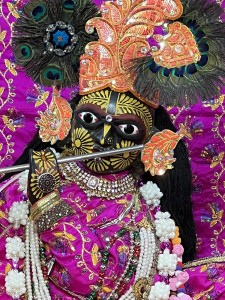
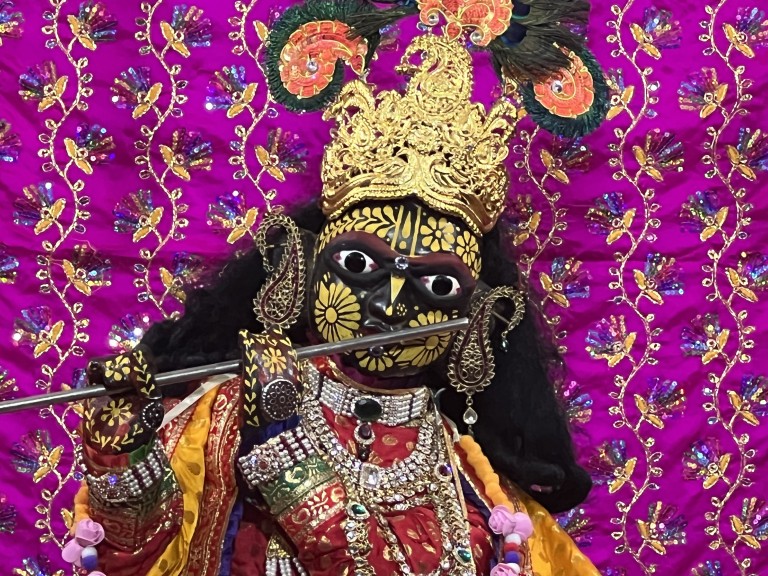
The Deity of Govindaji was originally established in Vrindavana by Lord Krishna’s great grandson Maharaja Vajranabha, who was the king of Mathura just after Krishna’s disappearance around five thousand years ago. During the course of time the Deity was lost and eventually rediscovered by Shrila Rupa Goswami hidden in a hole on the hill-top known as Goma-tila, also called the Govindaji Yoga Pitha, the place where the Govindaji Mandira now stands.
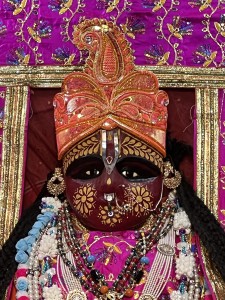
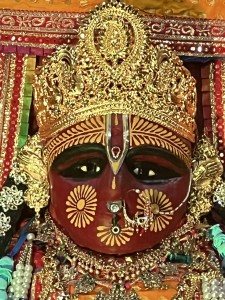
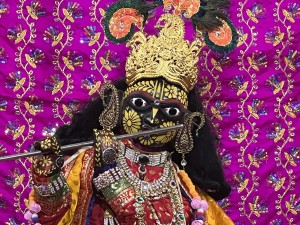
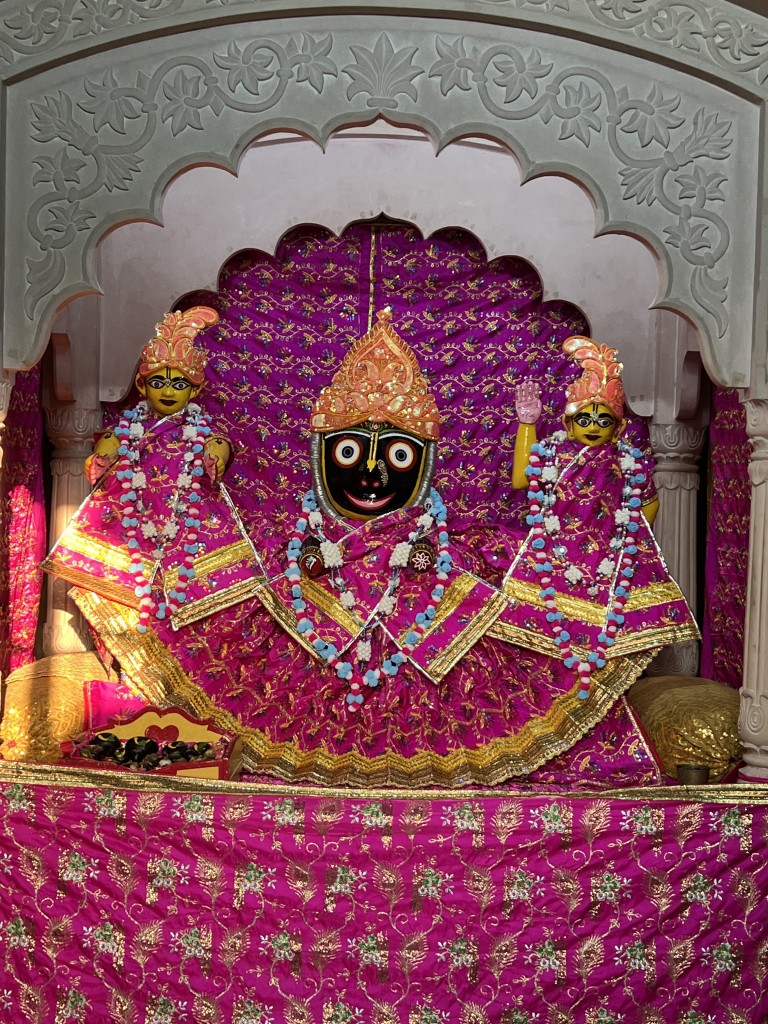
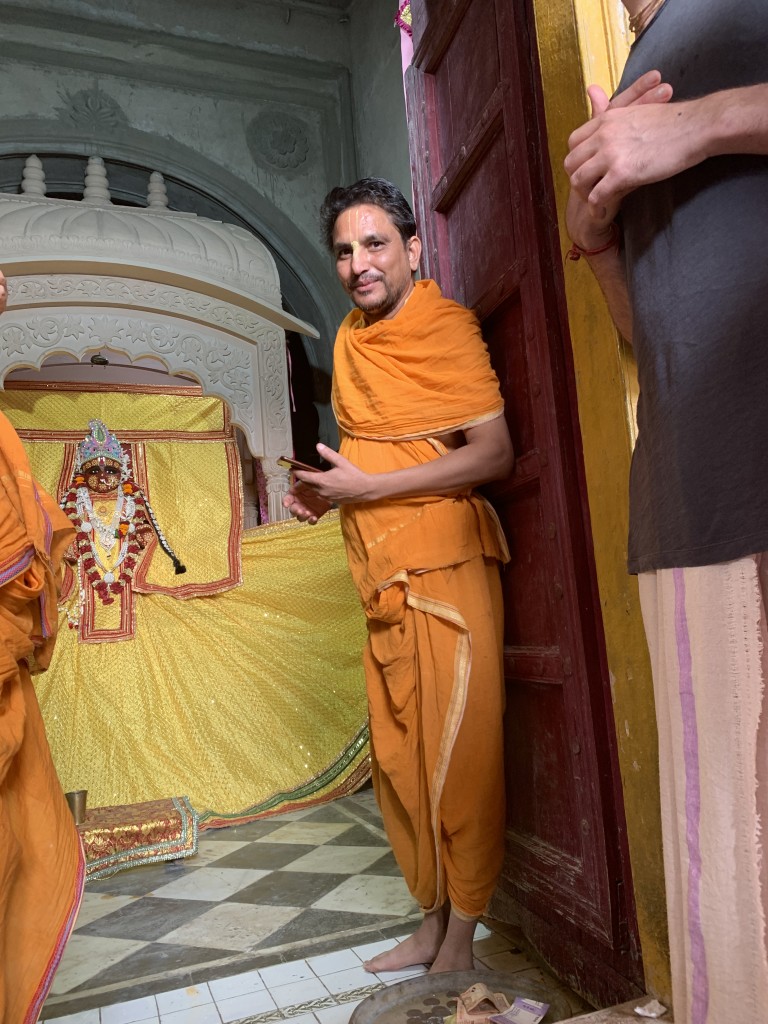
Here in this temple one can see the original Deity of Vrinda Devi alongside the ‘pratibhu-murti’ of Lord Govindaji and also a Deity of Lord Jagannatha Swami. When the Deities of the Gaudiya Goswamis were brought from Vrindavana, they were kept at different locations in Kamyavana for safety. At this particular location, the Deities of Govindaji and Vrinda Devi were kept for three or four days before Govindaji was moved to Amber, then finally to Jaipura in Rajasthan. When the pujaris tried to move the Deity of Vrinda Devi, she became too heavy to move; the pujaris therefore concluded that Vrinda Devi, the presiding Deity of Vrindavana forest, was not willing to leave the holy dhama. Consequently, Vrinda Devi remained at Kamyavana and was later installed in this temple along with the pratibhu-murti of Govindaji.
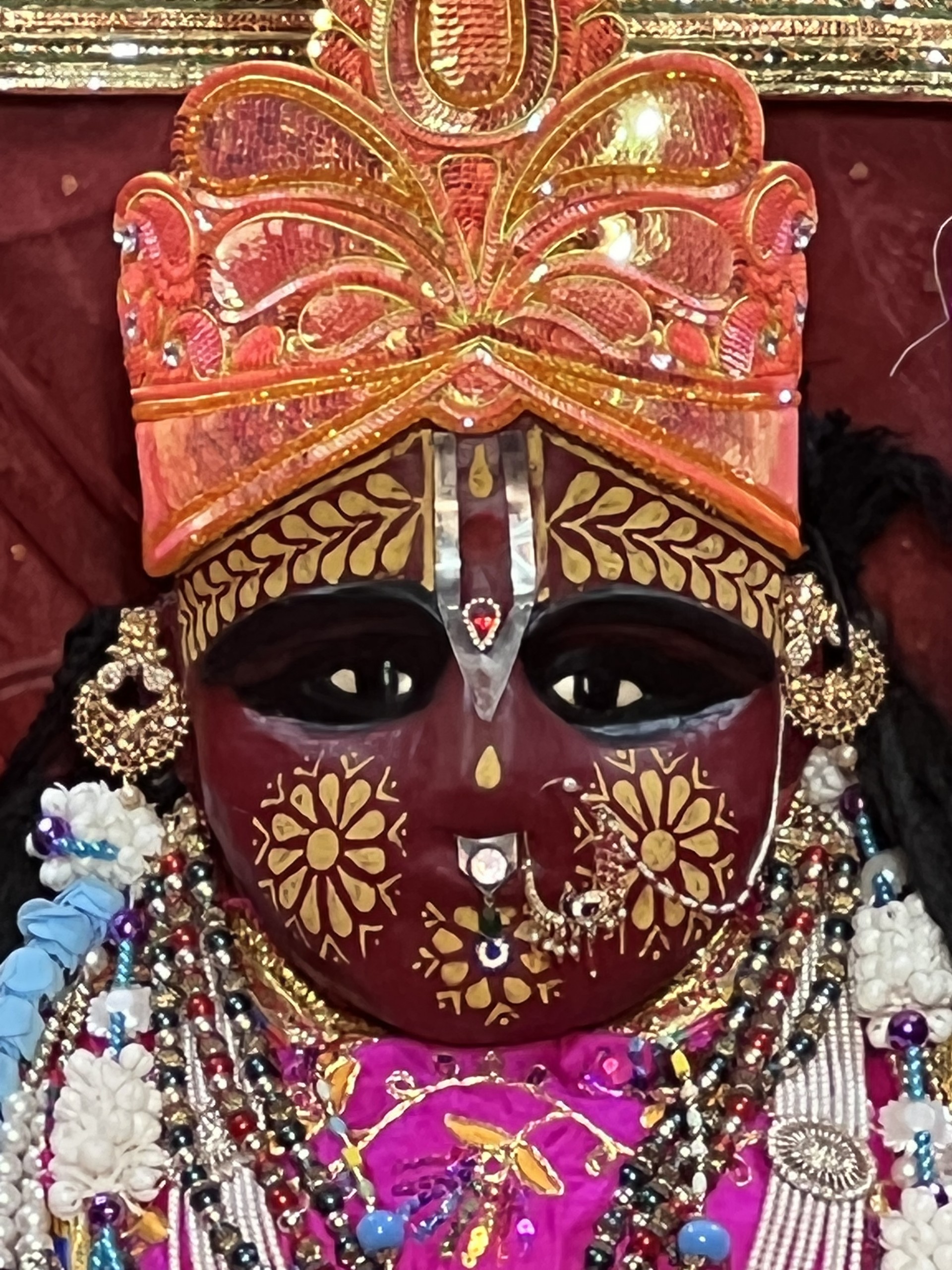
This very beautiful Deity of Vrinda Devi has ten arms holding her various symbols and is said to have been originally installed in Vrindavana by King Vajranabha, five thousand years earlier. During the course of history, the Deity was lost but was subsequently rediscovered in Brahma-kunda by Shrila Rupa Goswami after she appeared in a dream informing him where she lay hidden. Rupa Goswami then installed Vrinda Devi in the Govindaji Mandira in Vrindavana. Vrinda Devi is the gopi after whom the forest of Vrindavana has been named (the vana of Vrinda). Along with Purnamasi, Vrinda Devi is responsible for making all the various arrangements for the loving pastimes between Radha and Krishna within the groves of Vrindavana. Shrimati Tulasi Devi is considered to be the partial expansion of Vrinda Devi, who is herself an expansion of Yogamaya Devi.
Photo (24)