Description

Bhaktivedanta Narayana Gosvami
From the book “Sri Vraja-maṇḍala-parikramā”:
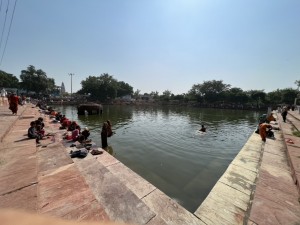
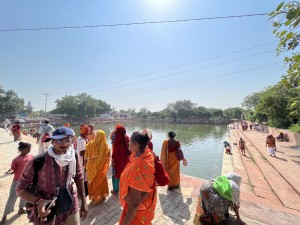
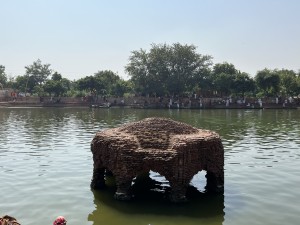
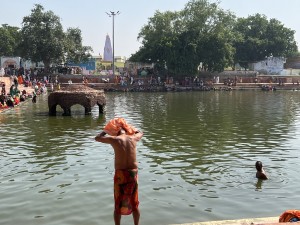
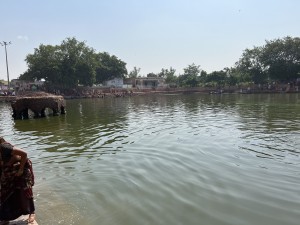
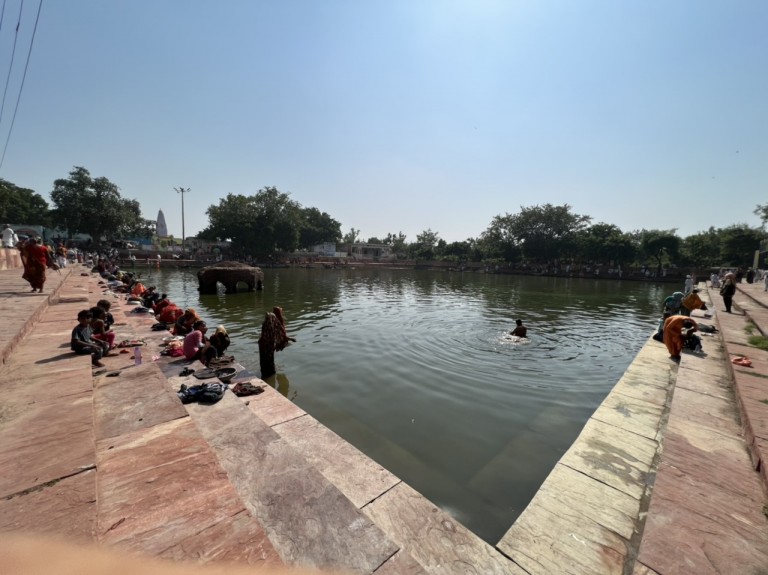
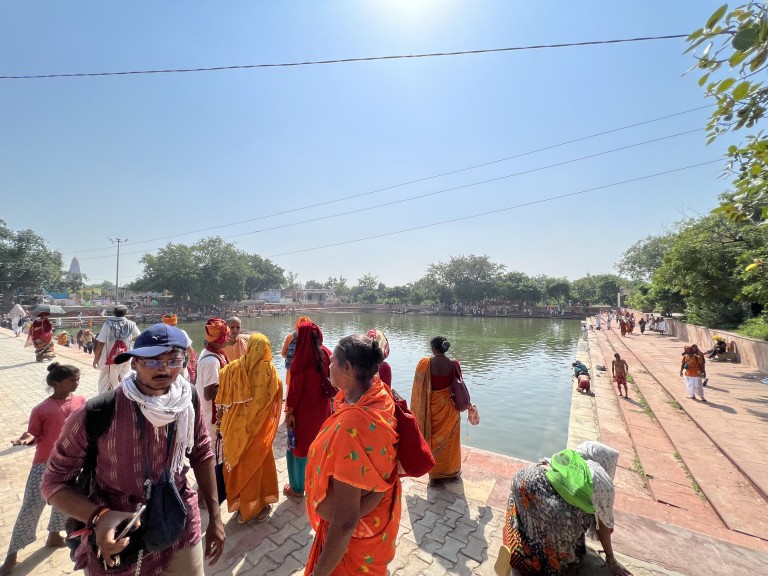
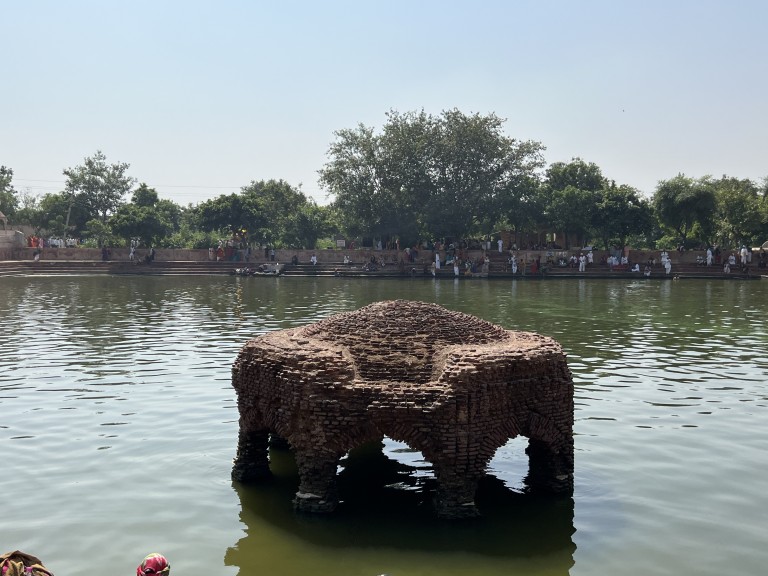
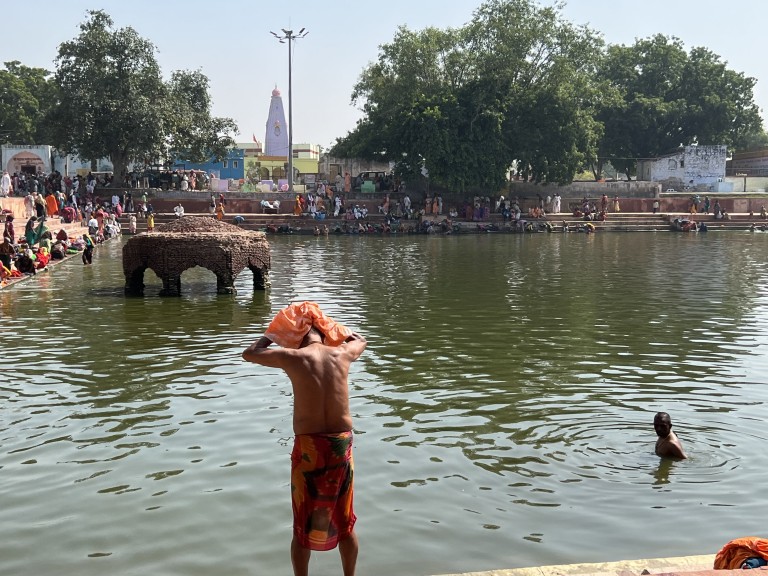
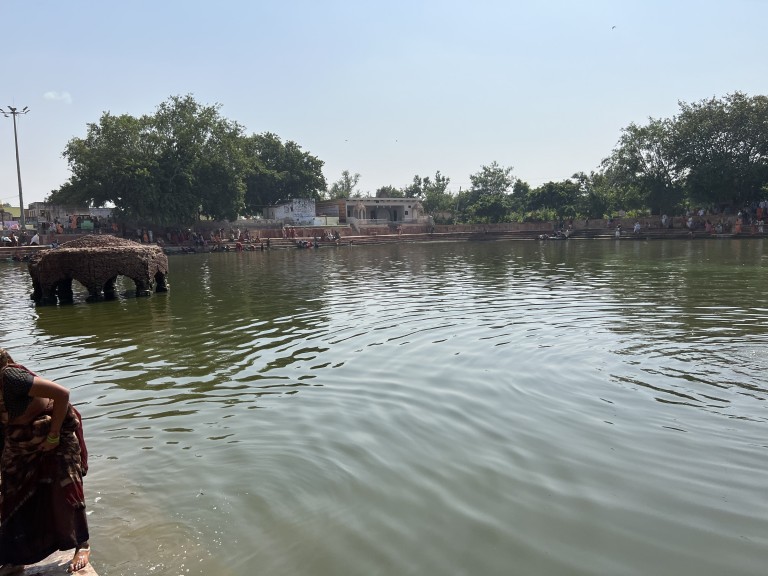
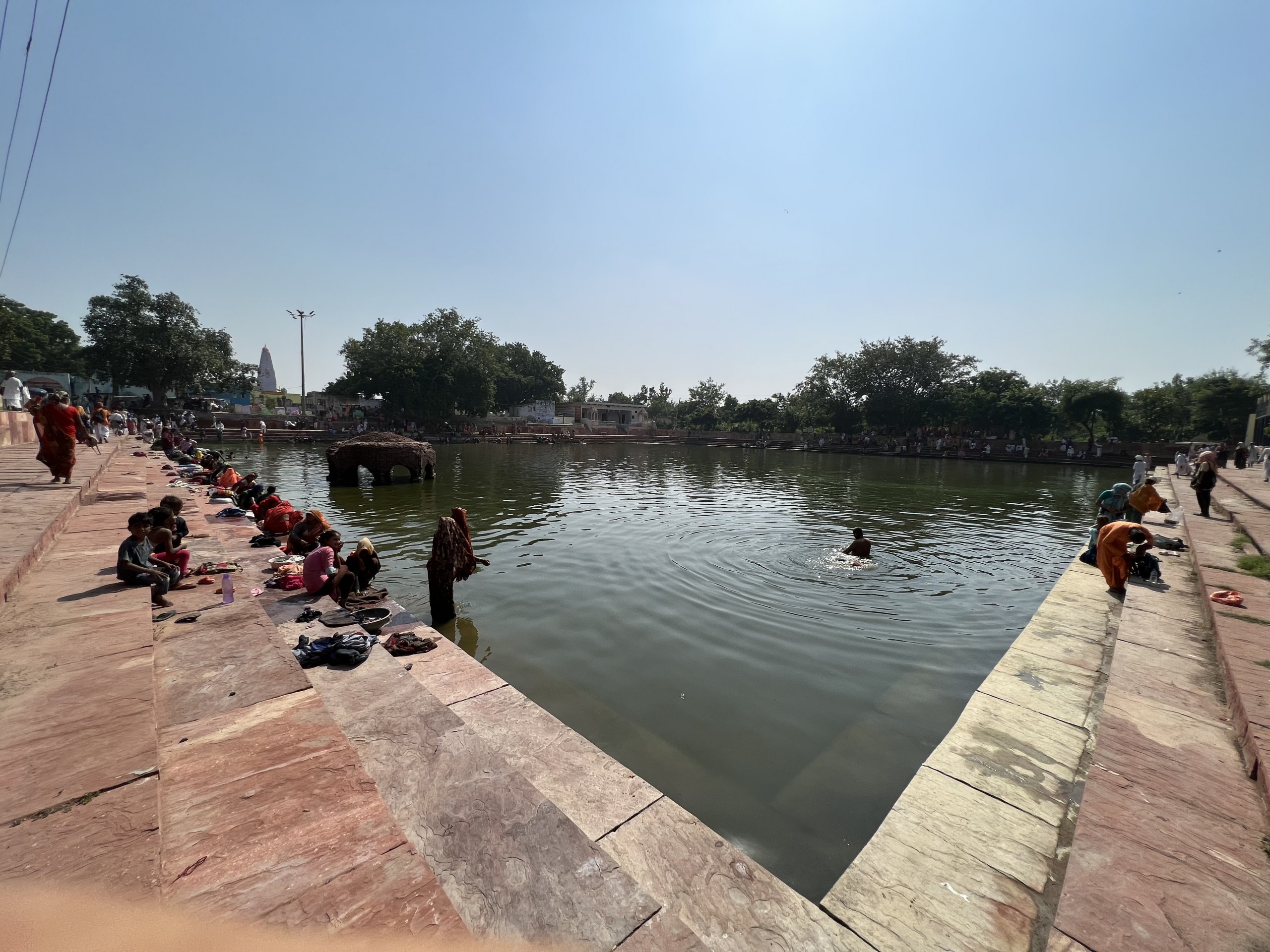
The holy place of Gayā resides at this place in Vraja-maṇḍala, performing worship of Kṛṣṇa. Agasta-kuṇḍa is also here. Gayā- kuṇḍa’s southern bank is known as Agasta-ghāṭa. Bathing here and performing tarpaṇa (offering water to the demigods, sages and forefathers) and piṇḍa-dāna (offering homage to the dead souls) in the month of Āśvina on the day of the dark moon (Kṛṣṇapakṣa) are highly praised.
Rajashekhara Dasa
From the book “Chaurasi-kosa Vraja Mandala Parikrama”:
This sacred kunda is situated on the outskirts of Kaman Town and it is one of the famous kundas of Kamyavana and considered to be the original Gaya, or Adi-Gaya, with its expansion situated in Bihar state, where Hindus traditionally offer ‘pinda’ once a year to their departed forefathers. Nanda Maharaja used to come here to Gaya-kunda and offer ‘pinda’ to his forefathers, as do many Vrajavasis even today. Some authorities have said that there are many different kundas, now not visible, that were situated around Gaya-kunda including: Prayaga-kunda, Kashi-kunda, Pushkara-kunda, Gomati-kunda, Mana-kunda, Balabhadra-kunda, Narada-kunda, and Dwaraka-kunda, which represent the various holy tirthas found in India. Others say these kundas were actually situated within Gaya-kunda depending at which side of Gaya-kunda one bathed, and it was possible to bathe in all these various holy places one after another by moving clockwise around Gaya-kunda.
Photo (5)