Description

Rajashekhara Dasa
From the book “Chaurasi-kosa Vraja Mandala Parikrama”:
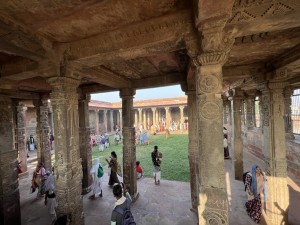
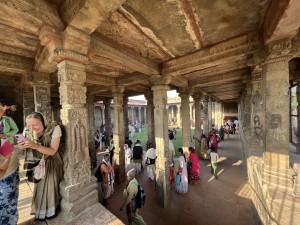
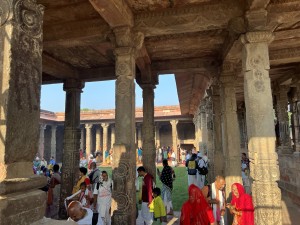
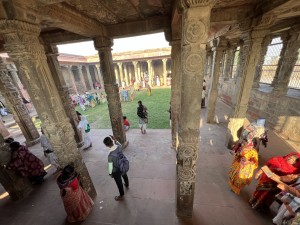
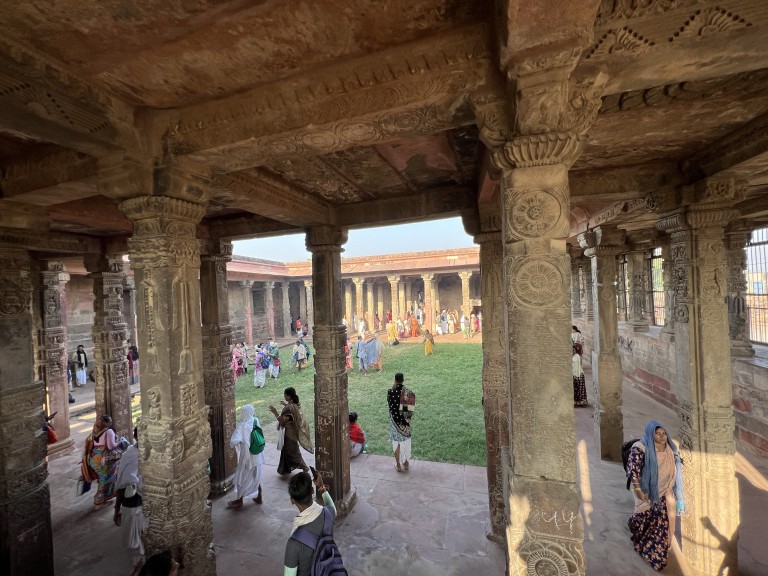
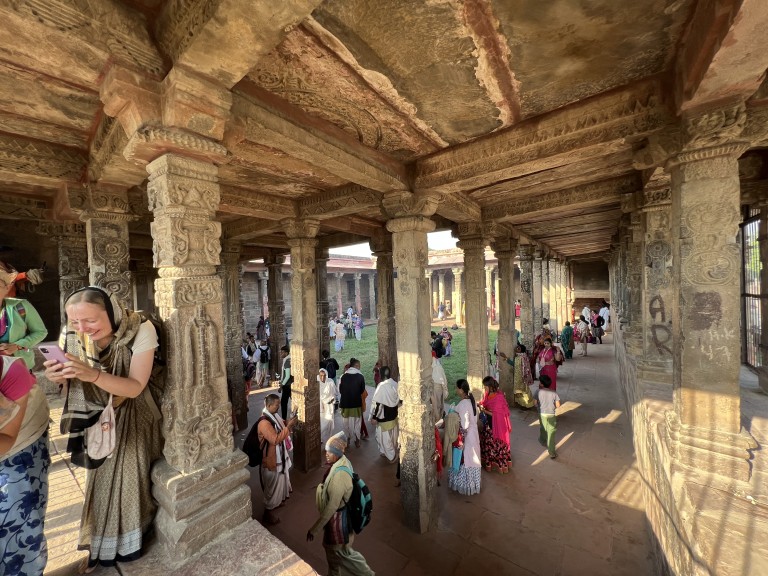
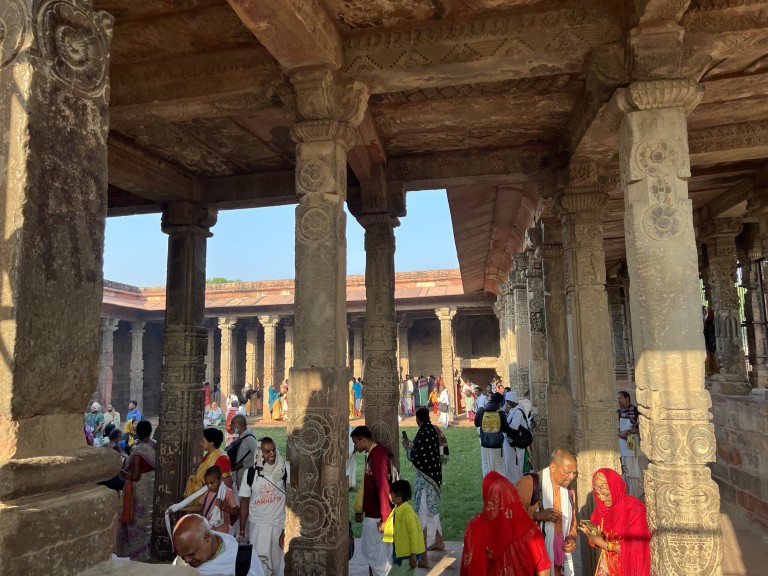
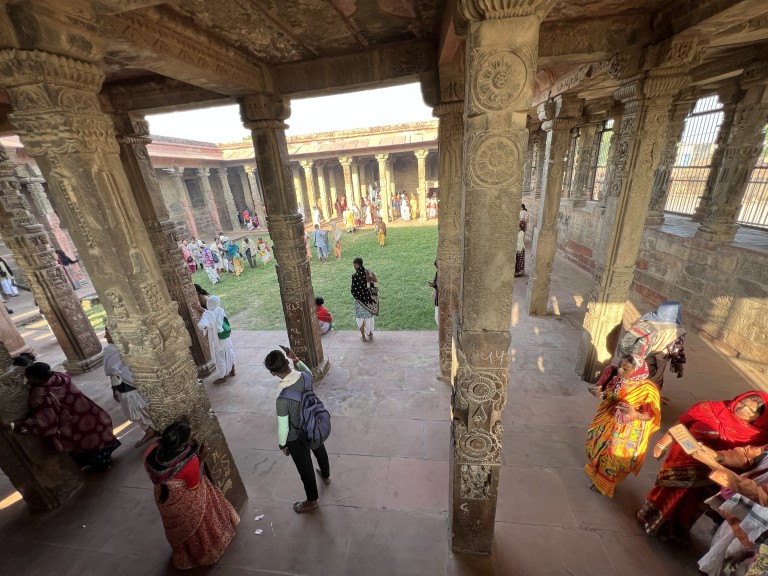
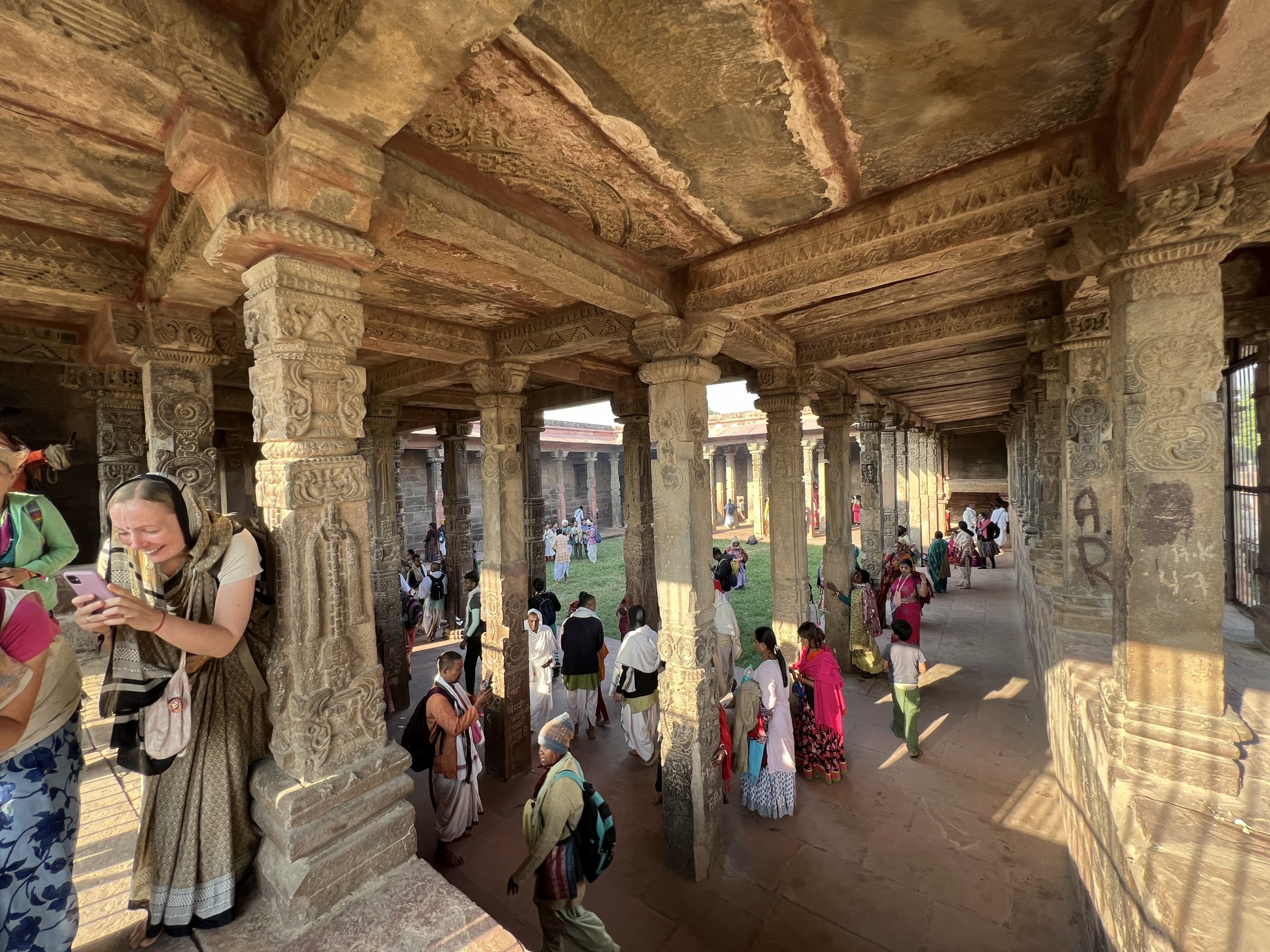
The word ‘chaurasi’ means eighty-four and ‘khamba’ means pillars, in other words a palace with eighty-four stone pillars. This ancient ruin is one of the famous landmarks of Kamyavana and lies on a hilltop between the Govindaji and Gopinatha temples. The Chaurasi Khamba at Kamyavana is said to have been discovered by Shrila Narayana Bhatta, the author of Vraja-bhakti-vilasa and a great authority on Vraja Mandala parikrama. It is said that this palace was built by the celestial architect Vishvakarma and was one of the three palaces of Nanda Maharaja, the others being Gokula and Nandagrama. It appears very similar to King Nanda’s palace at Gokula, but on a much larger scale. Some historians have said it was used by the Pandavas during their exile while others have said it was originally built by Mother Yashoda’s forefathers who ruled the area around Kamyavana.
Some of the local historians claim that Chaurasi-khamba was reconstructed from the ruins on Nanda Maharaja’s palace by a Hindu king named Kamasena Maharaja who ruled over the area. It is said that Kamasena Maharaja excavated and reestablished many important holy places around Kamyavana including Vimala-kunda, but as historical records are practically non-existent such claims are difficult to substantiate. During the Islamic rule over this region it is said that it was used as a mosque and there are a number of Urdu and Persian inscriptions found there.
Photo (5)