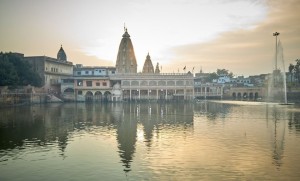
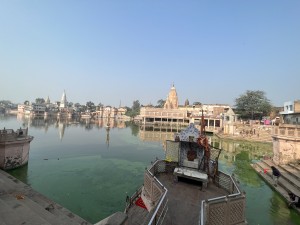
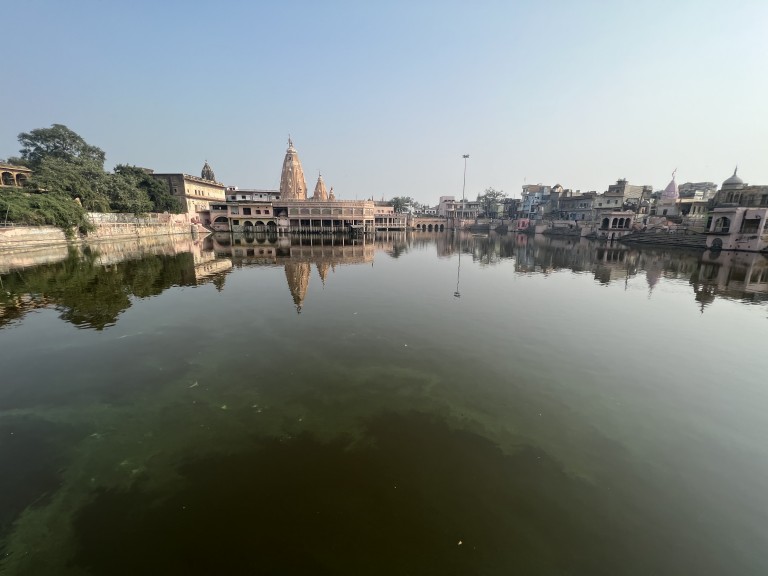
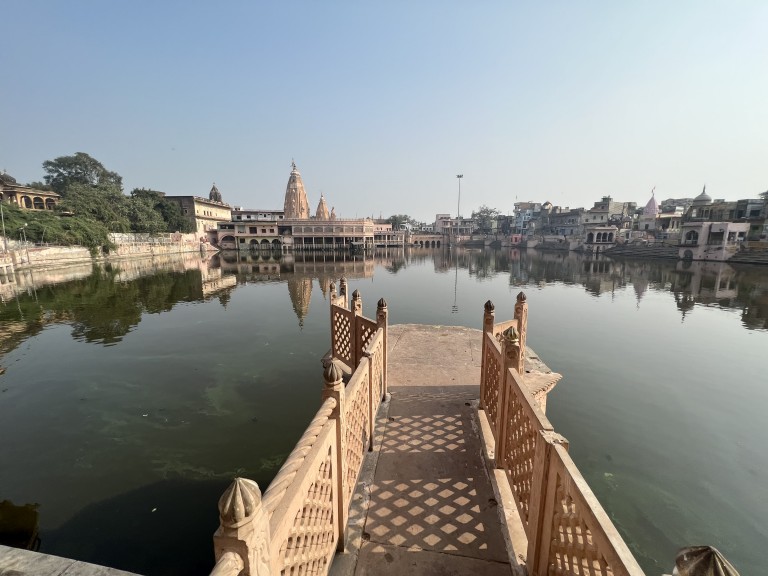
Description

Bhaktivedanta Narayana Gosvami
From the book “Sri Vraja-maṇḍala-parikramā”:
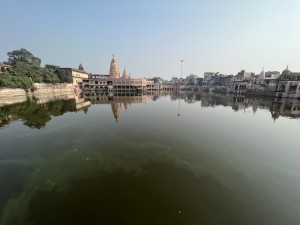
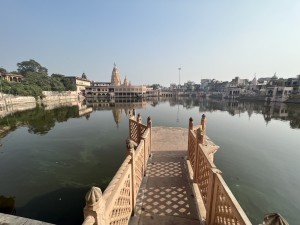
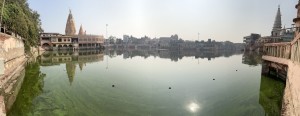
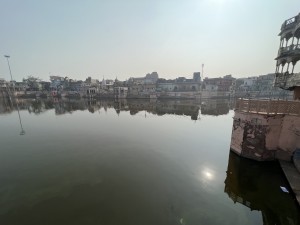
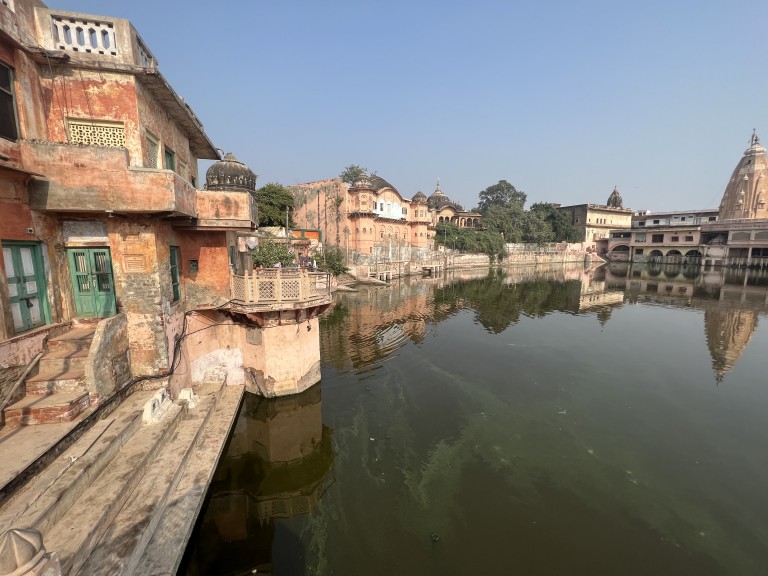
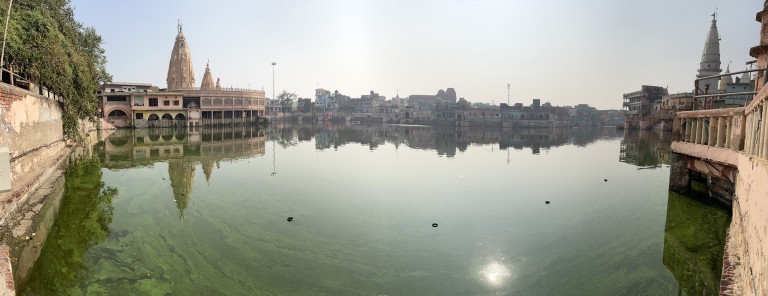
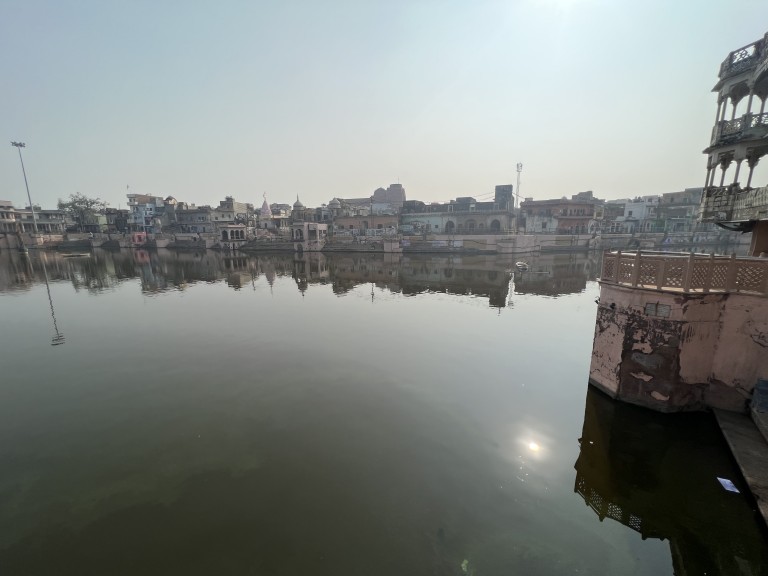
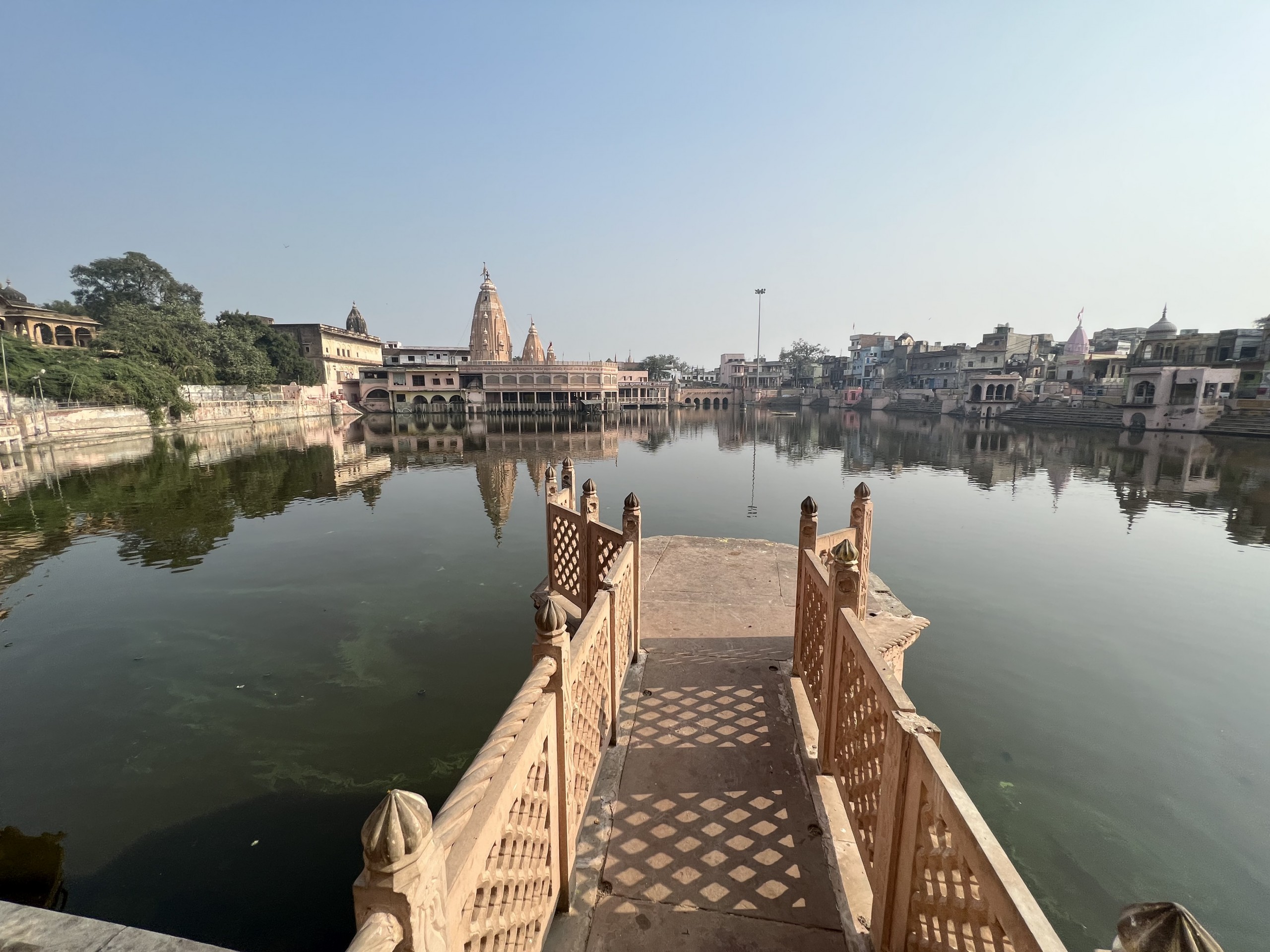
Driven by the gopīs’ insistence that He atone for the sin of killing a bull (Vṛṣabhāsura), Śrī Kṛṣṇa created Mānasī-gaṅgā from His mind and became pure by bathing in its waters.
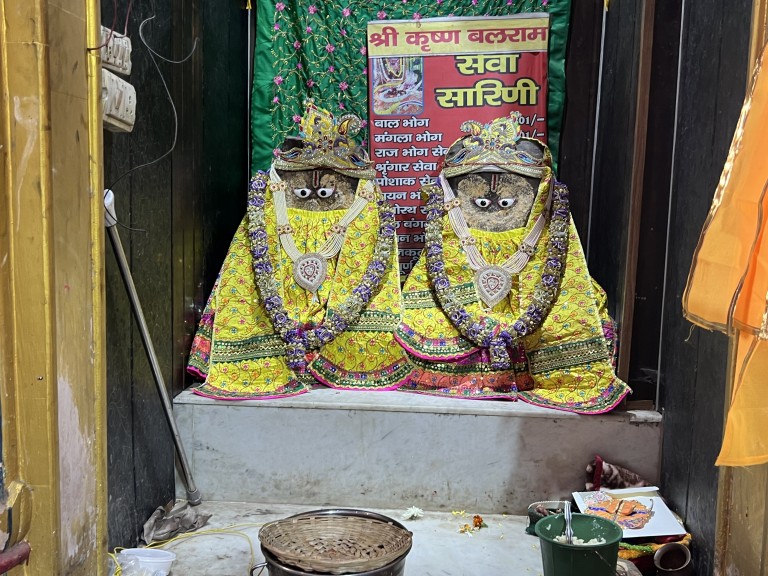
According to a second story, once Śrī Nanda Mahārāja, Śrī Yaśodā and the other gopas and gopīs took Kṛṣṇa and Balarāma with them on a journey to the Gaṅgā to take bath. That night, they rested near Govardhana. Kṛṣṇa questioned the need for them to travel so far when all holy places reside in Vraja. He remembered Gaṅgā-devī, and at once Bhagavatī Bhāgīrathī-Gaṅgā’s strong current brought her to this spot, making a sweet sound. At the head of this current was Śrī Gaṅgā-devī, mounted on an alligator. This darśaṇa astonished Nanda, Yaśodā, and the gopas, gopīs and other Vrajavāsīs.
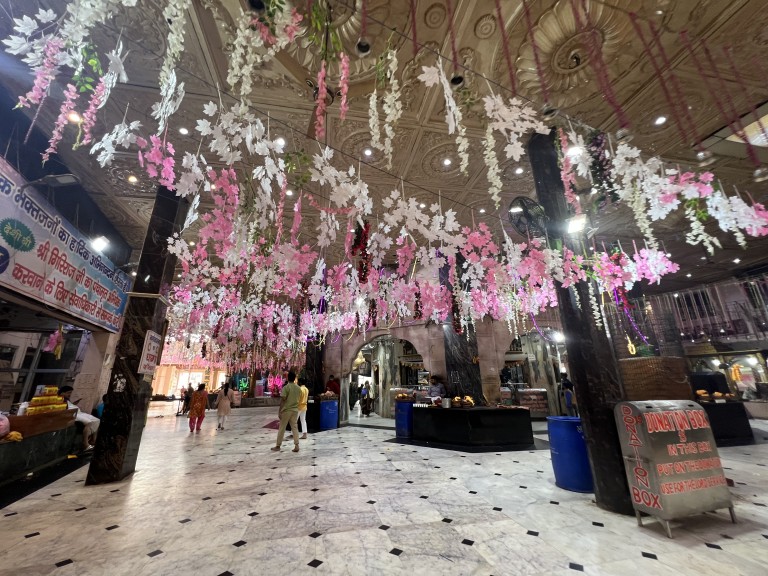
Kṛṣṇa said, “All holy places exist in Vraja. You wanted to bathe in the Gaṅgā, so Gaṅgā-devī has personally appeared before you today. Please bathe in her waters without delay.” Gaṅgā-devī appeared here on the dark night (Amāvasyā) of Kārtika on the day of Dīpāvalī. Large numbers of faithful people bathe here on Dīpāvalī and take darśana of Śrī Harideva. On all of Mānasī-gaṅgā’s banks and near Śrī Girirāja-Govardhana people offer ghee lamps.
According to a third story, Kṛṣṇa used to sport in the Yamunā, sometimes with His sakhās and sometimes with His beloved gopīs. When Bhagavatī Gaṅgā beheld the great fortune of Yamunā, her younger sister, she also became overwhelmed by a strong desire to serve the Divine Couple Śrī Rādhā-Kṛṣṇa. She expressed this yearning to Yamunā and requested her help. Kṛṣṇa’s dear Śrī Yamunā entreated her beloved Kṛṣṇa to bestow His mercy upon her elder sister, so when the time was right, Śrī Kṛṣṇa summoned Gaṅgājī to Vraja and blessed her by frolicking in her waters with the gopīs.
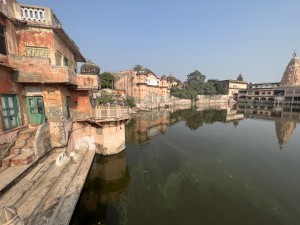
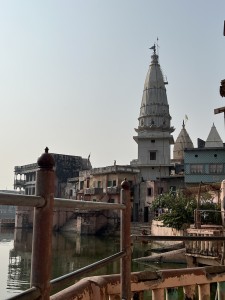
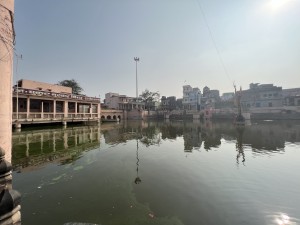
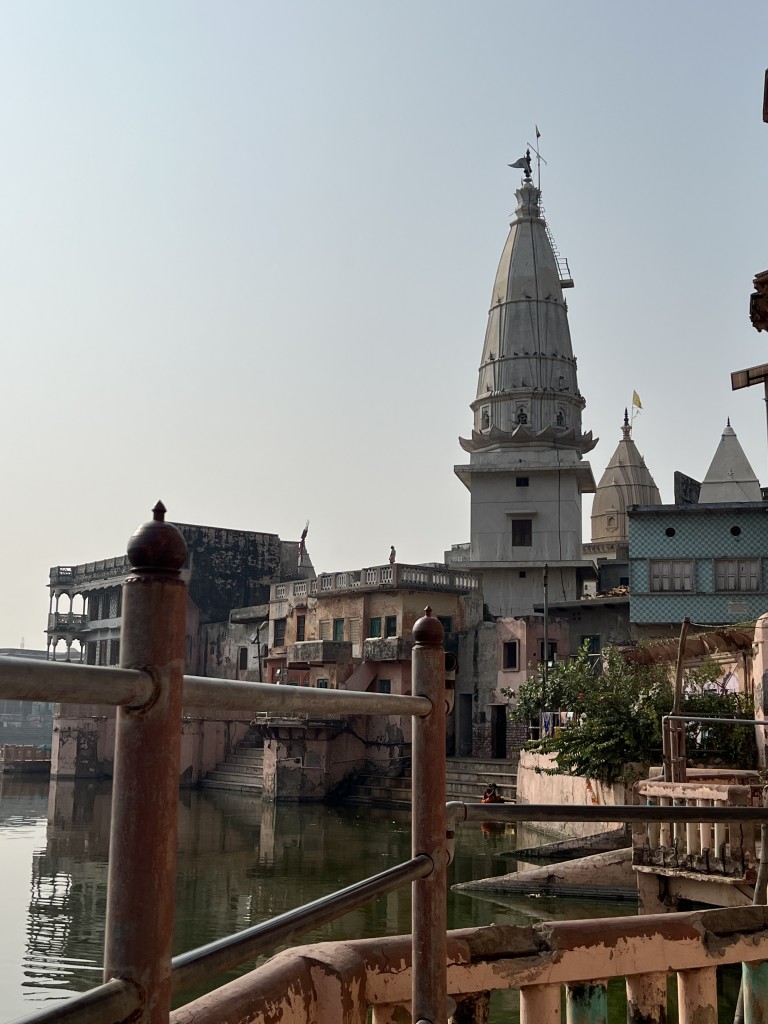
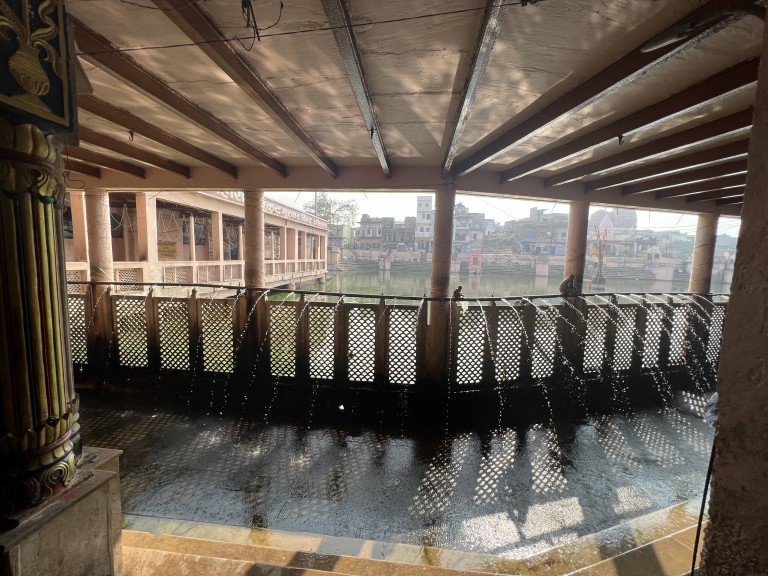
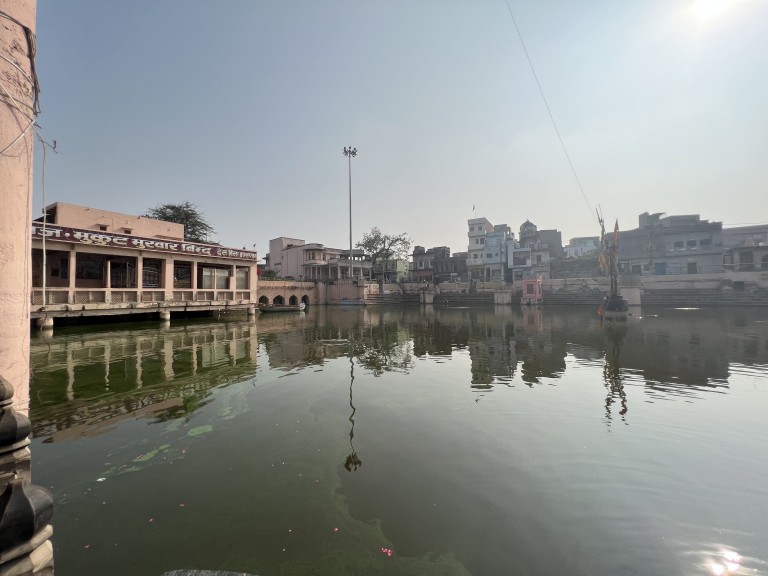
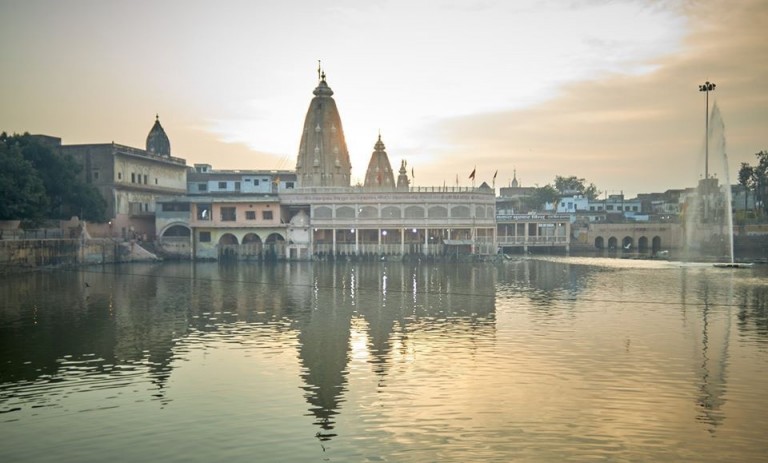
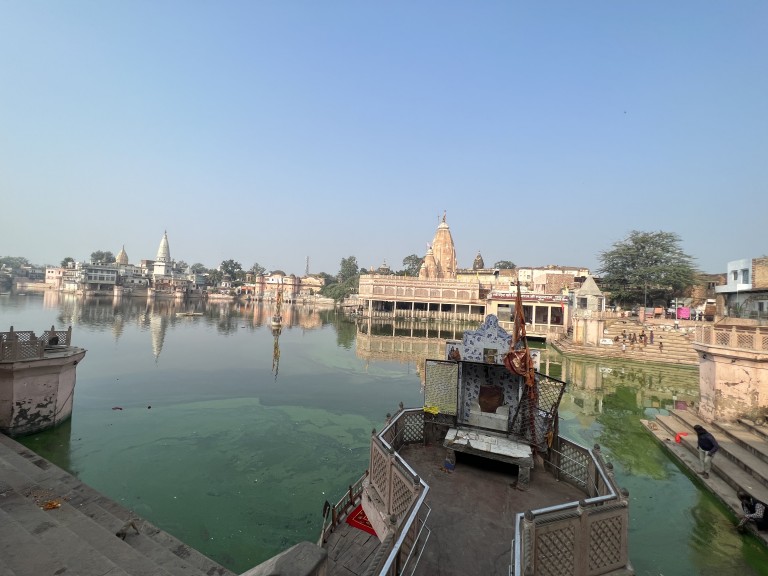
The stone ghāṭas at Mānasī-gaṅgā were built by King Bhagavān dāsa, the father of Māna Singh, a king of Jaipura.
Rajashekhara Dasa
From the book “Chaurasi-kosa Vraja Mandala Parikrama”:
This lake is said to have been created from Krishna’s mind after He had killed the demon Vatsasura. Because the demon was in the form of a calf, and it is considered very sinful to kill a calf, the cowherd boys suggested that Krishna could purify Himself by bathing in the River Ganges. Not wishing to leave Vrindavana, while at the same time satisfying His cowherd boyfriends, Krishna created the River Ganges from His own mind and manifested it here at Govardhana Hill. He then took His bath much to the pleasure of His cowherd boyfriends. The word ‘manasi’ means ‘from the mind’ and ‘ganga’ means the ‘River Ganges’.
Sometime later, when Nanda Maharaja and the cowherd men heard descriptions about the glories of bathing in the Ganges, they wanted to go and take bath in that holy river. After much persuasion however, Krishna convinced his father and the other Vrajavasis that the River Ganges was manifested in Vrindavana and He brought them here to Manasi-ganga. When Nanda Maharaja and the cowherd men arrived there with Krishna, Ganga Mayi, the river goddess, suddenly appeared from the lake and standing before them, offered prayers to Krishna. Having seen mother Ganga with their own eyes, they were convinced that Manasi-ganga was non-different from the River Ganges, and they joyfully took their bath in the sacred lake.
The Bhakti-ratnakara says, “The waters of Manasa-ganga are supremely pure. Who can describe the wonderful results one achieves by bathing there.”
Manasi-ganga is also the site of some of Krishna’s celebrated boating pastimes known as nauka-vihara. The word ‘nauka’ means ‘boat’ and ‘vihara’ means ‘loving pastimes’. Formerly Manasi-ganga was much larger and many boats used to ply from one side to the other. One day, the gopis arrived there with their milk products meant for sale in a local market on the other side of the lake. There were no boats available other than one very old boat, so the gopis enquired from the young boatman dressed in a cloak with a peacock feather in his hair, how much he would charge. After some haggling, the boatman agreed to accept some milk products as his fee. The gopis boarded the boat and the boatman began rowing to the opposite shore. All of a sudden the boatman stopped rowing and lying back, informed the gopis that due to weakness, he was unable to go any further unless he was immediately fed with some of the gopis milk products. At first the gopis flatly refused to hand over any milk products until they reached the other side, but realizing they had no other option, they were forced to feed a quantity of their milk sweets to the hungry boatman.
After being fed, the boatman continued rowing for some time but again stopped, this time saying that after eating so many milk products, he felt bloated and would have to rest for some time. The boatman suggested that it would help if two gopis could massage his legs and another two could massage his arms. The gopis became very angry with the boatman, saying they would certainly take hold of his arms and legs, but instead throw him overboard into the lake. Seeing the angry mood of the gopis, the boatman again started rowing but after some time, suddenly pointed to a hole in the boat’s hull through which water was steadily leaking into the boat. The boatman informed the gopis that due to the heavy weight of all their milk products, the boat would surely sink unless they threw all their pots into the water. Fearing they may drown, the gopis immediately threw all their milk products overboard. The boatman then said that there was still too much weight in the boat and if they were to survive, the gopis would have to throw all their heavy jewelry overboard also. The gopis then removed all their jewelry and threw that into the water as well.
Suddenly dark clouds enveloped the whole sky as strong winds began to blow causing large waves to batter the boat. By this time the gopis were completely terrified, in order to assure them that the boat was sturdy enough to withstand the stormy conditions, the boatman demonstrated the strength of his boat by rocking it back and forth. As soon as the boatman started rocking the boat, in great fear that She might fall overboard, Radharani suddenly leapt forward and thrust Her arms around the boatman’s neck for safety. At that moment the storm subsided and the wind stopped blowing. As soon as Radharani touched the boatman, She immediately understood that the boatman was non-other than Her beloved Krishna. Seeing Radharani embracing the boatman, the gopis were surprised and enquired what on earth was She doing. Radharani then pulled the flute from under Krishna’s belt and held it up for all the gopis to see. The gopis then started laughing and clapping their hands in great delight. Krishna then took them on a boat-ride to see all the beautiful places around Manasi-ganga. The Vraja-vilasa-stava says, “The Manasa-ganga River flows so swiftly on the side of Govardhana Hill that it’s waves push the splendid rocks lining it’s shores. I pray the Manasa-ganga River, where Shri Shri Gandharvika-Muravimardana enjoy jubilant boating pastimes, may give me shelter.”
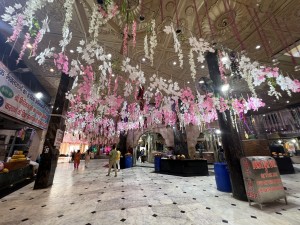
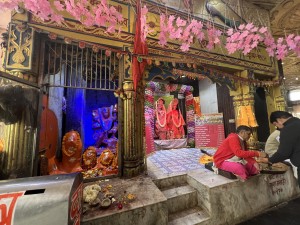
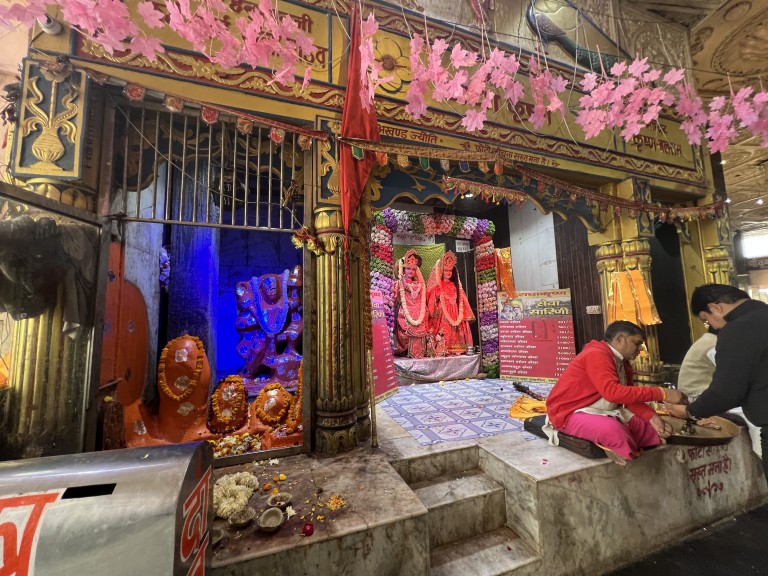
During His parikrama of Vraja Mandala, Lord Chaitanya also bathed in Manasi-ganga before entering the Harideva Mandira for darshana. There is a tradition amongst Vrajavasis and pilgrims in general, which has also been mentioned in Rupa Gosvami’s Mathura-mahatmya, that those who are performing Govardhana Parikrama should first bathe in Manasi-ganga and then take darshana of Lord Harideva, after which they can start Govardhana Parikrama, then after finishing Govardhana Parikrama many pilgrims once again bathe in Manasi-ganga.
Photo (14)