Description

Bhaktivedanta Narayana Gosvami
From the book “Sri Vraja-mandala-parikrama”:
While herding the cows, Śrī Kṛṣṇa, Śrī Balarāma and the cowherd boys wandered throughout this delightful place. Śrī Kṛṣṇa Himself spor ted in this kuṇḍa with the cowherd boys and with sweet words He would summon the cows to the bank of the pond by exclaiming, “Tīrī-tīrī!” And then with “Cūṅ-cūṅ!” He would tell them to drink water. The boys decorated each other with garlands made of kumudinī flowers.
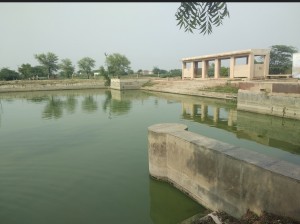
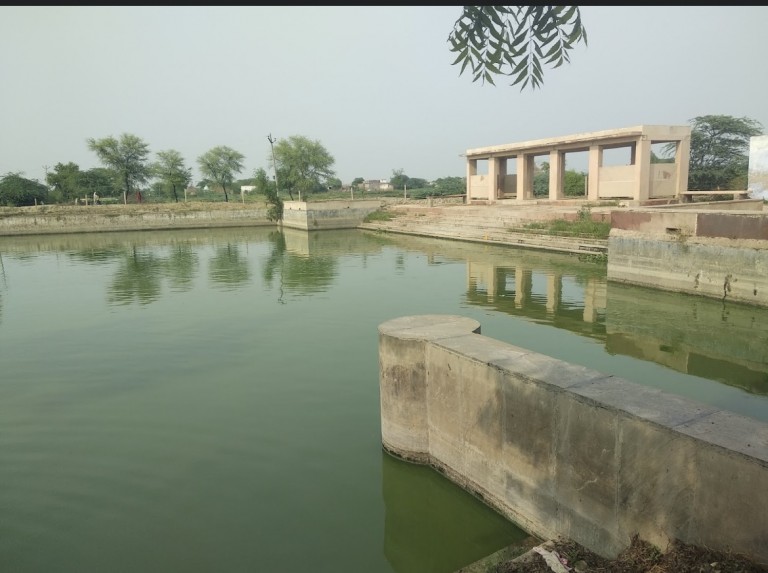
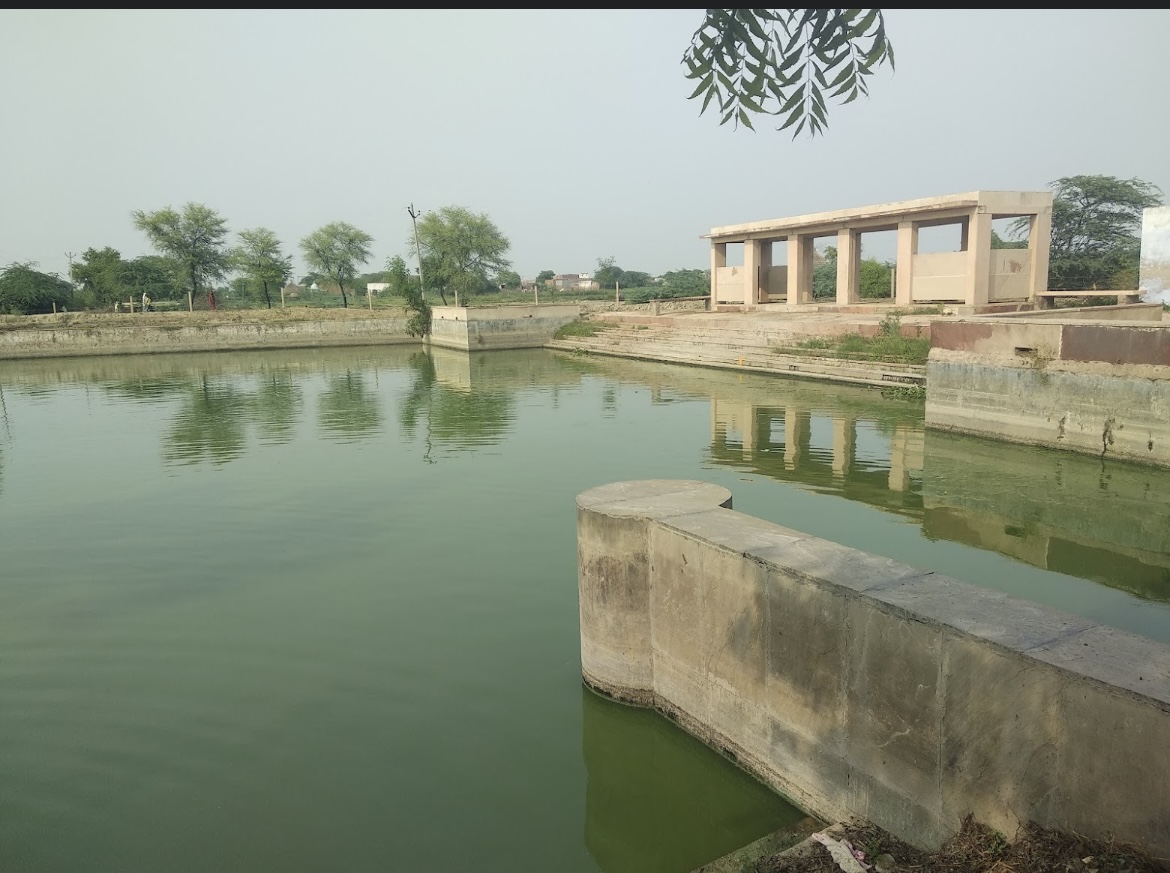
Two miles west of Tālavana is Kumudavana, which presently goes by the name Kudaravana. The kuṇḍa here is called both Kumudinī-kuṇḍa and Vihāra-kuṇḍa. While herding the cows, Śrī Kṛṣṇa, Śrī Balarāma and the cowherd boys wandered throughout this delightful place. Śrī Kṛṣṇa Himself sported in this kuṇḍa with the cowherd boys and with sweet words He would summon the cows to the bank of the pond by exclaiming, “Tīrī- tīrī!” And then with “Cūṅ-cūṅ!” He would tell them to drink water. The boys decorated each other with garlands made of kumudinī flowers. Sometimes Kṛṣṇa hid from His sakhās and, unseen by them, He sported in the water here with Śrīmatī Rādhikā, Lalitā, Viśākhā and other priya-narma-sakhīs. There is currently a deity of Śrī Kapiladeva on the bank of this kuṇḍa. Lord Kapila worshipped Svayam Bhagavān Śrī Kṛṣṇa at this place.
From here, the pilgrimage of Vraja proceeds to Bahulāvana via Śāntanu-kuṇḍa. In the neighbourhood are picturesque pastime places, such as Ompār, Mānako-nagara, Lagāyo, Ambikāvana, Gaṇeśarā (Gandheśvarīvana), Datihā (Datīya), Chaṭṭīkarā and Garuḍa-Govinda.
Rajashekhara Dasa
From the book “Chaurasi-kosa Vraja Mandala Parikrama”:
In the Adi-Varaha Purana it is stated. “Hey Devi, this third forest, Kumudavana, is supreme. One who visits this place becomes worshipable in My abode.” Kamudavana is the smallest of the twelve sacred forests of Vraja with a parikrama of just one mile (1.5km). The sacred forest has now completely disappeared and a small village now stands here where the forest once stood. The village is known locally as Kudarban which is a corruption of the name Kamudavana. The word ‘kamuda’ or ‘kamudini’ refers to a special variety of lotus flower, similar to a water lily, which formerly grew in great abundance in Kamuda-kunda, and because of these kamuda flowers, this sacred forest achieved its name. The celebrated lake of Kamuda-kunda is still present here. It is said that Radha and Krishna used to enjoy many wonderful water sports (jala-krida) as well as many amorous pastimes (jala-vihara) in this sacred lake. The word jala’ means ‘water’ and ‘krida’ means ‘sporting pastimes’, the word ‘vihara’ means ‘amorous pastimes’. Because many amorous pastimes (jala-vihara) took place in this lake, it is also known as Vihara-kunda.
Kamudavana is also one of the forests where ecstatic rasa-lila pastimes took place. In the Garga Samhita (2.29 & 38) it is said, “Then Sri Krishna went to Kumudvana forest, which was filled with the sounds of humming bees, and enjoyed the rasa-dance with the gopis. With many different dances, with amorous gestures, and with sidelong glances the gopis gave great pleasure to Krishna.” The great sage and incarnation of Lord Vishnu, Kapila Muni, also spent considerable time at Kamudavana performing austerities on the banks of Kamuda-kunda and there is a small temple known as the Kapila Mandira here on the bank of the kunda containing the Deity of Lord Kapila. Because Kapila Muni spent time here engaged in meditation and austerities, this kunda is also known as Gangasagara-kunda, after the famous ashrama of Lord Kapila situated at the mouth of the Ganges in Bengal, known as Shri Gangasagara. In the Adi-Varaha Purana it is said, “One who bathes in this kunda will achieve ten times the benefit of a pilgrimage to Shri Gangasagara.” As all the tirthas of the world have their origins in Vraja it appears from this verse that Kamuda-kunda is the original Gangasagara-tirtha. This famous kunda is also known as
Padma-kunda and it is said that anyone who bathes here will acquire all the knowledge of the Vedas. The word ‘padma’ generally means a ‘lotus flower’, but can also refer to enlightenment through transcendental knowledge.
Krishna and Balarama used to regularly bring Their cows to Kamudavana and while the cows were grazing in the forest, the two brothers would enjoy water sports (jala-krida) in this kunda along with Their cowherd boyfriends. Sometimes the cowherd boys would make beautiful garlands from the kamuda flowers that grew in the lake and then present them with great love and affection to Krishna and Balarama. There is also a small shrine near the banks of the kunda established by the local Gaudiya Math and known as Chaitanya-charana-chinha, where the impressions of Lord Chaitanya Mahaprabhu’s lotus-feet are being worshiped. The shrine commemorates Lord Chaitanya’s historic visit to Kamudavana during His parikrama of Vraja Mandala in the year 1515. The word ‘charana’ means ‘lotus-feet’ and ‘chinha’ means either ‘indented’, or ‘engraved’ on stone.
Photo (1)