Description

Bhaktivedanta Narayana Gosvami
From the book “Sri Vraja-maṇḍala-parikramā”:
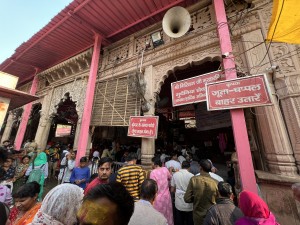
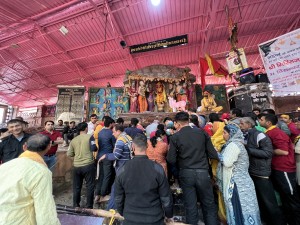
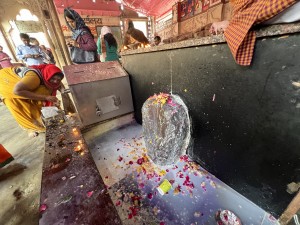
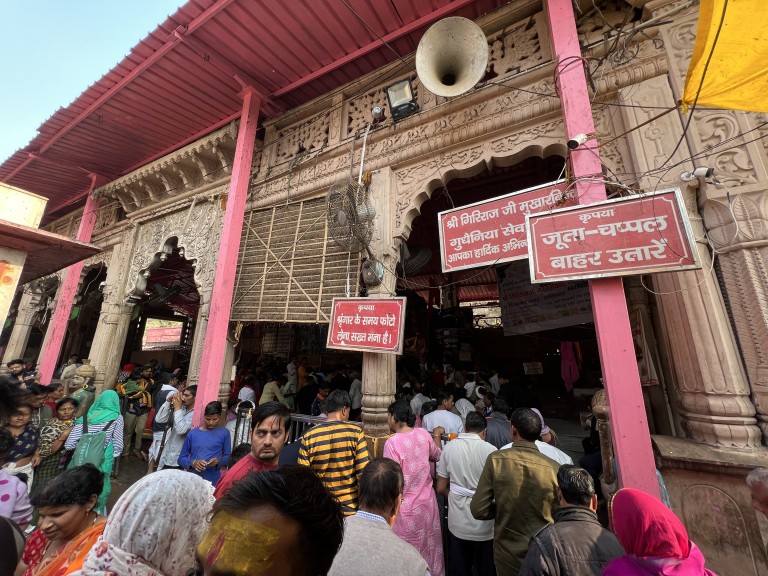
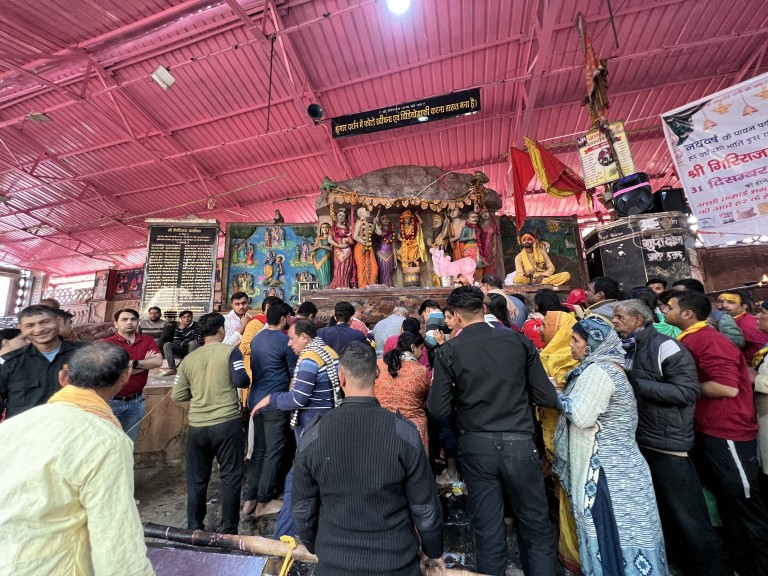
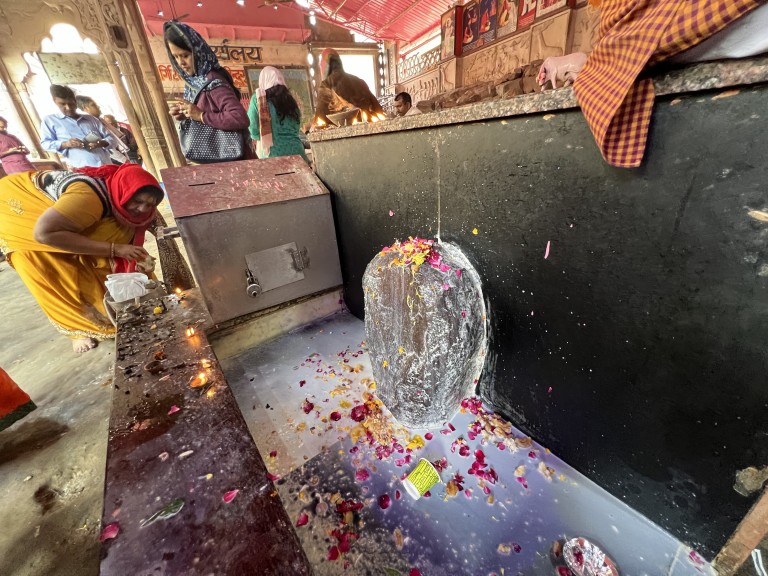
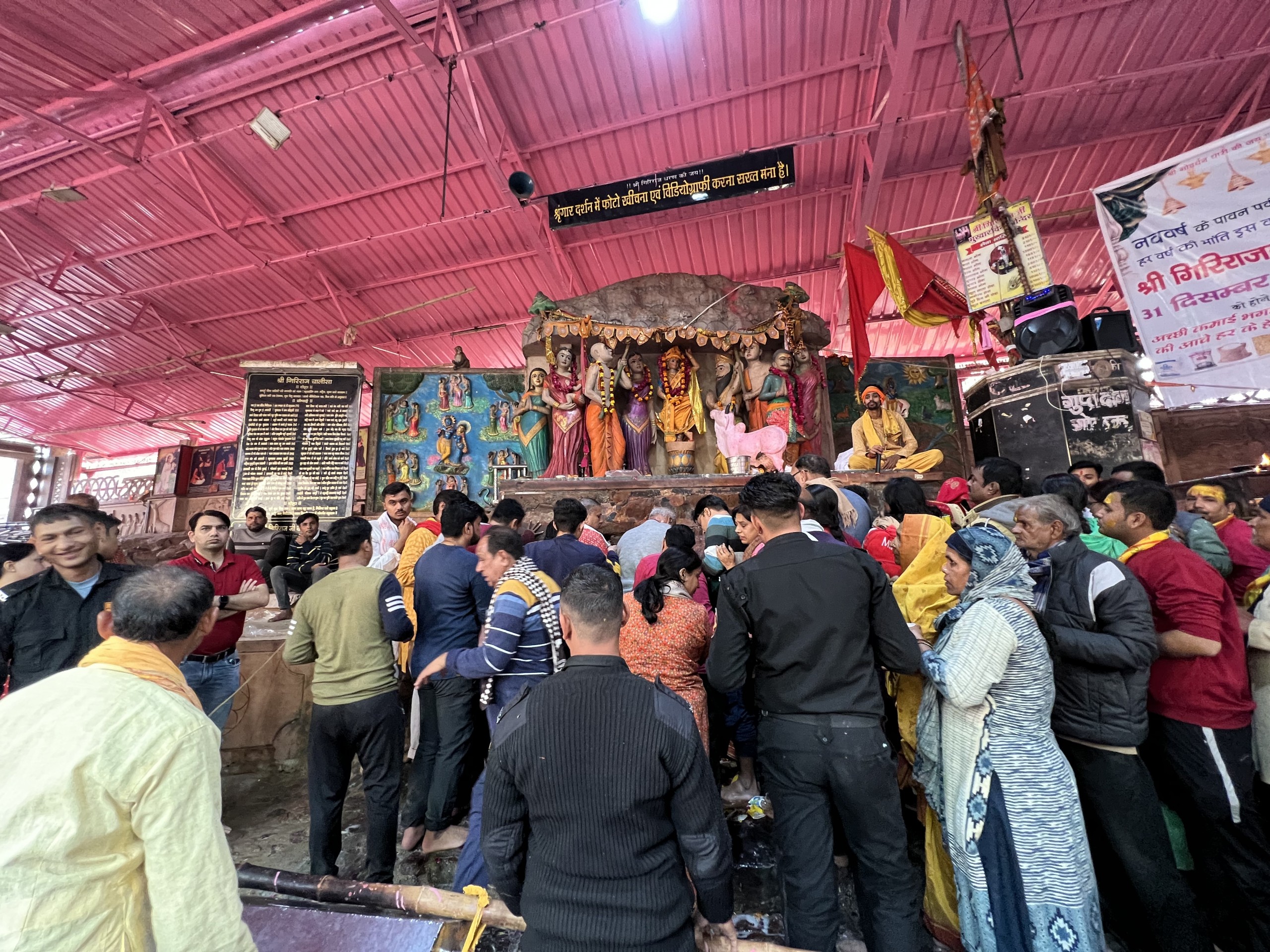
On the northern bank of Mānasī-gaṅgā is the lotus face (mukhāravinda) of Śrī Govardhana. Govardhana’s form is that of a sitting cow. His hind part is Pūcharī, or Pūñcharī. He has turned his neck to place his lotus face near his stomach, which is the town of Govardhana. His two eyes are Rādhā-kuṇḍa and Śyāma-kuṇḍa. There is a beautiful temple here with a śilā of Girirāja’s lotus face. Every day he is given abhiṣeka and receives worship and offerings of bhoga. Festivals are also organised here on Annakūṭa and Dīpāvalī.
Rajashekhara Dasa
From the book “Chaurasi-kosa Vraja Mandala Parikrama”:
According to Shrila Bhaktisiddhanta Saraswati Goswami, this is the original mukharavinda-shila, or lotus mouth of Govardhana. The word ‘mukha’ means ‘mouth’ and ‘aravinda’ means a ‘lotus’. The word ‘shila’ means one of the ‘rocks’ from Govardhana Hill. At this temple pilgrims make offerings of milk, yogurt, and sweets to the lotus mouth of Govardhana Hill. There are a number of other so-called mukharavinda-shilas around Govardhana hill, but they are not situated at the correct place to be recognized as the actual lotus mouth of Giri-Govardhana, and are therefore not considered to be the original mukharavinda-shila. In this temple just behind the mukharavinda-shila is the famous mukut-shila, where the impression of Krishna’s crown can be seen on a rock from Govardhana Hill.
Photo (3)