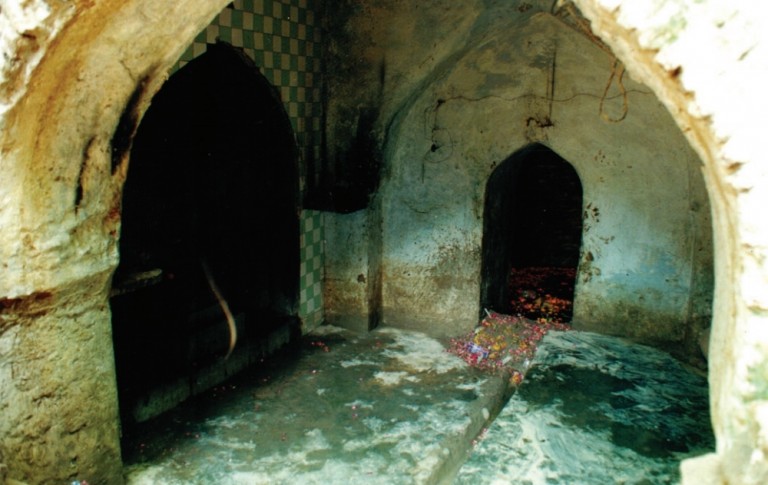
Description

Bhaktivedanta Narayana Gosvami
From the book “Sri Vraja-maṇḍala-parikramā”:
Jñāna–vāpī is an important ancient tīrtha, which is hidden within the earth on the ten–mile parikramā path around Mathurā, between Bhūteśvara Mahādeva and Kaṭarā Keśavadeva (the birthplace of Śrī Kṛṣṇa). Referring to this sacred place, the Varāha Purāṇa (Mathurā-mahātmya) states:
sthānaṁ karoti tasyāṁ tu, grahadorṣarna lipyate
In his Mathurā Parikramā, the best of poets, Harilāl Kakora, says:
yāmai joṅ snān karaijū dhoī pāp bahu puny bharaijū
According to the Vāyu Purāṇa, Dharmarāja Yudhiṣṭhira built this bāvaḍī (deep tank with steps). This place is also important as the place where the Supreme Lord Śrī Kṛṣṇa used to consult with Mahārāja Yudhiṣṭhira.
Śrī Caitanya-caritāmṛta specifically describes the arrival in Śrī Dhāma Mathurā of Śacīnandana Śrī Gaurahari, who is non– different from Śrī Kṛṣṇa and who preached pure bhakti and the chanting of Kṛṣṇa’s holy names throughout the entire world. Śrī Gaurahari took bath in the Yamunā at Viśrāma–ghāṭa and then went to the temple of Śrī Keśavadeva. Seeing Him performing kīrtana and dancing in ecstasy, a crowd of thousands assembled there. Śrī Caitanya Mahāprabhu performed ācamana and bathed in Jñāna–bāvaḍī. Śrī Caitanya-caritāmṛta mentions that He later stayed at the house of a Vaiṣṇava brāhmaṇa from the Sānoḍhiyā community who lived near Jñāna–bāvaḍī, and also accepted prasāda here.
Rajashekhara Dasa
From the book “Chaurasi-kosa Vraja Mandala Parikrama”:
The ancient tirtha of Jnana-vapi is located next to the Guru-Govinda Gaudiya Matha. This well is said to have been established by Dharmaraja (Yamaraja) in the Satya-yuga and according to the Adi-Varaha Purana, anyone who bathes here automatically removes the influence of malefic planets and achieves both jnana (knowledge) and Vishnu-bhakti (devotion). It is said that Lord Chaitanya came to this bavadi after having darshana of Lord Keshavadeva to perform achamana and bathe. Lord Chaitanya also stayed near here in the house of a sanadiya-brahmana who was a disciple of Madhavendra Puri Goswami, the parama-guru of Lord Chaitanya.
A very large well with steps going down inside it is known as a bavadi or bowri and from this word it appears the name vapi (as in Jnana-vapi) has been derived. At the present time this bavadi is dry and presently being used by Muslims who worship the shrine of a Sufi saint who once lived inside the well. It is also said that this Jnana-vapi is also connected to Krishna’s dear friend Uddhava. It was while at this bavadi that Uddhava became overwhelmed with ecstatic love while thinking of Krishna’s transcendental pastimes in Vrindavana. There used to be a small shrine dedicated to Uddhava nearby but it is no longer visible.
Photo (1)