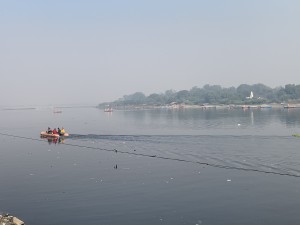
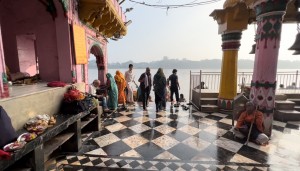
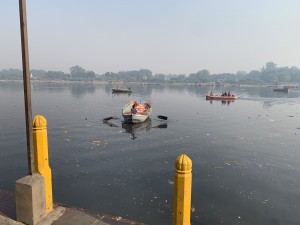
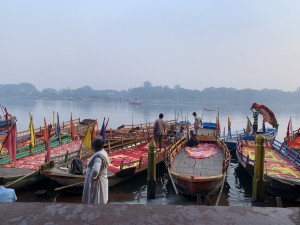
Description

Bhaktivedanta Narayana Gosvami
From the book “Sri Vraja-maṇḍala-parikramā”:
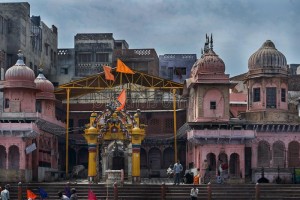
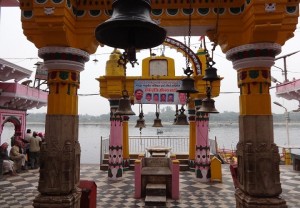
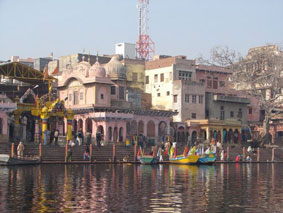
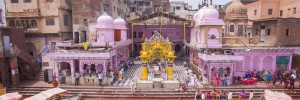
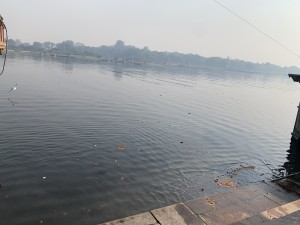
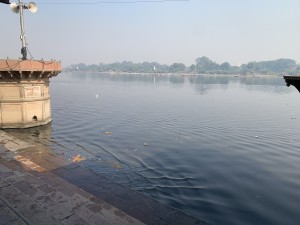
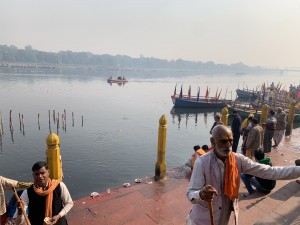
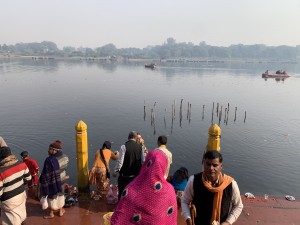
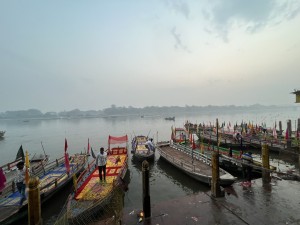
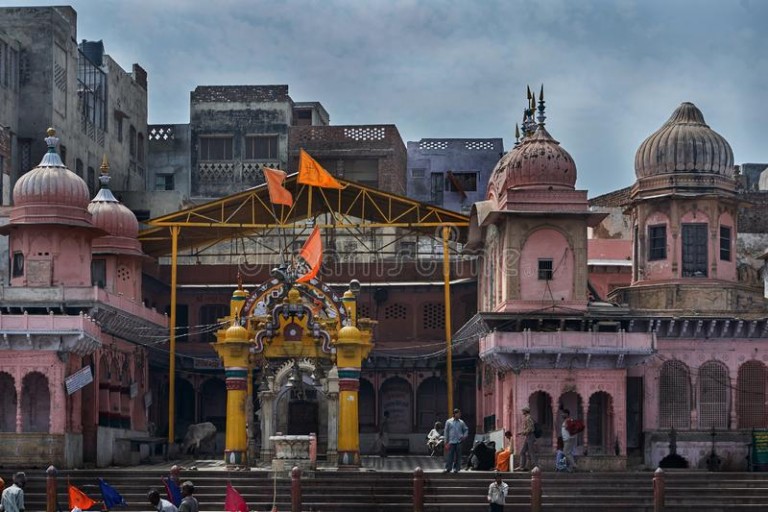
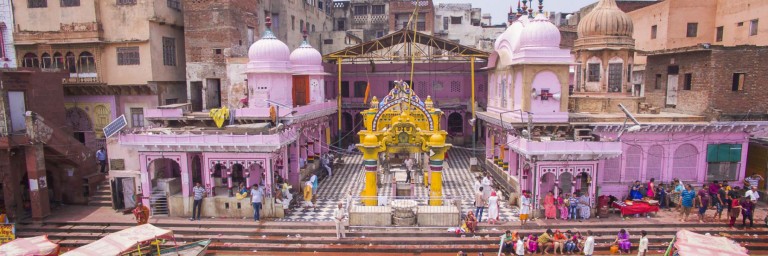
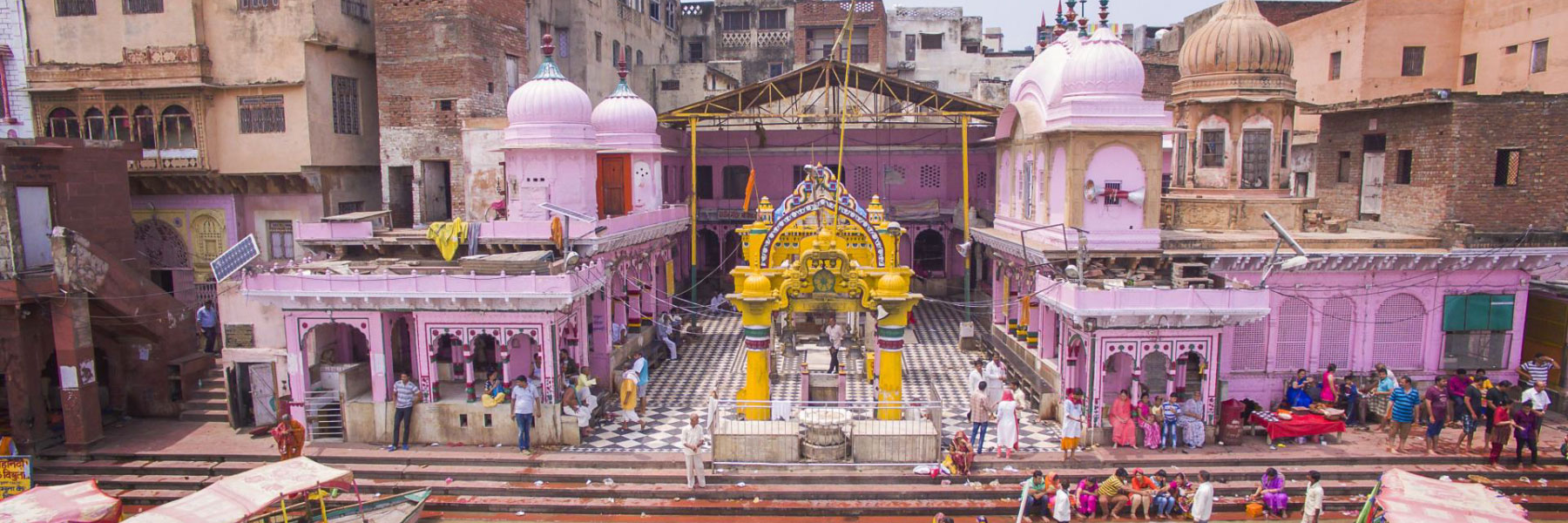
The famous Viśrāma–ghāṭa is the principal ghāṭa of Mathurā. According to the Saura Purāṇa, this sacred place is named Viśrānti– tīrtha for the following reason:
saṁsāra maru sañcāra kleśa viśrāntidaṁ nṛṇām
It is said that after the Supreme Lord Śrī Kṛṣṇa killed the mighty Kaṁsa, He had Kaṁsa’s funeral rites performed at Dhruva–ghāṭa. Śrī Kṛṣṇa, as well as His relatives and friends, then bathed at this holy ghāṭa and rested here. In His human–like pastimes, Śrī Kṛṣṇa may need to rest, but that Śrī Kṛṣṇa who is the Supreme Lord, who has an eternal form, full of knowledge and bliss, who is full of all the six opulences and who is endowed with all potencies that can make the impossible possible, never needs any rest. This Viśrāma– ghāṭa serves as a place of rest for the distressed living entities who have strayed from the Lord and are immersed in the endless and bottomless ocean of birth and death.
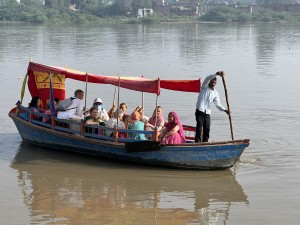
Every year, before starting Vraja–maṇḍala parikramā, hundreds of thousands of devout pilgrims bathe, perform ācamana, and then take vows at this eminent place of pilgrimage. They also complete their parikramā here.
On the day of Yama–dvitīyā (or Bhaiyādūja), the second day after the night of the new moon (Amāvasyā) in Kārtika, many faithful and pious people from far–off places come to bathe at this place. According to the Purāṇas, Yama (Dharmarāja) and Yamī (Yamunā) are twins. Soft–hearted Yamunā could not endure seeing the various suffering of the living beings and wished for a way to alleviate them. On her birthday she invited her brother to a meal of many delicious preparations and sweetmeats. Pleased and fully satisfied, Yama told her to ask for a boon. Yamunā said, “Brother, please grant those who bathe in my waters with faith on this day, relief from the clutches of birth and death and from the variegated threefold miseries.” Hearing this, Yama Mahārāja replied, “So, be it!”
Although it is very glorious to bathe anywhere in Śrī Yamunā, it is especially glorious to do so in Vraja, and even more so at Viśrāma– ghāṭa on the day of Yama–dvitīyā. Therefore, every year on this day, thousands of brothers and sisters come here to bathe.
Rajashekhara Dasa
From the book “Chaurasi-kosa Vraja Mandala Parikrama”:
In the glorification of Vishranti-tirtha, the Skanda Purana says, “One who bathes here will destroy all his sins and be freed from the agony and misery of the material world.”
In the Adi-Varaha Purana Lord Varaha says, “Hey Devi! Vishranti-tirtha is renowned throughout the three worlds. A person becomes worshipable in Vaikuntha Dhama if he takes bath here. Lord Gatashrama (Narayana) is situated here in this beautiful place. By His darshana one achieves the results from bathing in all other holy places.”
The Padma Purana says, “Bathing at Vishrama Ghata, is one hundred times more superior to bathing in the Ganges River at the triveni-sangam during the Magh-mela.”
In the Mathura Mahatmya it says, “Bathing at Keshi Ghata is one hundred times more beneficial than bathing in the river Ganges, but to bathe at Vishrama Ghata, is one hundred times more beneficial than bathing at Keshi Ghata.”
In the Saura Purana it says, “Vishranti-tirtha destroys all sins and offers rest from the fatigue of wandering through the desert of material existence. Anyone who bathes here and worships Achyuta will be released from the fire of material existence and attain immortality.”
According to the Bhakti-ratnakara, Raghava Pandit, Shrinivasa Acharya, and Narottama Dasa, stopped at Vishrama Ghata to bathe before proceeding on to Ambikavana and Vrindavana on the last leg of their Vraja Mandala Parikrama. Vrindavana was also the last of the sacred forests visited by Lord Chaitanya Mahaprabhu during his epic parikrama of Vraja Mandala in the year 1515. For the Vraja-yatris who began their parikrama from Vrindavana, returning to Vishrama Ghata marks the end of their Vraja Mandala Parikrama.
Photo (18)