Description

Bhaktivedanta Narayana Gosvami
From the book “Sri Vraja-maṇḍala-parikramā”:
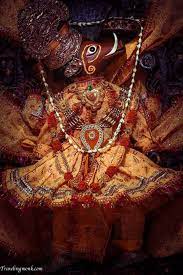
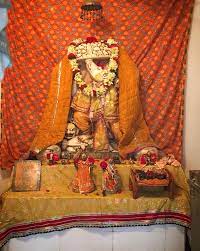
Behind the present Dvārakādhīśa Temple in Māṇika–choka are two temples of Lord Varāha. One of them has a black deity of Varāha (Kṛṣṇa–varāha, or Ādi–varāha); the other has a white deity of Varāha (Śveta–varāha). During the period of Svāyambhuva Manu in Brāhmakalpa, Kṛṣṇa–varāha manifested from the nostril of Brahmā in a four–legged, boar form. He kept the Earth on His tusk and brought her up from Rasātala, the nether region. During the reign of Cākṣusa Manu, Śveta–varāha manifested from the ocean. His face was like that of a boar and the lower portion of His body was human–like. He is also called Nṛ–varāha (nṛ meaning “human”). He killed Hiraṇyākśa and delivered the Earth.
At the beginning of Satya–yuga, there was a brāhmaṇa sage named Kapila, who was a worshipper of Bhagavān Ādi–varāha. Indra, the king of the demigods, pleased that brāhmaṇa and then brought the deity of Varāha to the heavenly planets, where he installed Him for worship. Having defeated Indra, the mighty Rāvaṇa seized that Varāha deity from Svarga and established Him in Laṅkā. After killing the impersonalist Rāvaṇa, Śrī Rāmacandra brought that same deity to Ayodhyā and installed Varāhadeva in the palace. When Mahārāja Śatrughna was leaving Ayodhyā to kill Lavaṇāsura, he asked his elder brother Śrī Rāmacandra for the deity. Mahārāja Śatrughna carried the deity with him and, after killing Lavaṇāsura, established Him in the city of Mathurā, where one can take darśana of Him even today.
Rajashekhara Dasa
From the book “Chaurasi-kosa Vraja Mandala Parikrama”:
This temple is located in the old city area of Mathura and contains the Deity of Adi Varaha, the red incarnation of Lord Varaha. It is said that this Deity of Adi Varaha is the same one that was installed by Shatrughna after he slew the demon Lavanasura. The Varaha Deity in this temple is carved from black marble but appears to have a reddish hue. The pastime story of this Deity is very interesting, it is said that in the Satya-yuga a brahmana-rishi named Kapila (Kapila Muni) had worshiped this Deity of Adi Varaha. However, sometime later Lord Indra took this same Deity to swarga, the heavenly planets, and installed the Deity within his palace. When Indra was defeated by Ravana when he conquered the heavenly regions, the demon took the Deity of Adi Varaha with him to Lanka. After Ravana was killed in battle by Lord Rama in the Lankan war, the Deity of Adi Varaha was taken by Lord Rama to Ayodhya. When Shatrughna was going to Mathura to kill the demon Lavanasura, Lord Rama gave this Deity to him saying that after killing Lavanasura, he should build a new city at Mathura and then install the Deity of Adi Varaha.
According to the Shrimad-Bhagavatam, Lord Varaha appeared during the brahma-kalpa of the Swayambhuva-manvantara from the nostril of Lord Brahma and then lifted the earth from the nether-regions of Patala. Lord Varaha is the presiding Deity of Mathura Mandala and it is said that Lord Varaha and His consort Bhumi Devi, eternally reside at a place known as Sakauri-vateshwara situated on the southern petal of the lotus of Vraja Mandala. The Sanskrit word ‘sakauri’ means a boar and ‘Vateshwara’ is the location of the Lord’s transcendental residence. According to the Adi-Varaha Purana, whenever Lord Varaha advents Himself in order to save the world, He appears from His transcendental abode at Saukari-vateshwara.
Photo (2)